Add The New York Post on Google A glacier collapse triggered this week’s catastrophic flash floods that killed at least 273 and left more than 1,300 missing when it hit the Nepal-China border, unleashing what officials have described as a “tsunami from the sky.”
A chunk of ice snapped off a glacier high in the Himalayas around 8:40 a.m. Wednesday and fell from a height of around 17,000 feet, smashing into a valley floor, creating what is known as an ice avalanche, Al Jazeera reported.
As the ice was falling, it was picking up debris and it struck the Lhende River – located around 12 miles from the Nepal-China border.
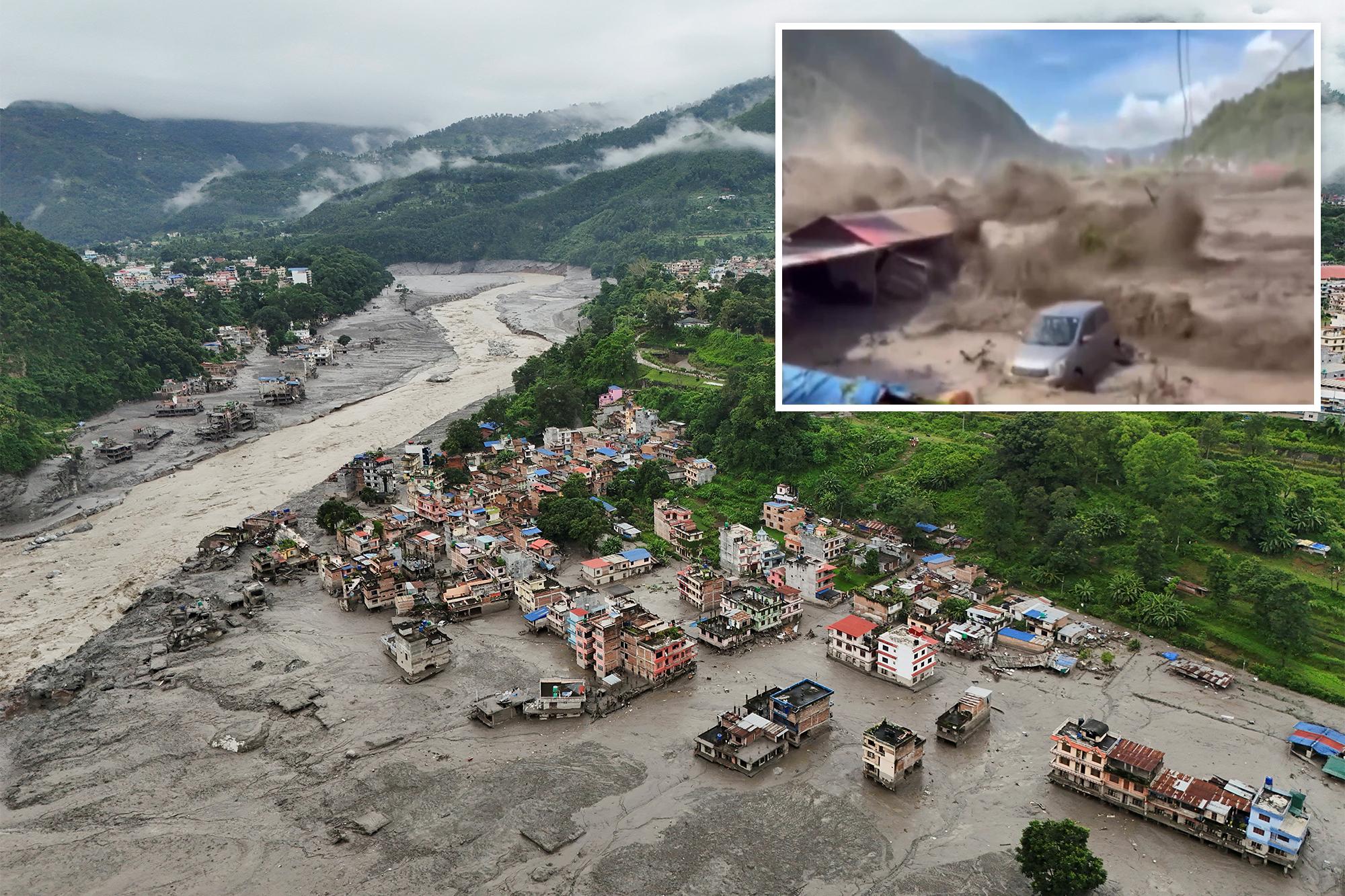
The debris accumulation initially caused the river to be blocked up before the dam gave way, unleashing a violent torrent downstream.
“It was such a huge amount of water. You can imagine it is 20 million cubic meters excess water on the river, and it was like a tsunami from the sky,” Bishal Nath Upreti, the president of the Nepal Centre for Disaster Management, told BBC’s “Today” show.
“It’s such a huge debris, and everything on the way was completely washed out. Villages and villages along the almost 40 to 50 kilometres were completely wiped out.”
Upreti declared that Wednesday’s floods were “one of the largest disasters” in Nepalese history.
Initially, the US Geological Survey reported that a 4.4-magnitude earthquake had struck 41 miles north of the Nepal capital, Kathmandu, before revising its assessment.
“Additional analysis of nearby seismic stations, long period seismic waves, and satellite imagery led to the determination that the seismic event was instead a glacial collapse and debris flow, and that no earthquake had occurred,” the USGS said, according to AFP.
The glacier collapse caused “catastrophic impacts downstream.”
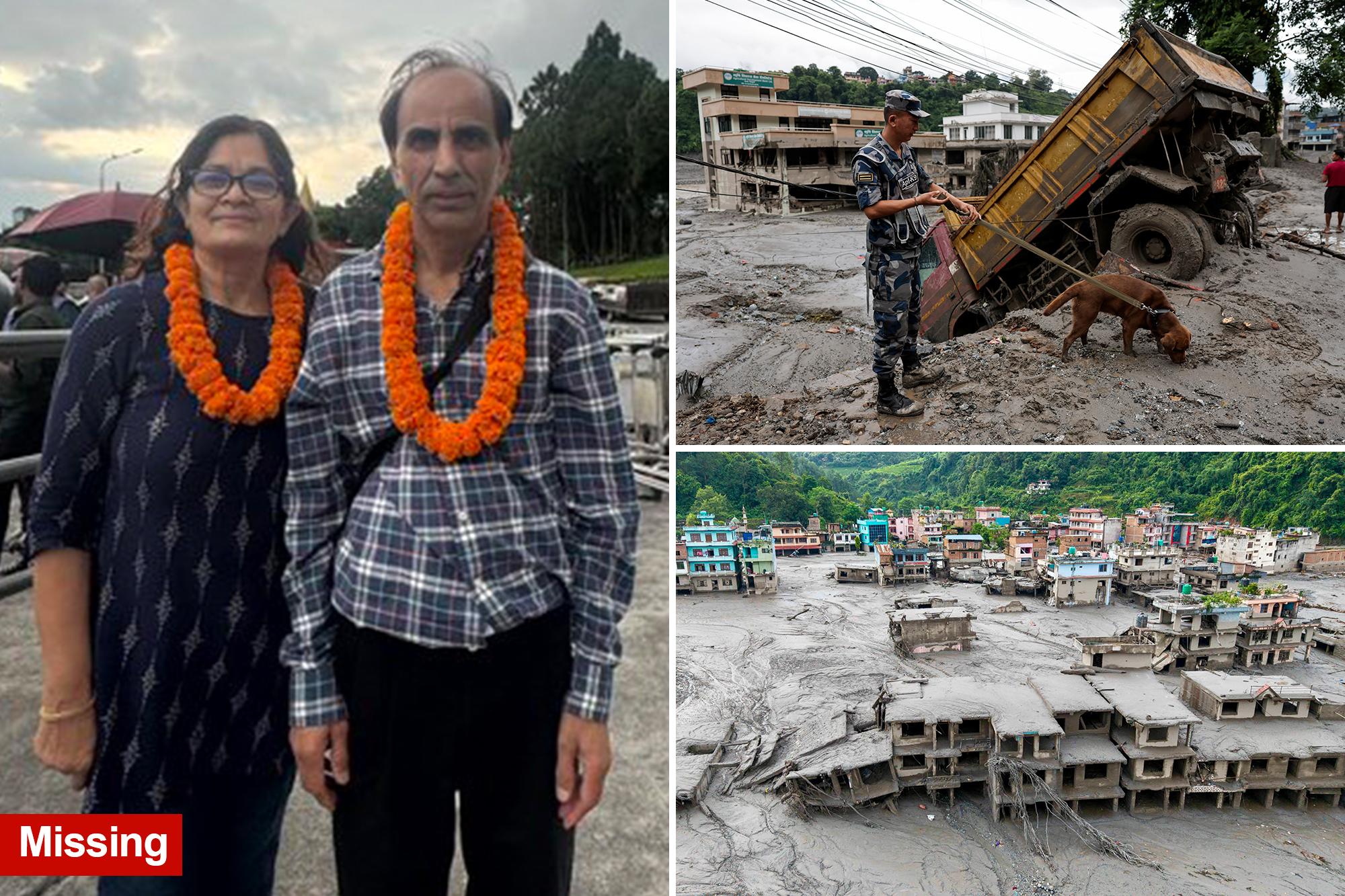
A mudslide slammed into the Gyirong port in China-controlled Tibet, while villages on the paths of the Bhote Koshi and Trishuli rivers in Nepal were devastated by the 33-foot-high wall of water, debris, and mud, which surged downstream.
“I started running,” Bibek Kumal, a 24-year-old Nepali laborer, said, revealing he was working on a toilet pit when the mudslides hit.
“Then a wall of water came thundering down as if it was an earthquake.”
Kumal, who was hospitalized but survived, counted his blessings as he ended up in a mango tree as he was being swept downstream.
“Had there been no mango tree, I would’ve been washed away to death.”
Some 168 people have been killed, with authorities fearing the number will rise.
Hundreds of foreigners who had embarked on pilgrimages to the sacred Mount Kailash, located in southwestern China, were caught up in the floods.
It’s a revered peak in Buddhism, Hinduism, Jainism, and Bon – and it has never been successfully climbed.
US citizens Ramesh Sharma, 65, and his wife Neelam Sharma, 64, are among the American citizens missing. They were on a pilgrimage to Mount Kailash, their daughter Radhika Sharma revealed.
Some 63 American citizens are missing, according to Nepalese authorities.
At least 77 pilgrims traveling with the Isha Foundation – founded by the Indian guru Sadhguru – lost contact when traveling back to Kathmandu after completing their journey to Kailash, according to the ANI news agency.
Nine Brits – who were on a pilgrimage to Mount Kailash with the Trekkers Society – are missing. The ages of the pilgrims range from 14 to 54, according to the Press Association.
The response has seen more than 5,000 army and police rescue personnel deployed.
But rescue operations are being hampered by the infrastructure that has been damaged or destroyed in the floods and landslides.
Around 25 miles of roads were damaged and 19 bridges were destroyed.
Nepalese army personnel have been forced to carry out rescue operations by helicopter.
More than 100 people were rescued on Thursday, according to army spokesperson Brig. Gen. Raja Ram Basnet.
Meanwhile, areas near the Gyirong port in China-controlled Tibet, which is near the border crossing, were covered in mud that was five feet deep.
China’s foreign ministry spokesperson, Lin Jian, said the flooding “has caused significant casualties and missing persons in both China and Nepal.”