@rockmarooned Published March 6, 2026, 5:00 p.m. ET Where to Stream: Bram Stoker's Dracula Powered by Reelgood More On: monster movies R.I.P. Tom Noonan: Check Out ‘What Happened Was,’ A Hidden Gem Full Of ’90s Indie Spirit Stream It Or Skip It: ‘Anaconda’ on VOD, A Self-Referential Giant Snake Movie About The Previous Giant Snake Movie We Must Discuss Those Gross Troll Pubes In Netflix’s ‘Troll 2’ ‘Troll 2’ Ending Explained: Will There Be a ‘Troll 3’ Movie? “I’ve heard of Bram Stoker’s Dracula, but Mary Shelley’s Frankenstein?!” That seemed to be the general reaction to the release of an unofficial companion piece to the 1992 Francis Ford Coppola adaptation of the famous vampire novel. Two years after that film, Coppola produced a lavish big-budget version of Frankenstein for director Kenneth Branagh, purporting to stick closer to the source material than the 1931 Universal horror classic. (You know, like that other 1931 Universal horror classic, which also doesn’t much resemble the literature at hand.) It promptly flopped, grossing about as much in total domestically as Bram Stoker’s Dracula did in its first weekend. All told, of Sony Pictures’ trilogy of R-rated Universal Monsters reimagined, Mary Shelley’s Frankenstein did the least business; the same year’s Wolf made twice as much.
But as we all now know, the Dark Universe cannot be killed! Not at Universal, not at other studios! And so, over 30 years later, we’re in an ongoing Monster Movie renaissance. This year alone, we’re getting new versions of Dracula, the Wolf Man, the Mummy, and, yes, Frankenstein, along with his bride, via a divisive new film by Maggie Gyllenhaal. This comes on the heels of Guillermo del Toro’s Oscar-nominated dream project Frankenstein, which also purports to be a more text-faithful version of the story. If all of this monster mashing puts you in the mood for more, HBO Max has you covered; it’s now streaming Branagh’s relatively little-seen adaptation, which does include elements of the Bride of Frankenstein story (despite the fact that the idea of the Creature’s bride is only alluded to in the book, never brought into existence).
Why Watch Mary Shelley’s Frankenstein Tonight?
Let’s be clear: If you’re going to choose a single Frankenstein movie to watch, the Branagh version ain’t it. There’s a James Whale-directed classic from 1931 and a well-appointed del Toro version with Oscar Isaac, Jacob Elordi, and Mia Goth; those should be a priority if you’ve somehow made it this far without experiencing Frankenstein on film. However! If you’re a fan of the story, monster movies, Robert De Niro, or Kenneth Branagh’s monstrous ego, there are plenty of reasons to check out this particular version at home.
The movie, like del Toro’s film and the original novel, opens in the Arctic before flashing back to how the characters arrived in this desolation. Branagh takes center stage for the first half, both as bare-chested star and the man behind the frenzied camerawork that seems determined to whip up gothic melodrama whenever possible. The mobility of the camera makes sense given that the DP is Roger Pratt, a collaborator with Terry Gilliam on several of his best films: 12 Monkeys, The Fisher King, and Brazil. (He also shot Tim Burton’s original Batman.) Branagh’s Frankenstein isn’t as impressively opulent and visually rich as Coppola’s Dracula, but then, most movies aren’t. By the same token, most movies made today will have a hard time competing with the sheer big-budget spectacle that $50 million in 1994 dollars (more than $100 million adjusted for inflation) could buy for Branagh.
There’s a touch of Wuthering Heights to the film’s version of Victor Frankenstein’s backstory, as Victor becomes besotted with his adoptive sister Elizabeth (Helena Bonham Carter as an adult), just a family friend in the book. Branagh clearly wants to give the proceedings a dizzying emotional heedlessness, unafraid of melodrama, even as he makes Victor more of a feckless hero than the “real” monster of the story. Around 45 minutes in, the movie reaches a fever pitch as Branagh stages the birth of the Creature in a makeshift womb full of goop and electric eels; enter De Niro via slippery nude grappling.
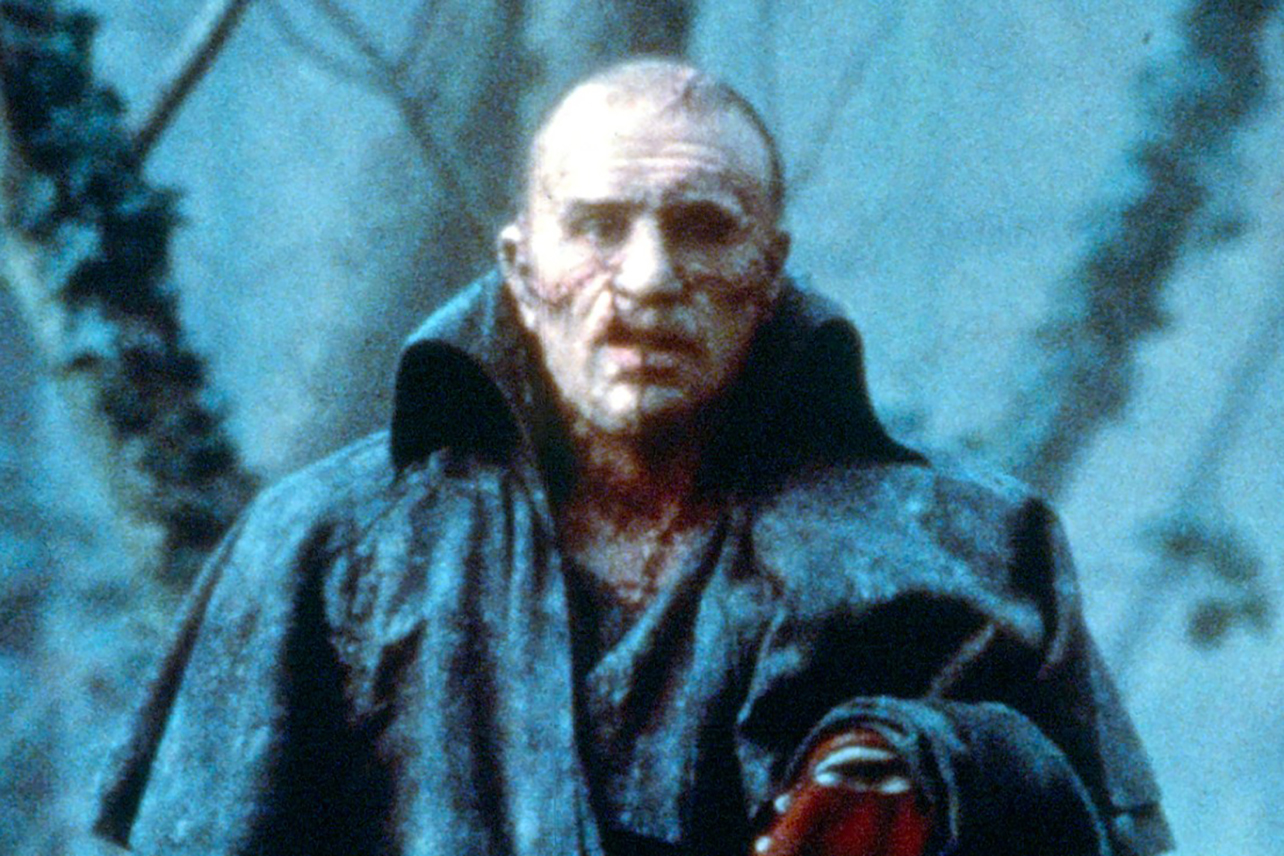
Once introduced into the picture, De Niro’s despairing outcast version of the Creature — truer to the book than Boris Karloff’s classic interpretation, more brutish and fearsome than the Elordi Creature in del Toro’s version, yet articulate in ways that many audience members found unfamiliar in 1994 — doesn’t quite have the same energy as Branagh’s dashing if misguided doctor. But that weird contrast/mismatch also lends the movie an interesting tension, and De Niro’s performance is quite compelling on its own terms, somewhere between a philosophically questioning lost soul and an incel demanding female companionship. He’s an ideal actor to play up the Creature’s simmering anger.
The movie is most interesting when it’s cross-pollinating material from Shelley’s novel with familiar bits and pieces from the classic Whale films, and that’s the direction it heads for a more horrifying confrontation between Creature and Creator in the final stretch. There are plenty of reasons that Branagh’s film hasn’t become the definitive version of the story. It lacks the iconography of the James Whale films, Branagh goes for thwarted romantic over mad doctor, and like Bram Stoker’s Dracula, its possessive title is slightly misleading about its moderate fidelity to its source. But removed from its initial box office disappointment, it’s a worthy curiosity; what’s truer to the spirit of monster movie than that?
Jesse Hassenger (@rockmarooned) is a writer living in Brooklyn podcasting at www.sportsalcohol.com. He’s a regular contributor to The A.V. Club, Polygon, and The Guardian, among others.