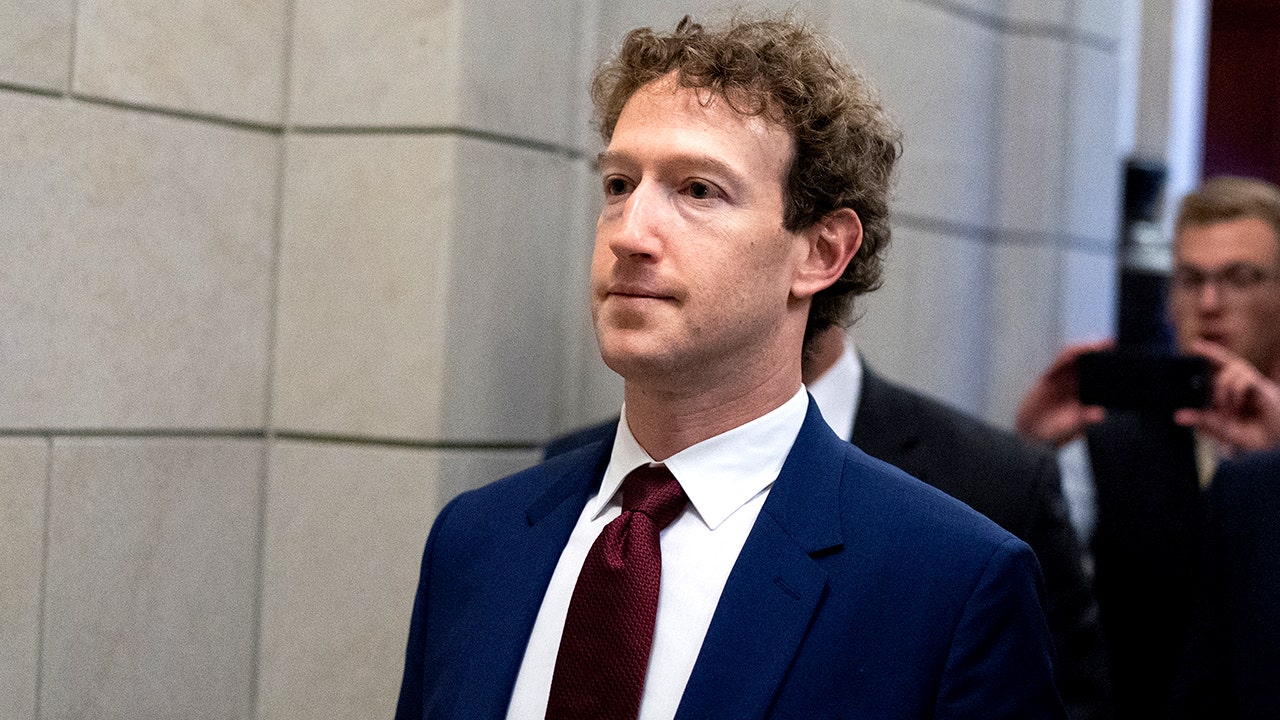
Video Jonathan Turley: Meta lawsuit settlement is 'seismic' but 'chump change' for tech giant Jonathan Turley, a constitutional law professor, joins co-host Dana Perino to analyze Meta's 'seismic' $16.6 billion settlement of the landmark child harm lawsuit. Turley argues that while the settlement is massive, it represents 'chump change' for the tech giant. The agreement also mandates that Meta establish new security tools to protect teenage users online.
It is not every day that a company can settle a case for over $17 billion and celebrate. However, Meta’s proposed settlement of claims brought by a coalition originally led by 29 states on Wednesday is a remarkably good deal for a company facing potential penalties that Meta estimated could reach $1.4 trillion and years of litigation. In the end, the company may not even take a loss from the litigation.
The proposed settlement ends the states’ federal case (but not the wider wave of litigation), following similar settlements in tobacco, opiates, and other products. It will require Meta to make changes to its platform, though the company has already appeared to be moving to make such changes.
The maximum payment of closer to $17.1 billion is tied to whether other social media companies, TikTok and YouTube, for example, adopt parallel protections for children. Otherwise, the company is on the hook for at least $12.1 billion over 10 years under the agreement.
META SETTLES FEDERAL TRIAL OVER CLAIMS FACEBOOK, INSTAGRAM ADDICT CHILDREN
The company agreed to proposed settlement terms that would impose daily time limits for underage users, "nighttime blocks" from midnight to 6 a.m., and notifications linked to school hours.
Social media remains one of the most transformative inventions in history, including as a powerful tool for free speech and political discourse. That popularity comes at a price.
It is doubtful that these "fixes" will actually fix the problem. Social media is enormously popular with adults and children alike. It is also ubiquitous and accessible, particularly for tech-savvy kids. The burden will remain with parents regarding access to and use of social media, not the company.
Meta was looking at a long slog in the courts. Some of us were skeptical of the legal basis for some of these claims. The line between a popular and an "addictive" product is fairly subjective. It was hard to see where the line would have been drawn in this litigation. However, Meta likely would have faced similar demands for changes to its platforms through legislation even if it prevailed in litigation.
Those legal questions will now have to wait for another test case. The settlement leaves other companies in a more exposed position. This massive settlement is like a dinner gong for plaintiff's lawyers who will now fan out in packs in pursuit of companies like dusk on the Serengeti. Companies are already facing thousands of such lawsuits.
FRANCE BECOMES FIRST EU NATION TO BAN SOCIAL MEDIA FOR CHILDREN UNDER 15
Meta has suffered adverse rulings in California and New Mexico, though the cases involved different claims and are subject to further appellate proceedings.
It’s clear that the company’s priority was to limit the potential damages rather than to make new law.
The actual damages are not as daunting as it may seem. The tobacco multistate settlement was over $206 billion, not counting separate state settlements worth tens of millions more. The opiate settlements resulted in damages of roughly $60 billion.
Even at more than potentially $17 billion, for a company the size of Meta, this is like monopoly money (literally so, if you ask some critics). The value of settling the case alone could potentially wipe out that loss through stock-market gains and other pricing changes. After the tobacco settlement, companies like Philip Morris enjoyed market gains that effectively washed out the loss. Moreover, these companies enjoyed a very inelastic market, so they internalized costs with price hikes that left smokers holding the bag.
Ironically, if social media is as addictive as claimed by litigants, the market is equally inelastic. Big media will be able to easily recoup these damages, as did Big Tobacco. Much of these damages could ultimately be passed on to and borne by social media users through advertising, production or cost decisions. They would potentially operate like a tax for states receiving the funds.
WE GREW UP BEFORE SCREENS TOOK OVER. OUR KIDS DESERVE THAT CHANCE TOO
The platform will clearly make positive changes that will assist parents after Wednesday’s proposed settlement announcement. These are straightforward changes that have long been needed. Hopefully, these states will not just take this money and run as many did with the tobacco windfall. Instead, it would be a great help if the money went to enhancing children’s mental-health programs.
Social media remains one of the most transformative inventions in history, including as a powerful tool for free speech and political discourse. That popularity comes at a price. It will remain part of our social fabric, as are alcohol and tobacco products despite their abuse.
CLICK HERE FOR MORE FOX NEWS OPINION
Meta did not create these social costs alone. We all did. We find ourselves overwhelmed by a technology with endless applications and potential for expression. This settlement will not erase those social costs any more than the tobacco settlement erased cancer or the opiate settlement erased addiction.
The ultimate child-protection regulation will remain parents monitoring and educating their own children.
CLICK HERE TO DOWNLOAD THE FOX NEWS APP
Meta's internal credo, "Meta, Metamates, and Me," may capture the problem. It is often hard for people to separate themselves from their virtual selves. This is a technology that is both liberating and captivating.
Ultimately, despite the progress under this agreement, no settlement will protect us from ourselves.
CLICK HERE TO READ MORE FROM JONATHAN TURLEY
Jonathan Turley is a Fox News Media contributor and the Shapiro Professor of Public Interest Law at George Washington University.
He is the author of the new book "Rage and the Republic: The Unfinished Story of the American Revolution" (Simon & Schuster, Feb 3, 2026), on the 250th anniversary of the American Revolution.on the 250th anniversary of the American Revolution.
He is a nationally recognized legal scholar who has written extensively in areas ranging from constitutional law to legal history to the Supreme Court. He has written over three dozen academic articles that have appeared in a variety of leading law journals.
Professor Turley also served as counsel in some of the most notable cases in the last two decades including the representation of whistleblowers, military personnel, former cabinet members, judges, members of Congress, and a wide range of other clients.
Professor Turley testified more than 50 times before the House and Senate on constitutional and statutory issues, including the Senate confirmation hearings of cabinet members and jurists such as Justice Neil Gorsuch. He also appeared as an expert witness in both the impeachment hearings of President Bill Clinton and Donald Trump.
Professor Turley received his B.A. at the University of Chicago and his J.D. at Northwestern. In 2008, he was given an honorary Doctorate of Law from John Marshall Law School for his contributions to civil liberties and the public interest.