Video Iranian oil operations face 'nuclear option' as US blockade traps ships Fox Business correspondent Lauren Simonetti reveals Iran's critical oil situation, highlighting why seizing Kharg Island is considered a 'nuclear option.' Simonetti presents data showing Iran's oil storage tanks are 77% full, with 46 Iranian oil ships caught in a US blockade. She details Iran's ship-to-ship transfer tactics to circumvent sanctions.
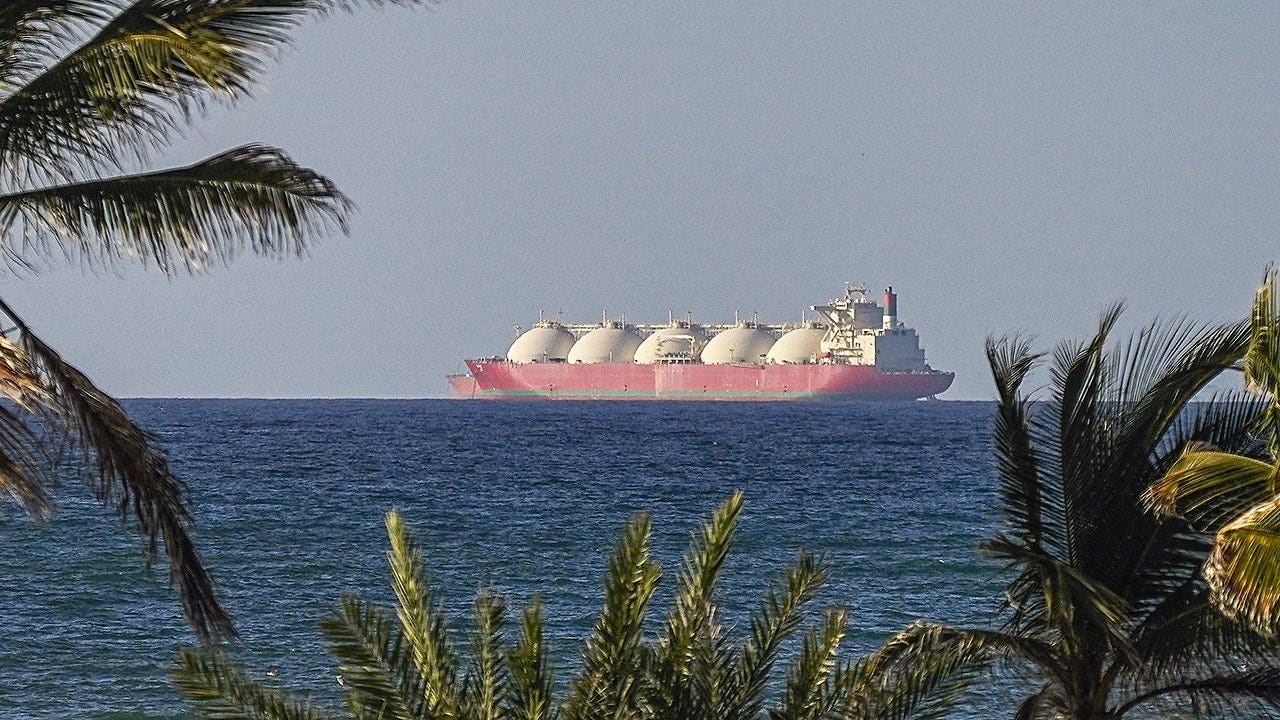
Far from the U.S. warships enforcing a blockade at the mouth of the Persian Gulf, nearly 40 million barrels of Iranian crude are sitting aboard tankers in waters near Malaysia, east of Singapore.
The cargo amounts to roughly 20 very large crude carriers’ worth of oil, a floating stockpile that could still give Tehran a way to turn crude already outside the blockade zone into cash even as the blockade sharply restricts fresh exports.
The stockpile poses a test for the Trump administration as it moves from military action and a naval blockade toward what the White House calls its financial "endgame" against Tehran.
TRUMP’S IRAN CRACKDOWN ‘SUFFOCATING’ REGIME AS OIL WELLS COULD SHUT WITHIN DAYS, BESSENT SAYS
Oil tankers and cargo ships line up in the Strait of Hormuz as seen from Khor Fakkan, United Arab Emirates, Wednesday, March 11, 2026. (AP Photo/Altaf Qadri)
Treasury Secretary Scott Bessent on Sunday launched Operation Economic Outcast, promising a "zero-leakage approach" designed to cut off Iran's remaining sources of revenue after months of pressure on its oil sales, shipping networks and financial enablers.
The blockade appears to be making it substantially harder for Iran to export new oil. China’s imports of Iranian crude have fallen to an estimated 534,000 barrels per day so far this month, down from roughly 823,000 barrels per day in July, according to provisional Kpler data reported by Reuters.
But millions of barrels that moved beyond the blockade line before it tightened remain within potential reach of buyers. Iran has an estimated 80 million barrels of crude held in floating storage, Reuters reported, with roughly half aboard vessels near Malaysia.
That leaves Washington facing a different challenge: stopping Tehran from monetizing oil the blockade did not trap.
If Iran can still turn that crude into cash, the regime can use the proceeds to pay for imports and potentially finance efforts to rebuild its military even as the blockade restricts fresh exports.
That makes the tankers near Malaysia an early test of whether the administration can deliver the "total isolation" it has promised.
CHINA ORDERS FIRMS TO IGNORE US IRAN SANCTIONS, DARING US TO ENFORCE CRACKDOWN
"The blockade as it’s currently being practiced and enforced against isn’t really stopping the flow of Iranian oil that’s already past the blockade line," Max Meizlish, a former Treasury official focused on sanctions policy and current senior fellow at the Foundation for Defense of Democracies, told Fox News Digital.
Treasury Secretary Scott Bessent speaks at a news conference, Monday, Aug. 24, 2026, at the Treasury Department in Washington. (AP Photo/Julia Demaree Nikhinson)
Iranian oil can move through ship-to-ship transfers, in which cargo is shifted from one tanker to another at sea. The practice can help obscure the oil’s origin before it reaches a buyer, often an independent Chinese refinery.
Simply having the crude outside the blockade zone does not automatically give Tehran usable revenue. Iran still needs to deliver the oil, collect payment and move the proceeds through the financial channels it has used to evade sanctions.
Treasury has said Iran primarily settles oil sales in Chinese yuan, with exchange houses and front companies helping convert those funds into currencies the regime can use. The department has also previously tied proceeds from Iranian oil sales to the Iranian government, the Islamic Revolutionary Guard Corps, weapons development and Tehran’s regional proxies.
Meizlish noted that the administration has continued sanctioning Chinese and Hong Kong trading houses, maritime service providers and other entities accused of enabling Iranian sanctions evasion but has stopped short of designating a Chinese financial institution.
The U.S. cut the bank off from access to the American financial system in 2012 over dealings with Iran, Meizlish said, but stopped short of placing it on Treasury’s Specially Designated Nationals list. He argued that formally designating the bank could put pressure on its owner, China National Petroleum Corporation, and potentially disrupt a channel used to move Iranian oil revenue.
A ship is seen passing through the Strait of Hormuz during a two-week temporary ceasefire between the United States and Iran on April 8, 2026. (Shady Alassar/Anadolu/Getty Images)
Meizlish noted that the administration has continued sanctioning Chinese and Hong Kong trading houses, maritime service providers and other entities accused of enabling Iranian sanctions evasion, but has so far stopped short of designating a Chinese financial institution.
"Secretary Bessent didn’t mention China by name," he said, adding that the issue could become a subject of higher-level engagement between Washington and Beijing.
The administration has already targeted the Malaysia route.
In April, Treasury sanctioned the Hong Kong-flagged tanker Lynn, saying the vessel conducted a ship-to-ship transfer of Iranian crude off Malaysia before delivering the cargo to China.
Meizlish said another option would be to expand pressure on shadow-fleet vessels operating near Malaysia and elsewhere in Asia in an effort to keep that oil from ultimately reaching Chinese buyers.
"The U.S. could expand the blockades in that sense by going after shadow fleet tankers, operating, for instance, off the coast of Malaysia, which is a huge hub for illicit ship-to-ship transfers," he said.
He said the sharp decline in Chinese purchases suggests the pressure campaign is having an effect, but argued that crude already aboard shadow-fleet tankers remains a potential future source of revenue for Tehran.
"There’s a lot more that we can do," Meizlish said.
"Unless we expect for this regime to ultimately fall, we should be putting a lot of pressure into interdicting this oil that’s on the market right now on shadow fleet tankers, because this money could eventually go into the regime’s pockets down the road," he said.
SIGN UP TO GET THE POLITICS NEWSLETTER
Asked whether the administration planned further action against Iranian oil cargoes and shadow-fleet vessels near Malaysia, a War Department official told Fox News Digital that U.S. forces would continue "global maritime enforcement" to disrupt illicit networks and interdict sanctioned vessels supporting Iran "wherever they operate, at the time and place of our choosing."
"Under Operation Economic Outcast, anyone foolish enough to continue doing business with the Iranian regime cannot continue to enjoy access to the global financial system," a Treasury Department spokesperson told Fox News Digital. "We will cut every remaining economic lifeline Tehran has."
Meizlish said money from oil already sitting on shadow-fleet tankers could still wind up in Tehran’s hands and help Iran rebuild military capabilities damaged in the conflict.
Going after those tankers would not be simple. The U.S. Navy is already stretched by operations in the Strait of Hormuz and elsewhere, he said, and seizing ships and their cargo can trigger legal fights over ownership, custody and what happens to the oil afterward.
CLICK HERE TO DOWNLOAD THE FOX NEWS APP
Meizlish said Congress could make it easier for the government to seize illicit cargoes. He also argued that Washington should look for ways to expand its capacity to pursue shadow-fleet vessels if the Navy cannot do it alone.
Bessent’s new campaign goes beyond oil, targeting digital assets, technology, gold, aviation and shipping. He also threatened broader secondary sanctions against entities that continue doing business with Tehran.
The drop in Chinese purchases shows Iran is having a harder time getting new oil to market. But millions of barrels are already sitting outside the blockade.
Whether Tehran can still sell that oil, and whether Washington is willing to go after it near Malaysia, will help determine how much "zero leakage" actually means.