play Live Sign upShow navigation menuplay Live Click here to searchsearchSign upANALYSISNews|US-Israel war on IranWhy Hormuz remains high risk for ships despite US claims of mine-clearingAnalysts say mine clearance alone is unlikely to make shipping ‘safe’ in the Strait of Hormuz.
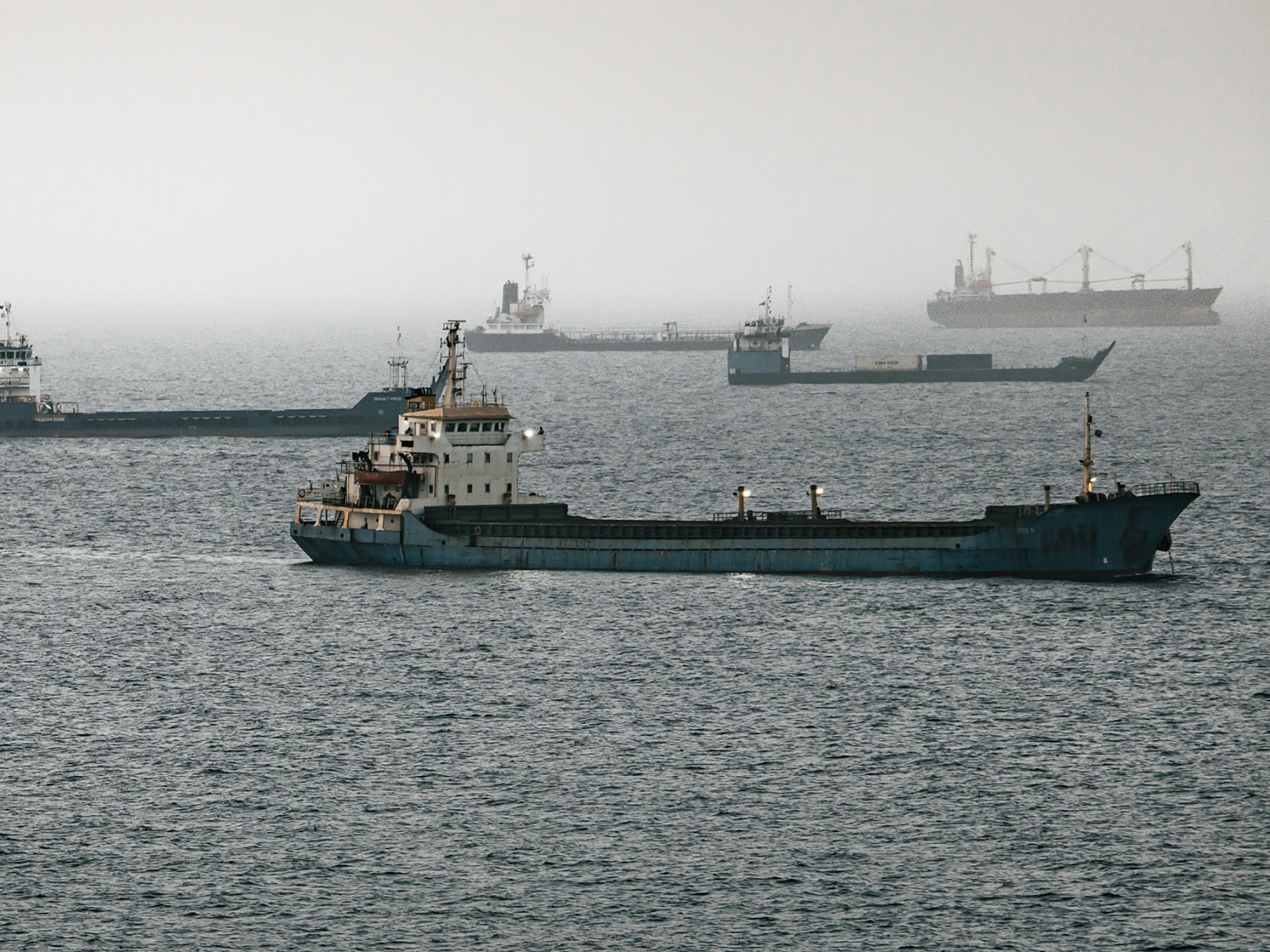
xwhatsapp-strokecopylinkgoogleAdd Al Jazeera on GoogleinfoCrude oil tankers, bulk carriers and vessels sit anchored around Qaboos Port on June 22, 2026 in Muscat, Oman [File: Elke Scholiers/Getty Images]By Caolán MageePublished On 26 Aug 202626 Aug 2026US President Donald Trump has claimed that the US Navy has removed or detonated all sea mines in the Strait of Hormuz – the vital waterway in the Gulf which Iran effectively closed after the US and Israel first launched attacks on the country nearly six months ago.
“Iran has been notified that any ship or boat placing new mines will be immediately and systematically destroyed,” Trump declared in a post on his Truth Social platform on Tuesday.
But on Wednesday, Iran’s Deputy Foreign Minister Kazem Gharibabadi said the strait remains closed, despite a temporary transit-route agreement with Oman, while he dismissed Trump’s claim that all mines had been cleared.
“No one except Iran knows the location of these mines,” Gharibabadi said, dismissing Trump’s comments as “only aimed at calming the markets” and warning that US mine-detection vessels entering the area would become “very good targets”.
Meanwhile, in addition to agreeing on a new transit route for ships crossing through the strait, Iran and Oman have agreed to implement a joint project to clear mines from the strait, according to a statement from the two countries this week.
Before the war began, approximately 130 ships passed through the strait each day, transporting about one-fifth of the world’s oil and natural gas supplies from Gulf producers.
Analysts say the US assessment that mines have been cleared from key shipping lanes is likely credible. But that does not mean Hormuz is necessarily completely mine-free – or that commercial shipping can safely return to pre-war levels.
A small number of “drifting” or uncharted mines could remain outside the heavily monitored shipping lanes, while Iran retains the ability to lay more. Experts also cautioned that mines are only one aspect of the threat facing vessels needing to pass through the strait. With no ceasefire agreement in place and the US announcing what it has described as an “economic D-Day” of sanctions against Iran, the prospect of renewed open warfare remains.
That uncertainty carries a major cost. According to a report published by S&P Global in July, since the war began, war-risk insurance costs for ships traversing the waterway have soared from between 1 and 3 percent of a ship’s hull value to between 7.5 and 10 percent of hull value.
War-risk insurance premiums are likely to remain high, experts say, leaving many shipping companies reluctant to resume transiting the Strait of Hormuz.
Weeks after the war erupted in late February, Iran’s National Defence Council said any attempt by “the enemy” to target Iranian coasts or islands would lead to the mining of the Strait of Hormuz.
For a while, it remained unclear whether Tehran was bluffing. But evidence soon emerged that mines had been deployed, although Iran has never outright confirmed this.
On May 30, Oman’s Maritime Security Centre warned shipping operators to exercise caution after an “object suspected to be a floating mine” was sighted near its side of the strait.
Three days later, US Secretary of State Marco Rubio told the Senate Foreign Relations Committee that Iran had “mined large segments of Hormuz – international waters”.
Then, in a June 11 notice, Germany’s navy, citing information received from the US and British navies, said mines had been reported at four locations around the strait, although it could not verify their positions. The UK, France and Germany all deployed warships or mine-countermeasure assets to the region amid preparations for possible mine-clearing operations.
Analysis by the Philadelphia-based Foreign Policy Research Institute (FPRI) has found that while sophisticated modern mines can cost in the tens of thousands of dollars to manufacture, imposing economic and strategic measures is likely to be far more expensive.
That is because sea mines can cause huge disruption at a relatively low cost. Suspicion that just one mine may be present in a shipping lane is enough to bring traffic to a halt.
Maritime analysts estimate Iran has a stockpile of between 2,000 and 6,000 mines, many of them domestically produced. Scott Savitz, a senior engineer at the research institute RAND, who specialises in naval operations and technologies, said Iran possesses both traditional moored mines and more sophisticated weapons.
Sea mines can include moored contact mines that detonate when a vessel strikes them, while more sophisticated “bottom mines” sit on the seabed and use sensors to trigger an explosion when they detect a ship’s magnetic or acoustic signature above.
Iran has “the classic spiky balls that everyone envisions”, Savitz said, which are mines tethered to an anchor that explode when struck by a ship. “But it also has a number of influence mines. These sit on the seabed and are harder to detect.”
Hours after Trump declared the mines cleared from Hormuz on Tuesday, the Joint Maritime Information Center said that there remained a “continued risk of drifting or uncharted mines” in and near the strait’s traffic separation scheme. The UK Maritime Trade Operations Centre said that “mine-danger areas” are still active in a post on X. So, who should shipping operators heed?
Mark Hilborne, a senior lecturer in war studies at King’s College, London, told Al Jazeera there is actually good reason to trust the US assessment.
“The claim that the mines have been cleared came from CENTCOM initially, and in this we can have strong confidence,” he said.
Hilborne added that the US Navy has detonated a large number of mines while employing space-based surveillance technology and underwater drones which scan the seabed. US forces have also destroyed several Iranian naval mine-laying vessels.
But establishing that the main shipping lanes are “clear” is not the same as guaranteeing that every mine has been removed or deactivated. “It is possible that there are a few loose mines, or ‘ghost’ mines,” Hilborne said.
“The claims that the mines have been cleared relate to those that are known to have been deployed in the key lanes,” he added, explaining that some anchored mines could have broken free.
“It is not particularly likely that there are any in the main shipping lanes due to the level of monitoring, but there may be risks beyond the lanes.”
And even if every mine currently known to the US has been destroyed, Iran retains the ability to deploy more. “So while the shipping lanes might currently be clear, that does not mean that the threat has permanently disappeared,” Hilborne said.
Mine clearance itself – known as mine countermeasures (MCM) – is a painstaking and dangerous process. Complicating that task, according to the Foreign Policy Research Institute (FPRI), is years of institutional neglect that has weakened the US Navy’s dedicated mine-countermeasure capabilities up until shortly before the war began.
Its last four Avenger-class MCM ships in Bahrain were decommissioned in September, while its MH-53E Sea Dragon helicopters – long central to airborne minesweeping operations – were phased out in August.
The US has since relied on a combination of warships and unmanned systems for its Hormuz operation. CENTCOM said two guided-missile destroyers also entered the strait as the clearance mission began in April, with underwater drones subsequently joining the effort.
Ultimately, the removal of the mines from shipping lanes addresses only part of the calculation faced by shipping operators and insurers.
A supertanker and its cargo of crude can be worth about $300m, meaning war-risk underwriters, oil companies and tanker operators are likely to demand sustained evidence that passage is safe before sending vessels back through the strait.
“Insurance premiums are likely to remain high,” Hilborne said. “These will not come down until there has been a protracted period of calm.”
“A single announcement, while welcome, will not bring an immediate drop in the rates.”
There are signs, however, that the shipping industry is adapting to new realities on the water. Alex Almeida, an analyst at maritime intelligence firm Ambrey, told Al Jazeera that risk aversion among shipping operators appeared to be easing off as alternative arrangements have been developed.
Bloomberg reported earlier this month, for example, that Abu Dhabi National Oil Co’s trading arm is offering to shuttle Iraqi oil cargoes through the Strait of Hormuz, with vessels making short trips with their transponders turned off, before transferring cargoes to other ships outside the Gulf. This development comes as the UAE announced an indefinite embargo on trade with Iran last week.
“The shuttle service run by the UAE seems to be proving its worth and offloads a lot of the insurance risk from shippers,” Almeida said, adding that Saudi Arabia was also moving into ship-to-ship transfers and introducing a government-backed insurance scheme.
Almeida said the new workarounds available to shippers are increasingly presenting Iran with a dilemma, particularly as US economic pressure increases.
“I think for the first time Iran is under more real pressure than the US,” he said. That raises the possibility that Tehran could seek another means of changing the balance of power, he added, including launching strikes on ship-to-ship transfer areas in the Gulf of Oman, which are within range of Iranian missiles and drones.
Ultimately, mine clearance is not a reliable measure of whether Hormuz is “safe”. “The issue is that mines … have never been the primary threat,” Almeida said. The greater danger to shipping along the strait remains “drones and anti-ship cruise and ballistic missiles” launched from mainland Iran.
For now, those strikes have subsided, but the underlying confrontation between Washington and Tehran remains unresolved – leaving shipowners and insurers weighing the possibility that the waterway could once again become a battlefield.
“While the shipping lanes might currently be clear, that does not mean that the threat has permanently disappeared,” Hilborne added.