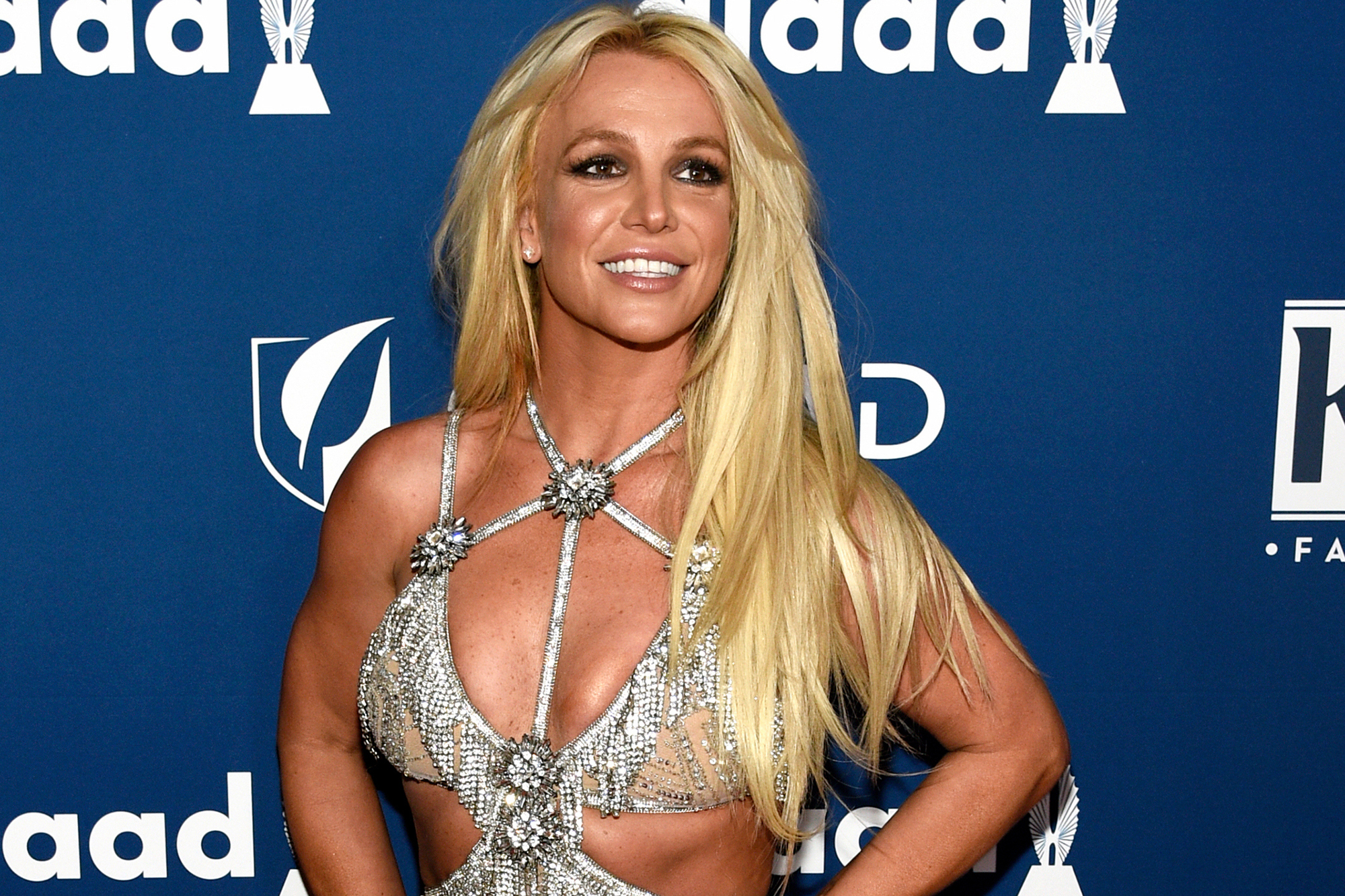
Britney Spears arrives at the 29th annual GLAAD Media Awards, April 12, 2018, in Beverly Hills, California. Chris Pizzello/Invision/AP Britney Spears was arrested late Wednesday near her Los Angeles home for allegedly driving under the influence — yet another unsettling chapter in the story of one of America’s most famous and tragic celebrities.
And the pop princess’ predicament echoes a debate unfolding on the streets of America’s largest cities.
In New York, Los Angeles, San Francisco, Portland and elsewhere, policymakers have spent years grappling with a growing population of homeless individuals who suffer from severe mental illness or addiction.
Many progressives in these deep-blue enclaves are committed to policies that put such individuals’ choices above all else: Forcing someone into treatment or mandating a shelter stay is framed as an unacceptable violation of personal autonomy.
The humane response, leftists argue, is to respect these people’s freedom — even if that freedom means sleeping on a sidewalk, declining medication or refusing help.
But others wonder: Is it compassion to leave people alone if that is what they want, even when they’re clearly incapable of caring for themselves?
No one wants to see vulnerable people stripped of their rights.
But as deaths among the homeless rise in many cities — including an estimated 22 in New York City this winter after nights spent outside in freezing temperatures — the limits of autonomy as a governing principle are becoming painfully clear.
Millions of fans have watched Spears’ life unfold in increasingly erratic bursts on social media.
For nearly 14 years, the former child star lived under a legal conservatorship that placed control of her finances, medical care and many personal decisions in the hands of court-appointed guardians, primarily her father.
The arrangement began in 2008 after a series of public breakdowns, rehab stints, hospitalizations, and the infamous moment when she shaved her head while paparazzi cameras flashed.
At first the conservatorship was a success, serving as a stabilizing force for the troubled singer.
Spears returned to performing, recorded new albums and completed a lucrative Las Vegas residency.
But after the release of the 2021 documentary “Framing Britney Spears,” many fans became convinced that the arrangement was something darker.
They launched the #Free Britney movement, an online campaign that expanded into a full-blown cultural crusade.
Activists argued Spears had been imprisoned by an abusive legal system that stripped her of autonomy and exploited her labor.
Rallies were held outside courtrooms. Celebrities joined the cause.
The pressure helped persuade a judge to terminate the conservatorship later that year.
At the time, the victory was framed as a triumph of grassroots organizing — a crowd of superfans liberated their icon.
But empathy movements, particularly those fueled by social media, thrive on moral simplicity.
They require a villain, a victim and a clear narrative about what justice demands.
In Spears’ case, the narrative framed her father as the evildoer, and her freedom as the solution.
Once victory was achieved with the conservatorship’s end, the assumption went, Spears would finally be able to reclaim her life.
Reality, as is often the case, proved more complicated.
Following this week’s arrest, Spears’ manager cut through the usual celebrity public-relations jargon with unusual candor.
“This was an unfortunate incident that is completely inexcusable,” Cade Hudson told The Post.
“Hopefully this can be the first step in long overdue change that needs to occur in Britney’s life . . . Her loved ones are going to come up with an overdue needed plan to set her up for success for well being.”
And we’re left with an uncomfortable question: What if the legal restrictions that once governed Spears’ life was not oppression after all, but protection?
She was granted her freedom, but at what cost?
True empathy for those in crisis is rarely as simple as progressives believe.
Families dealing with drug addiction and severe mental illness understand this better than anyone.
Often the most compassionate decision involves setting uncomfortable boundaries: requiring treatment, placing legal limits on financial control, or physically intervening when someone is unable to protect themselves or could endanger others.
None of those measures feel good, but the alternatives are often far worse.
Sometimes those for whom we feel the most sympathy are also those who most need structures of support — even when those structures complicate our preferred narratives about autonomy and justice.
That lesson is unfolding painfully in America’s homeless crisis.
And now, once again, it appears to be playing out in the life of Britney Spears.
Bethany Mandel writes and podcasts at The Mom Wars.