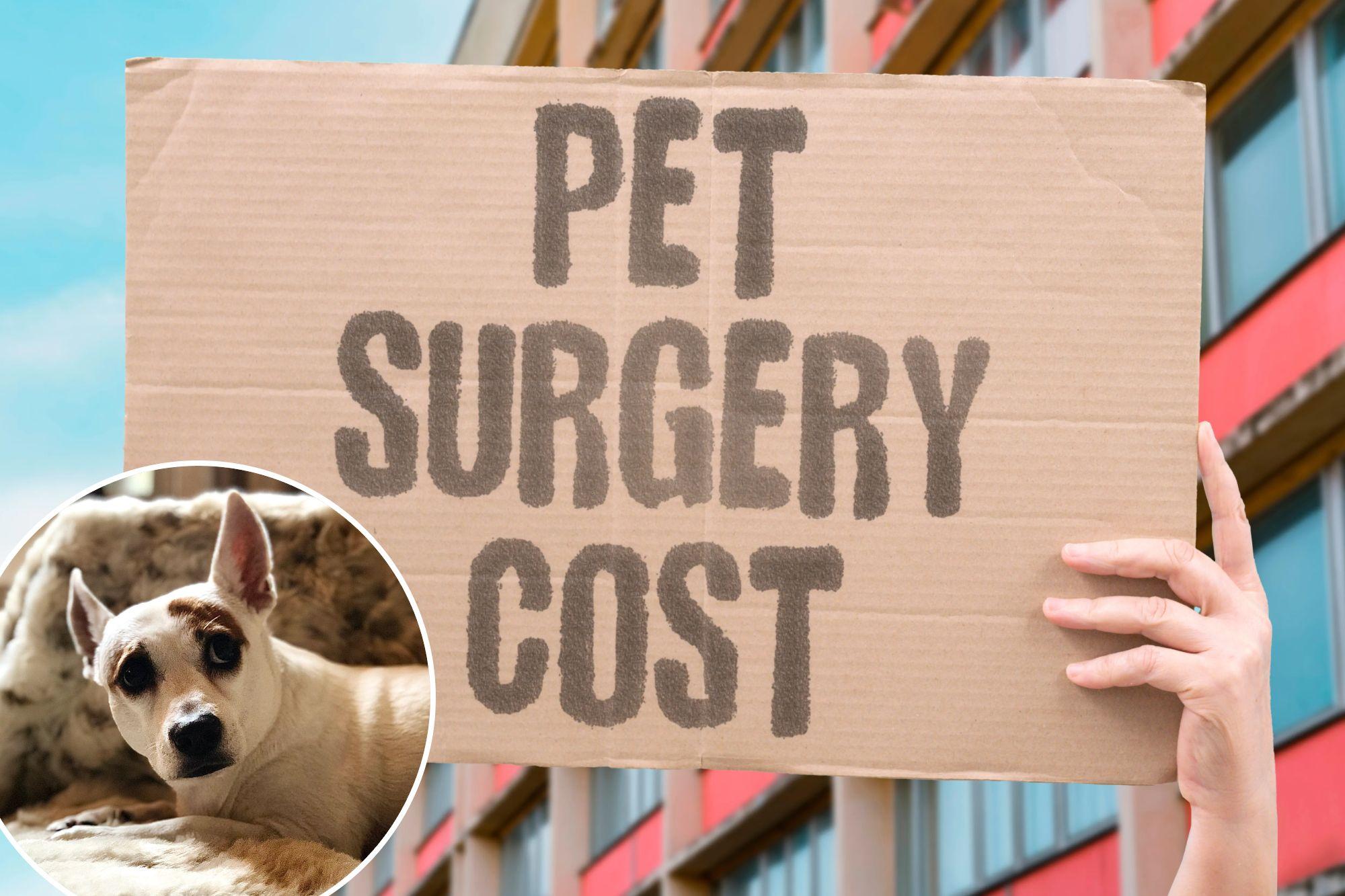
New York Post photo composite See more of our coverage in your search results.
Add The New York Post on Google We never found out what was killing Margot.
The vet laid it out in the spring of 2023. The seizures were either a brain tumor or her liver failing, and the only way to know which was to pay for an extensive workup that would tell us. She was nearly 17 years old (that’s 119 in dog years).
The answer wasn’t going to change the ending, and the number in front of us was real, so we skipped it and put the money toward keeping her comfortable and happy instead. It didn’t feel like it at the time, but that was a financial breaking point. It felt like mercy, and it’s a lot easier to live with when you call it that.
Three out of four American pet owners can name their version of that number. They just hate saying it out loud.
In fact, Healthy Paws Pet Insurance put it to 1,542 dog and cat owners this spring, and 76% admitted there’s a cost at which they’d decline a treatment their vet recommended. For about a third, the line sits below $1,000.
Margot was a Jack Russell Bull Terrier mix my partner rescued after she was found in a dumpster in Hollywood, Florida. After nearly 17 good years, she lived her final days in our home upstate, enjoying the first real backyard she could call her own.
It’s the number where what the vet recommends and what the account can absorb stop agreeing.
The same survey found 77% of owners say their pet is “like a child” to them. Put that next to the 76% with a walk-away price, and you come to an uncomfortable realization. That Venn diagram might as well be a circle.
Source: Healthy Paws Pet Insurance survey of 1,542 U.S. dog and cat owners, conducted by Morning Consult April 20-23, 2026. Margin of error: plus or minus 2 points.
More than half of owners said an unplanned bill falling under $1,000 would cause significant financial stress. Nearly one in five said any surprise vet expense, of any size, would strain them.
This isn’t only a low-income story either. Among households pulling in more than $100,000 a year, 44% said a bill under $2,000 would do it.
Debt fills the gap. About 29% of owners who reached for a credit card or other financing said paying it back took seven months or longer, or that they’re still at it.
Because everything, both inside the exam room and out, got expensive all at once.
Veterinary prices jumped roughly 43% between January 2021 and January 2026, per Labor Department data cited in the Healthy Paws cost research.
Grooming, boarding and the rest of the service category rose 38% over the same period of time. Routine care for one animal now averages $4,272 a year, which is why the true cost of being a pet parent easily clears $50,000 across a normal lifespan today.
That paste is the reason Mingo isn’t on lifelong seizure meds. It’s not a luxury; its price growth is just outpacing my salary growth.
Three dogs at those prices, in Manhattan, with a groomer and a vet and a bag of food that costs what a bag of food costs now? I’m not sure we pull it off.
Of the 5.8 million cats and dogs entered shelters and rescues across America in 2025, owner surrenders rose to 30% from 29% a year earlier, according to Shelter Animals Count. That’s 10,000 more dogs and 34,000 more cats coming through the door than in 2024.
Having or not having pet insurance changes the conversation, and the conversation is most of it.
Insured owners were far more likely to green-light every treatment their vet recommended regardless of cost, 47% versus 32% among owners overall. More than half said their policy reimbursed at least half of a major expense. On a $5,000 emergency, 70% reimbursement drops the out-of-pocket to $1,675.
Not free money. The North American Pet Health Insurance Association (NAPHIA) 2026 State of the Industry Report puts average premiums near $70 a month for dogs and $36 for cats, with deductibles and copays stacked on top.
Here’s what money couldn’t do for us. Margot died at home, on her favorite bed, with a vet who came to our home.
Gloria, my mini schnauzer, went into congestive heart failure on Christmas Day at my parents’ house and spent the following two days in an oxygen chamber while the vet tried to get her strong enough to come back to New York. She never got strong enough. We said goodbye on Dec. 27, my partner’s birthday, in a room neither of us had ever been in. That bill ran close to $3,000, and I’d pay it again tomorrow.
Same two dogs. Same two parents. Completely different last day.
So my regret is specific, and it isn’t about the $3,000. Insurance works best if you buy it on day one, before anything’s wrong, which is exactly why it should be the first thing you do with a new pet.
We never got it for Margot, Gloria or Mingo. By the time each of them needed it, everything they had was pre-existing. Two friends signed their rescue chihuahua up with Healthy Paws the week they brought her home, and said it was the best thing they did.
Price the whole animal, not the adoption fee. Food, preventatives, dental, meds and the emergency that hasn’t happened yet. We say this is a commitment for the rest of their lives, but you really have to understand what that really means.
Buy coverage while the pet is young. Premiums are lower, and nothing’s on their chart.
Skipping insurance anyway? Open a separate account and fund it every month. A plan you never touch beats a decision made in a hallway.
Ask your vet practice about payment plans now, while nothing is wrong. This can dramatically affect your decision if you know the details up front.
Stay current on preventive care. Dental and vaccines are cheap compared to what the fixes cost.
Mingo sleeps all day, has zero teeth and eats mushy food with gravy toppers like the little prince he is. He’s the last of the three. Whenever the next one picks us, the policy gets bought before the first toy.
Routine expenses for one cat or dog average $4,272 a year, per research from Healthy Paws Pet Insurance. Across a 12-year lifespan, that’s more than $50,000, before a single emergency.
About 76% say they have a threshold. Roughly one in three put it under $1,000, and more than half say a surprise bill under $1,000 would cause significant financial stress.
Most plans reimburse a percentage of covered accident and illness costs after a deductible. On a $5,000 emergency, 70% reimbursement cuts the out-of-pocket to $1,675. More than half of insured owners surveyed said their plan covered at least half of a major expense.
Day one — no question. Coverage is built around conditions that haven’t happened yet, so anything already diagnosed is typically excluded as pre-existing. Waiting until something is wrong is how people end up paying full freight.
It depends on what’s already on the chart. A senior with existing chronic conditions won’t get those covered, and premiums climb with age. A dedicated savings account may do more for an older pet.
For over 200 years, the New York Post has been America’s go-to source for bold news, engaging stories, in-depth reporting, and now, insightful shopping guidance. We’re not just thorough reporters – we sift through mountains of information, test and compare products, and consult experts on any topics we aren’t already schooled specialists in to deliver useful, realistic product recommendations based on our extensive and hands-on analysis. Here at The Post, we’re known for being brutally honest – we clearly label partnership content, and whether we receive anything from affiliate links, so you always know where we stand. We routinely update content to reflect current research and expert advice, provide context (and wit) and ensure our links work. Please note that deals can expire, and all prices are subject to change.
Looking for a headline-worthy haul? Keep shopping Post Wanted.