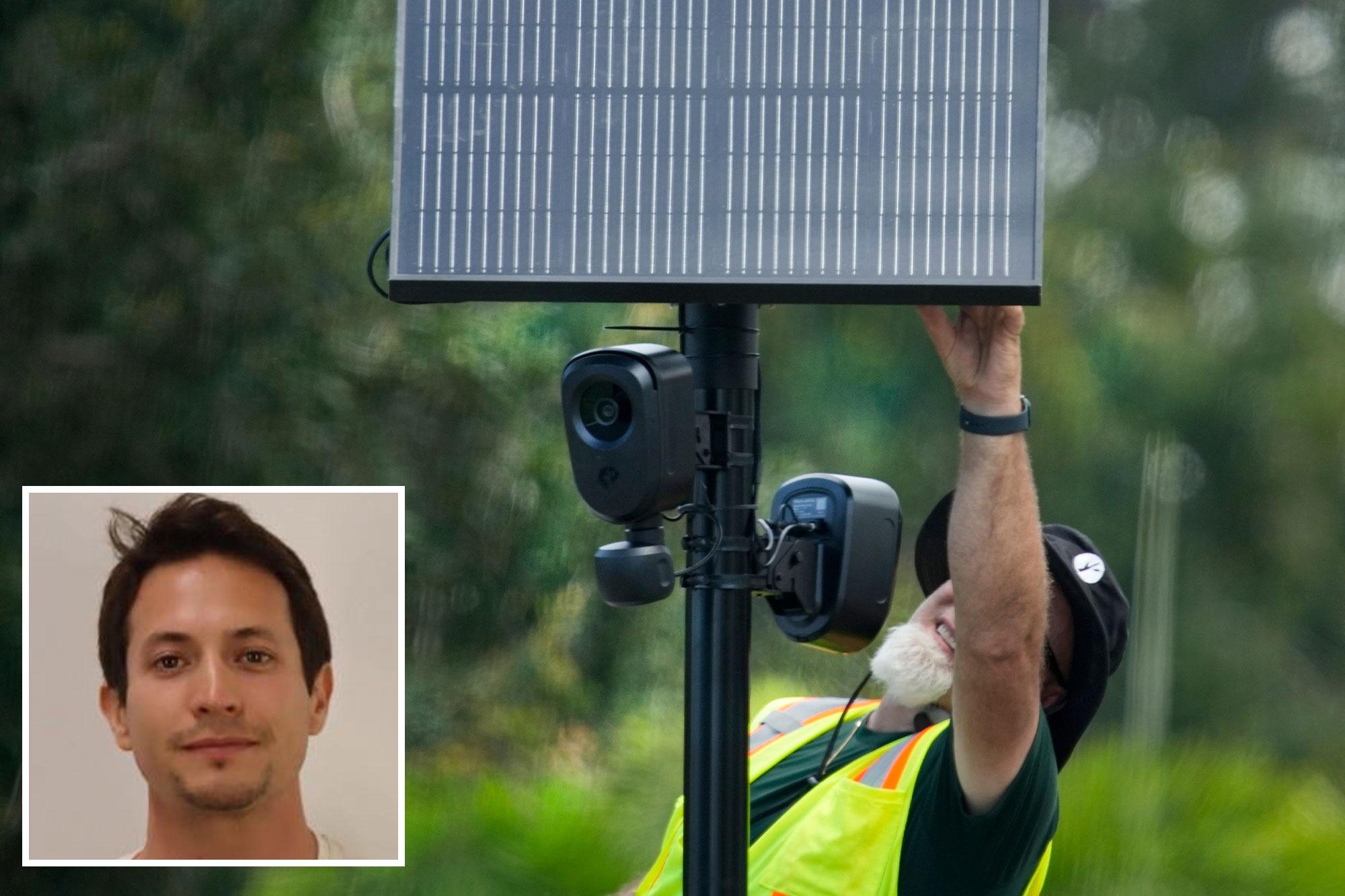
Add The California Post on Google Riverside County Sheriff’s deputies uncovered shocking pieces of evidence while searching the home of a suspect accused of assaulting a worker replacing a license plate reader in Palm Desert.
Investigators say Nathan Ceballos, 31, attacked a contractor hired by Flock Safety to replace an automatic license plate reader camera for the city of Palm Desert that had previously been vandalized.
During the investigation, deputies located evidence of the attack and additional vandalism to Flock Safety cameras. They also found multiple sexually intrusive videos of teenage girls recorded in public and private spaces.
The victim of the alleged assault told police that Ceballos approached him while he was working on the camera and threatened to stab him, slashing all four tires on his utility vehicle and damaging the new camera.
Hours after the alleged attack, deputies spotted Ceballos driving his vehicle and pulled him over, taking him into custody without incident.
Deputies then served a search warrant at Ceballos’ residence — where they say they found far more than evidence tied to the alleged assault.
Ceballos was booked into the John Benoit Detention Center on suspicion of assault with a deadly weapon, criminal threats and multiple counts of felony vandalism. He remained jailed Tuesday.
Deputies are continuing to investigate the alleged crimes and are working to identify the victims captured in the videos found on Ceballos’ computer.
Flock’s automatic license plate readers are either mounted on police vehicles or affixed to poles or portable trailers. They automatically photograph and convert license plate numbers to text, recording the exact location, date, and time.
Police say the technology can help solve crimes and track down fugitives, but Flock has faced mounting controversy over the rapidly expanding surveillance system.
The Los Angeles Police Department suspended its deal with the company in July amid a dispute over who controls the footage.
Flock has been accused by left-wing groups of sharing data with ICE to help track down illegal immigrants, although the company says it does not share customer data with any entity, federal or otherwise, without permission.
Cities in Texas, Illinois, Wisconsin and Michigan have severed ties with Flock, while departments in Georgia and Oklahoma continue to use it.
A spokeswoman for the Atlanta-based company didn’t respond to a request for comment.
Flock Safety CEO Garrett Langley told The California Post this month that the company is slashing how long its cameras store data from 30 days to just seven — while forcing cops to justify every search — amid mounting criticism from privacy advocates and politicians.
Langley said the overhaul amounts to the toughest license-plate-reader policy in the country. About 90% of investigative searches on Flock’s system already occur within seven days, Langley said.
“I’ve realized communities need my help,” Langley said, explaining the company’s decision to move beyond simply giving police departments privacy tools and instead make some safeguards mandatory.