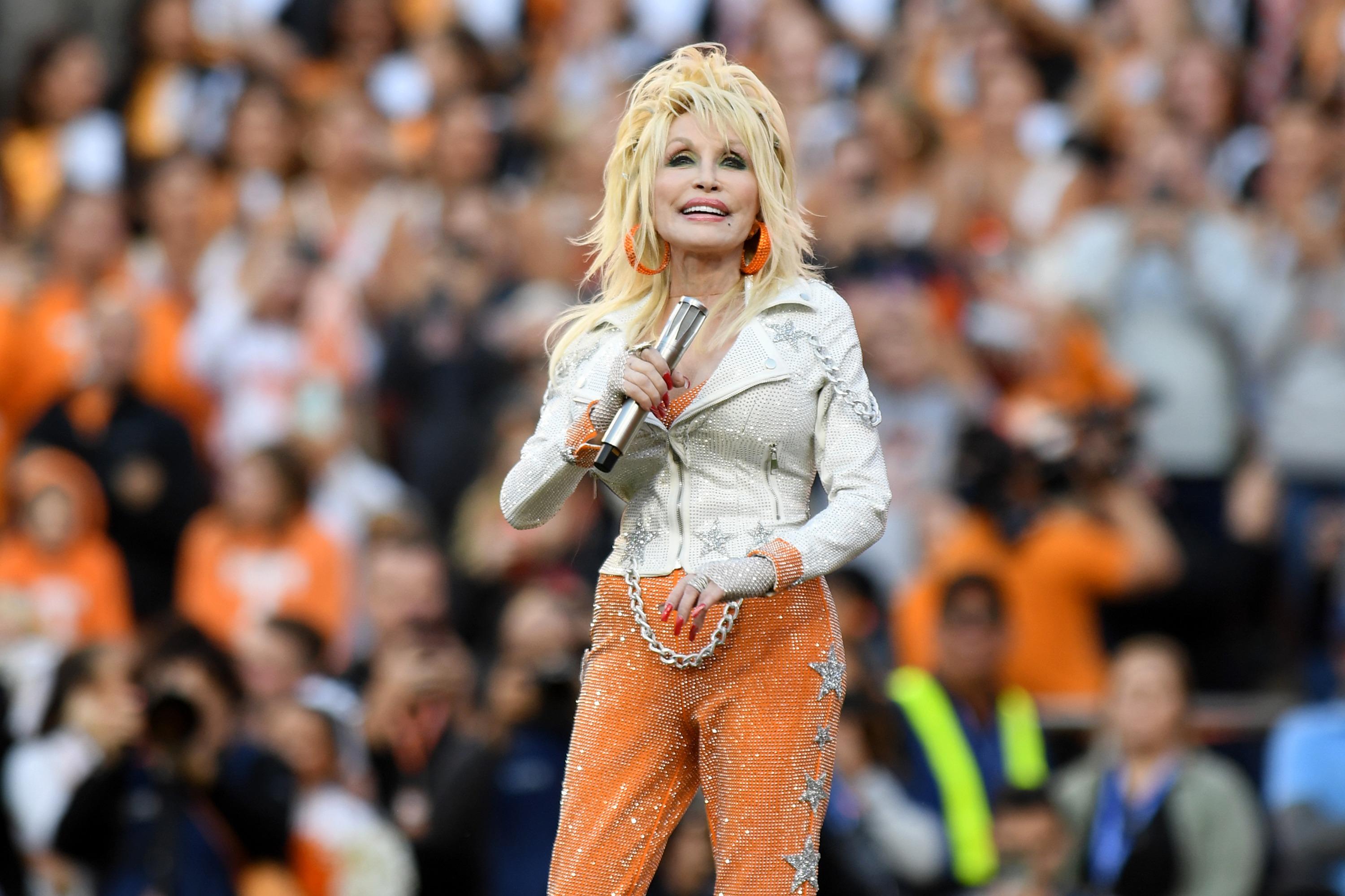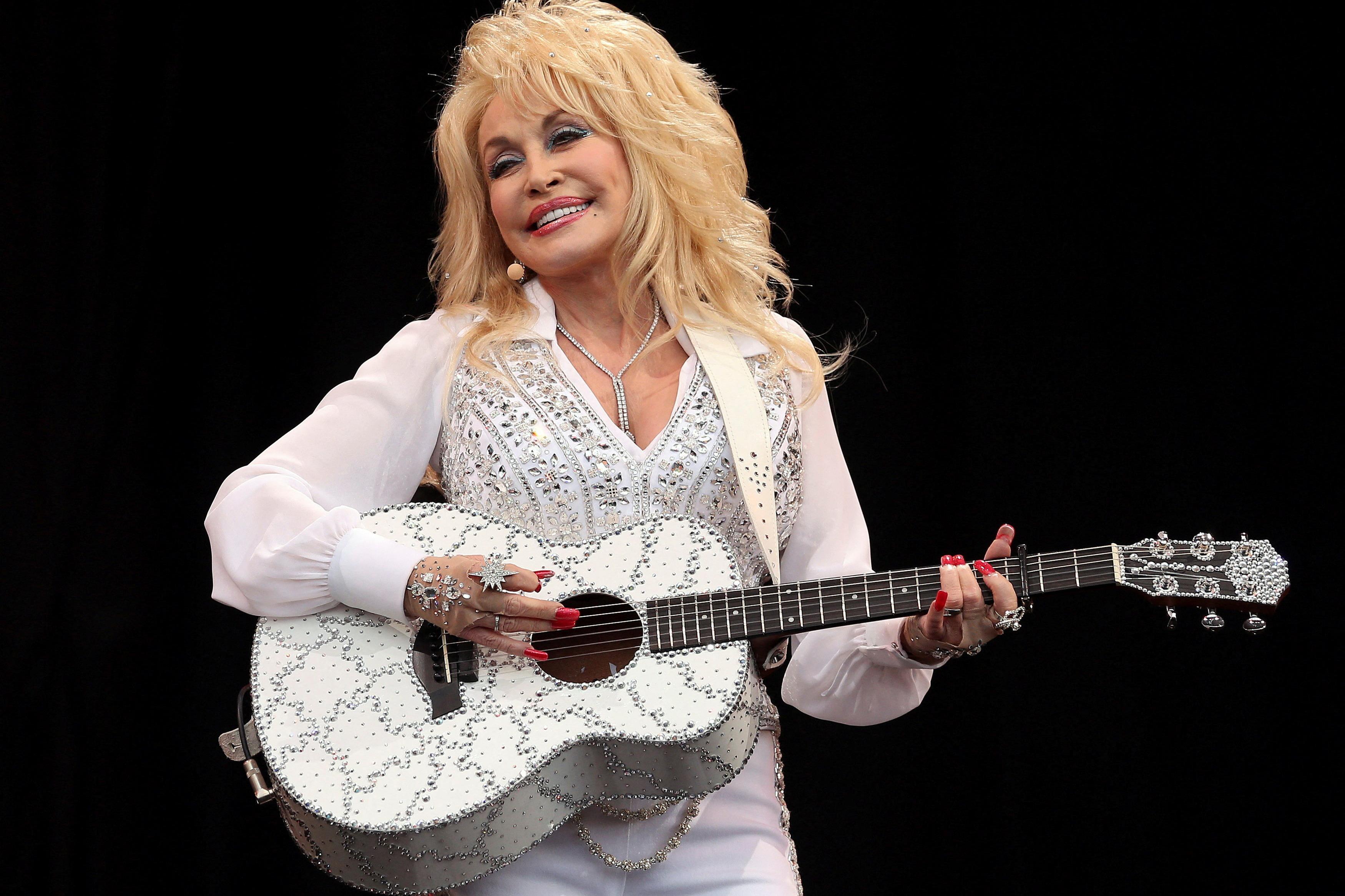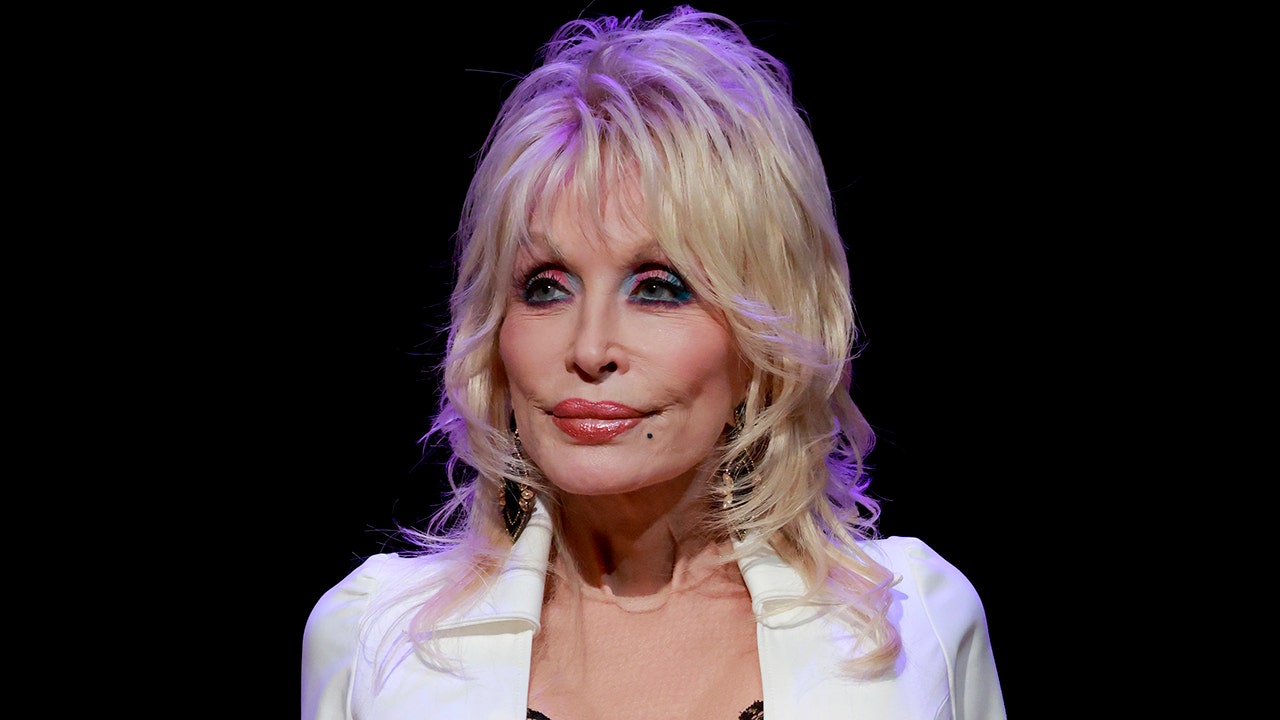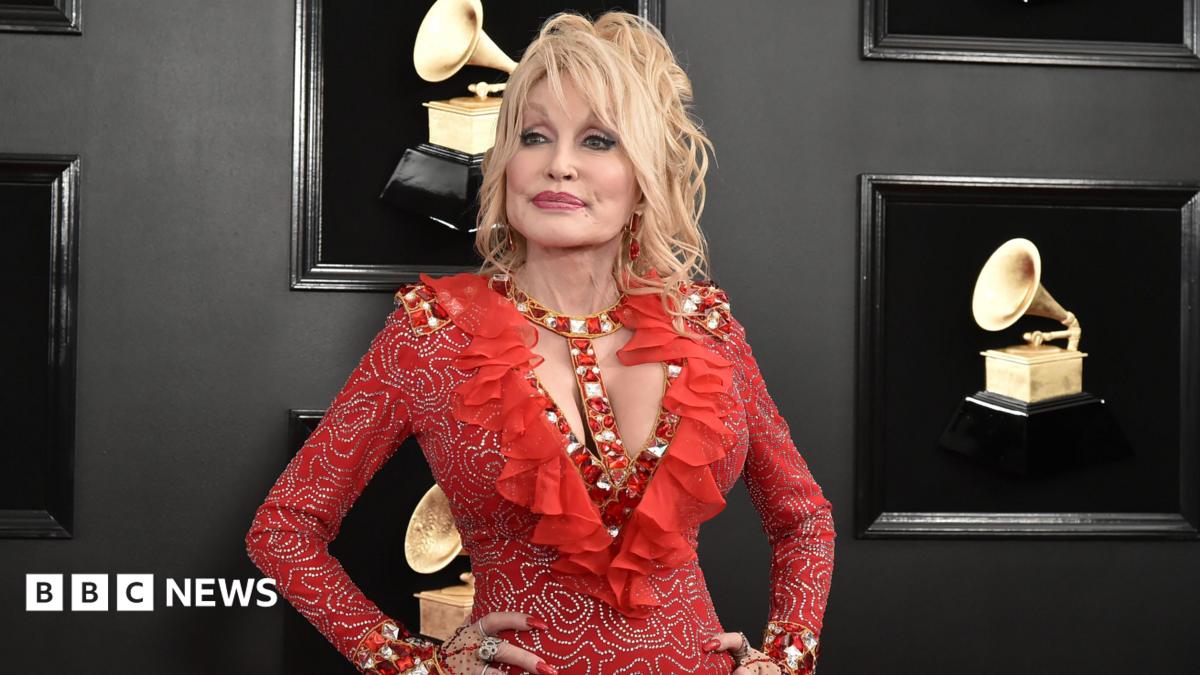
Image source, David Crotty/Patrick McMullan via Getty ImagesByTiffany Wertheimer and Emma PetriePublished4 minutes agoDolly Parton, the country singer from the Smoky Mountains of Tennessee, will be remembered for her songs that told beautiful stories so honestly, such as Coat of Many Colours, Jolene and I Will Always Love You.
In a seven-decade career, Parton won 10 Grammy awards, sold more than 100 million records worldwide, and wrote in excess of 3,000 songs.
Parton took her writing seriously, and considered herself a songwriter over everything else. "It's my way of expressing myself," she said. "It's my therapy.”
She was also a savvy businesswoman who wasn't afraid to make tough decisions. Armed with a quick wit and southern charm, she took control of her show business career that spanned more than 60 years.
Dolly Rebecca Parton was born in 1946, the fourth of 12 children, into a poor farming family who lived in a one bedroom cabin in Tennessee.
Her father, Robert Lee Parton, was a tobacco farmer and paid a missionary a sack of cornmeal for delivering her.
There was already music in the family - her mother, Avie Lee, sung folk songs all the time and her aunt played the guitar and wrote songs. During some of Parton's earliest performances, her uncle, Bill Owens, accompanied her on the guitar - formative years for the future music legend.
From the age of six, she sang in the local church where her grandfather was the pastor, and was performing on her local TV station by the time she was a teenager.
In 1959, when she was 13 years old, Parton performed with Uncle Bill at the Grand Ole Opry in Nashville - a live broadcast that is regarded as country music's biggest stage.
She was introduced by Johnny Cash and received three encores.
During her teenage years, Parton began to model herself on a local character who was known as the “town tramp”.
The lady wore bright red nail polish, low-cut tops and high heels - young Dolly thought she was beautiful.
When people said to her: “She ain’t nothing but trash”, Parton would reply: "Well, that’s what I’m gonna be when I grow up”.
Parton sang “I’m just a backwards Barbie / too much make-up, too much hair”, but her image was both a coat of armour and an astute disguise that helped get her noticed in show business.
She would get ahead of the jokes by making them first, and had a quick and simple response for anyone who suggested she should tone it down: "Go to hell."
Image source, Getty Images/CBS photo ArchiveImage caption, Parton said she felt better in bright colours and shiny clothes on stage: "You'd be surprised how much it costs to look this cheap"
After graduating from high school in 1964, she moved to Nashville to launch her singing career and met her future husband, Carl Dean, on her very first day.
They married two years later and remained together until his death in 2025.
In Nashville, Parton's singing caught the eye of country performer Porter Wagoner, who hired her to perform on his television programme.
Over the next seven years, the pair became one of country music's most popular duos, releasing so many duets that many fans assumed they were a couple.
But their relationship was a complicated one, and as Parton's solo career started to rise, so did tensions behind the scenes.
Writing in her book Star of the Show: My Life on Stage, Parton said Wagoner saw her success away from his show as a "threat".
While travelling with Wagoner on a tour bus in 1969, Parton wrote Coat of Many Colours, a beautifully emotive tale of how she grew up poor, but rich with love.
Scrawled on the back of one of Wagoner's dry cleaning receipts, it was rated by Rolling Stone magazine, external as her second best-ever song. Years later, Parton named her own children's book Coat of Many Colours, and it was the name of a 2015 TV movie based on her life.
"It's a song that's just stood by me... it's created a life of many colours for me," she said.
Despite being unable to read sheet music, Parton played several instruments including the banjo, harp, piano and saxophone.
She had her first number one hit - and first Grammy nomination - with the song Joshua in 1971 and finally left The Porter Wagoner Show in 1974 to concentrate on her solo career.
To say goodbye to him, she wrote I Will Always Love You, a song that many think is about two lovers parting ways.
"That's the prettiest song I ever heard," Wagoner cried when he first heard it, her website says.
The same year, Elvis Presley was set to record a cover of the song, but Parton pulled the deal when his manager demanded half of the songwriting rights.
She cried all night at the difficult decision, and Priscilla Presley later told her that Elvis sang the song to her during their divorce.
In 1992, Whitney Houston transformed it into a now-iconic power ballad.
Parton said she was driving when she first heard the cover and had to pull over: “When I heard her go from the a cappella into the music part, I honestly thought I was going to have a heart attack, it was one of the most overwhelming things.”
Houston's cover of Parton's “sad little country song” was one of the proudest moments of her life, she said.
Parton re-recorded the song for The best Little Whorehouse in Texas, a 1982 film in which she starred in and was nominated for a Golden Globe for best actress.
Another of her most famous songs was released in 1974 - Jolene.
Showing her aching vulnerability, it's about a bank clerk with flaming locks of auburn hair who flirted with her husband.
"Jolene, I'm begging of you, please don't take my man," she pleads.
Parton said her husband, who was notoriously private, was a bit embarrassed by the song. But it was nothing serious - just a running joke between them: "I was saying, 'Hell, you're spending a lot of time at the bank. I don't believe we've got that kind of money.'"
The song has been covered by many artists including The White Stripes, Miley Cyrus and Beyoncé, who changed up to the lyrics to the more ominous: "I'm warning you, don't come for my man."
In the years to come, Dolly Parton's success only grew, with more hits, nominations and awards - she won her first Grammy in 1978 for Here You Come Again.
Image source, Richard McCaffrey/Michael Ochs ArchiveImage caption, "If you see someone without a smile, give 'em one of yours": Parton performing in California in 1978
It was the theme song that Dolly Parton wrote for the 1980 movie 9 to 5 that fully propelled her to stardom.
Actress Jane Fonda, who produced and starred in the film about women being discriminated against in the workplace, made a deal with Parton - she'd star in the film if she could also write the theme song.
Realising her nails clicking together sounded like a typewriter, she wrote 9 to 5 while waiting around on set. Fonda said she realised straight away that it wasn't just a theme song - it was an anthem.
The film was a big success at the box office and the song won several awards, including a Golden Globe.
Parton was a successful and shrewd businesswoman, and in 2022 was listed by Forbes as one of America's richest self-made women, external.
"I look like a woman but I think like a man. I've done business with men who think I'm as silly as I look. By the time they realise I'm not, I've got the money and gone," she once said.
Her physical appearance - the costumes, wigs, long painted nails and high heels - were merely a facade of a stereotypical “dumb blonde”. But she always said she knew she wasn't dumb "and I also know that I'm not blonde".
She had her own record label, Dolly Records, and co-owned The Dollywood Company, which manages entertainment venues, a theme park, water park and a resort.
In 1986, she opened her Dollywood amusement park in the foothills of her beloved Smoky Mountains. As well as rollercoasters, it is home to the largest sanctuary for non-releasable bald eagles in the world. Its rehabilitation and breeding work has won awards and in 2007, the bald eagle was removed from the endangered species list.
Image source, Ron Galella, Ltd./Ron Galella Collection via Getty ImagesImage caption, Parton, pictured at Dollywood in 1993, said she wanted to build a place where the culture of the Smoky Mountains could be celebrated
Despite her wealth and success, Parton remained humble and supported the communities where she grew up.
Inspired by her father who couldn’t read or write, she launched the Imagination Library in 1999, which gave free books to children in Tennessee. It has since expanded to Australia, the UK, Ireland and Canada, sending out millions of free books every year.
Her non-profit organisation, The Dollywood Foundation, has funded scholarships, hospitals and donated to flood and wildfire victims.
In 2020, as the Covid-19 pandemic griped the world, Parton donated $1m (£716,000) to the Vanderbilt University Medical Centre which helped to fund the Moderna vaccine.
How Dolly Parton became the world’s best-loved celebrity
In later years, Parton had to postpone or cancel several shows for health treatment.
In May 2026, she postponed an upcoming Las Vegas residency because of treatment for kidney stones, saying it would take some time to heal and be "stage-performance ready".
"I can't be dizzy carrying around banjos, guitars and such on 5-inch heels - and you know that I'm going to be wearing them," she said in a video message. "Not to mention, all those heavy rhinestone outfits, the big hair, my big... uh, personality," she joked.
Image source, Brandon Sloter/Image Of Sport/Getty ImagesImage caption, Parton amazed fans when she performed at the NFL Thanksgiving half-time show in 2023, aged 77
Parton spoke graciously throughout her career with humour and intelligence. She steered clear of politics, saying she didn't want to alienate half her audience.
She was a courageous and talented trailblazer for country music at a time when women were not taken seriously in the industry, especially as solo artists.
Parton said she hoped to be remembered for her songwriting and as somebody who took her work seriously, but not herself.
She once offered this advice: “Never ignore your roots, your home, or your hair."
It's guidance that she stayed true to throughout her life.