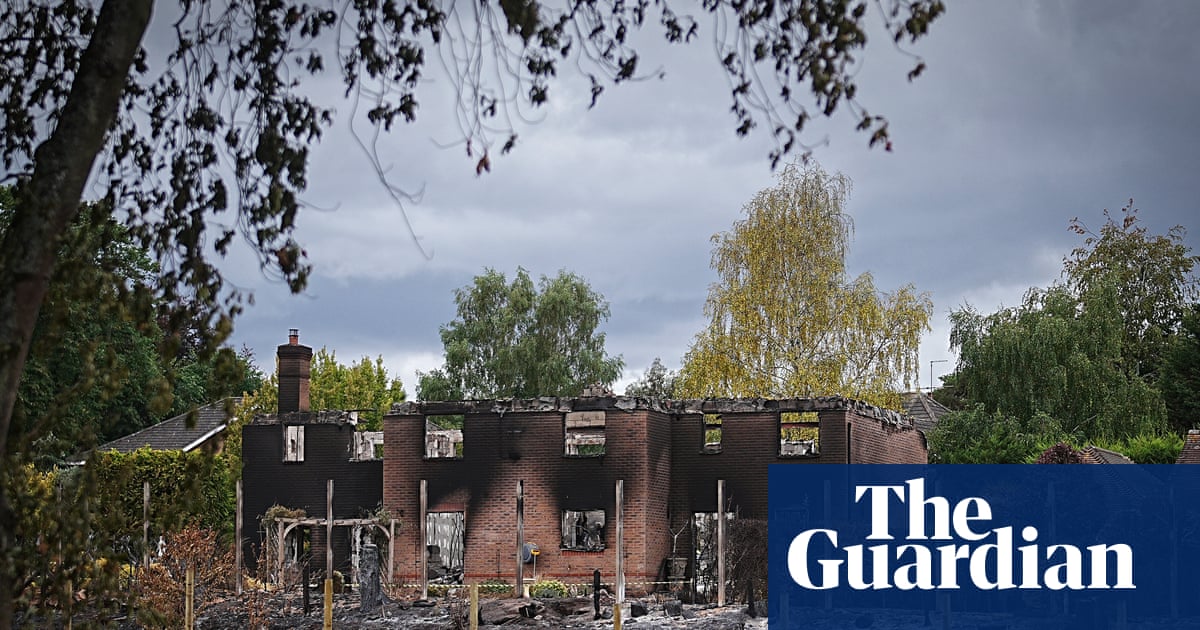
The fire-gutted remains of homes on Quarry Park Road on 17 August in Stourbridge, England after a wildfire that broke out across the West Midlands. Photograph: Christopher Furlong/Getty ImagesView image in fullscreenThe fire-gutted remains of homes on Quarry Park Road on 17 August in Stourbridge, England after a wildfire that broke out across the West Midlands. Photograph: Christopher Furlong/Getty ImagesUK to warn citizens to stock up on food amid threat from climate crisis and hostile statesGovernment resilience campaign aims to ensure people can cope in a national disaster, in order to free resources for most vulnerable
UK citizens will be told to stock up on tinned food and take steps to ensure they are prepared for national emergencies as part of a new government campaign to improve the nation’s resilience.
The new campaign from the Cabinet Office will set out ways people can prepare for extreme weather events and potential attacks from hostile states, including stocking up on bottled water, sources told the Guardian.
The aim will be to ensure most households have basic supplies and knowledge about how to cope in a crisis, in order to free up immediate government resources for the most vulnerable.
Read morePlanning for a number of disasters, from cyber-attacks to extreme heat and flooding, has been stepped up over the past few months after a number of incidents both in the UK and across the world. The plans, first reported by the FT, also include internal reassessment of government preparations for a military attack by a hostile state affecting Britain.
The Cabinet Office minister Louise Haigh, who is Andy Burnham’s de-facto deputy, is also understood to be coordinating crisis planning across departments in Whitehall to allow swifter assistance to affected communities.
View image in fullscreenDrought is predicted to cause food shortages. Photograph: Maureen McLean/ShutterstockDuring his campaign to be Makerfield MP, Burnham spoke repeatedly about the threat of flooding to communities and the inadequacy of government planning and response.
Burnham convened a Cobra meeting earlier this month to coordinate the government’s response to the heatwave, amid a threat of spreading wildfires and drought warnings.
The government was criticised, however, for its decision to send an emergency phone alert warning of wildfires last week, which charities and domestic abuse survivors said risked the safety of people who might be hiding secret phones.
Haigh’s predecessor, Darren Jones, had said that work was being undertaken on the so-called “war book” on how international conflict might affect the UK.
The Cabinet Office said: “Safeguarding national security is the first priority of any government.
“We’re committed to raising awareness of simple steps households can take to make themselves more resilient, as well as driving forward the home defence programme to build our country’s preparedness for various threats.”
Burnham’s predecessor, Keir Starmer, warned shortly before he left office that Russia could attack a Nato country within four years, according to western intelligence assessments.
View image in fullscreenVisiting Ukraine for a meeting with Volodymyr Zelenskyy on Monday, Burnham accused the Kremlin of “outrageous threats” against the UK. Photograph: Ukrainian Presidency/SIPA/ShutterstockVisiting Ukraine on Monday, Burnham accused the Kremlin of “outrageous threats” against the UK as Russia warned of an escalation in tensions after the UK’s decision to present Ukraine with newly declassified blueprints to allow Kyiv to improve its production of long-range missiles.
Vladimir Putin’s spokesperson, Dmitry Peskov, said the exchange would add “fuel to the fire” and scupper any moves towards a peace deal. “Britain is involved in this war on the side of the Kyiv regime,” Peskov said.
“Britain methodically and regularly adds fuel to the fire, and methodically and regularly hatches schemes to prevent even the slightest progress in the peaceful settlement process.”
Last week hackers linked to Iran were blamed for a cyber-attack that caused a British power plant to be temporarily shut down.
The incident involved a small-scale energy generator, according to the UK government, which said that at no point was there a risk to the wider energy system, but it marks an apparent escalation in the threat posed by Iran to UK infrastructure.