play Live Sign upShow navigation menuplay Live Click here to searchsearchSign upNewsRwanda accuses DR Congo of supporting an armed group on its soilRwanda says FDLR threat justifies its continued involvement in eastern DRC, as efforts to verify a ceasefire advance.
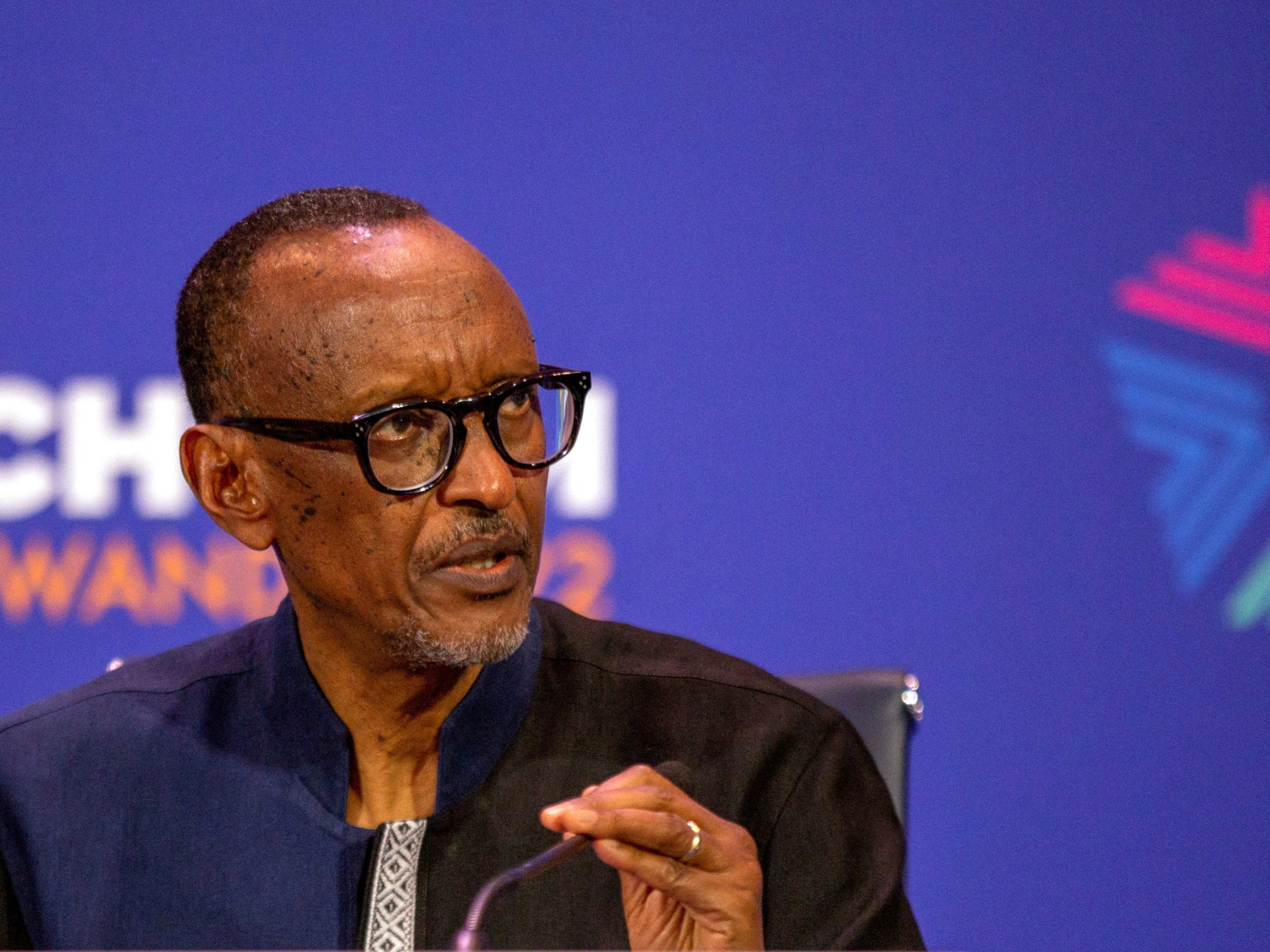
xwhatsapp-strokecopylinkgoogleAdd Al Jazeera on GoogleinfoRwandan President Paul Kagame reiterated Rwanda’s security concerns over the presence of the FDLR in the eastern Democratic Republic of the Congo, during a news conference in Kigali [Reuters]By Layth MushtaqPublished On 25 Aug 202625 Aug 2026Rwandan President Paul Kagame has again blamed the Democratic Republic of the Congo (DRC) for the continuing conflict in the country’s east, linking Rwanda’s involvement in the conflict to the continued presence of the Democratic Forces for the Liberation of Rwanda (FDLR), a Rwandan Hutu armed group, on Congolese territory. He said Rwanda would continue to take whatever measures it considers necessary to protect its security.
Speaking at a news conference in Kigali, Kagame reiterated that the FDLR’s presence in the DRC is Rwanda’s main concern, adding that “if this problem is not resolved, it is natural for Rwanda to remain involved” in the conflict.
Kigali accuses the FDLR, which was formed from remnants of the Rwandan army accused of involvement in the genocide against the Tutsi, of threatening Rwanda’s security from Congolese territory.
Kagame said Rwanda has information that Congolese authorities “are arming the FDLR and integrating its members into their own forces”.
Kinshasa, meanwhile, accuses Kigali of supporting the M23 movement, an armed group in eastern DRC, and of sending Rwandan troops into Congolese territory. Rwanda denies the allegations.
Kagame told reporters that Kigali’s evidence includes testimony from former FDLR members. Some returned voluntarily to Rwanda, while others were captured. He said they all “tell the same story” about the support the FDLR receives from Congolese authorities.
The Rwandan president said United States and European missions, as well as United Nations missions, had visited the Mutobo centre and heard testimony from the fighters themselves.
The Mutobo Demobilisation and Reintegration Centre is located near Musanze in northern Rwanda and operates under the supervision of Rwanda’s Demobilisation and Reintegration Commission.
The centre’s task is to disarm former fighters from armed groups arriving from eastern DRC, particularly the FDLR, and prepare them to return to civilian life through training and financial support.
Kagame also criticised calls for Rwanda to stay out of the crisis in eastern DRC, saying those making such calls should first address the armed group.
“Remove this problem, and then see whether Rwanda is using it as an excuse or not,” he said.
Kagame stressed that protecting Rwanda’s security remains a non-negotiable priority.
“The right thing to do is to protect ourselves, and we will do so without fear, day or night and at any time,” he said.
Kagame also said Rwanda seeks to work with countries in the region to achieve peace, adding that Rwanda is “ready to fight for it” and wants to work with others to that end.
On March 18, 2025, Qatar’s Emir Sheikh Tamim bin Hamad Al Thani brought Kagame and DRC President Felix Tshisekedi together in a meeting described as historic, paving the way for two peace tracks: One between Rwanda and the DRC and another between the parties to the conflict in the DRC.
On June 27, 2025, Rwanda and the DRC signed a peace agreement in Washington that included provisions to end support for armed groups, respect sovereignty, and coordinate security efforts, as well as plans for regional economic integration.
Alongside the Washington track, Qatar hosted a series of talks between the parties to the conflict in the DRC that resulted in the signing of the Doha Framework Agreement for Peace on November 15, 2025, between the DRC government and the M23 movement.
The agreement contains eight implementation protocols aimed at protecting civilians, restoring state authority, and strengthening national reconciliation and economic and social development, with Qatar, the US and the African Union overseeing implementation.
In a joint statement, representatives of the DRC government and the Congo River Alliance-M23, along with Qatar, the US, Togo, Switzerland and the AU Commission, welcomed the field mission on August 20, conducted with logistical support from MONUSCO in preparation for the first mission to verify the ceasefire.
On the evening of August 24, local sources told Al Jazeera that a delegation from the joint mechanism tasked with verifying the parties’ compliance with the ceasefire under the Doha peace agreement had arrived in South Kivu province in eastern DRC.
The delegation arrived with logistical support from MONUSCO.