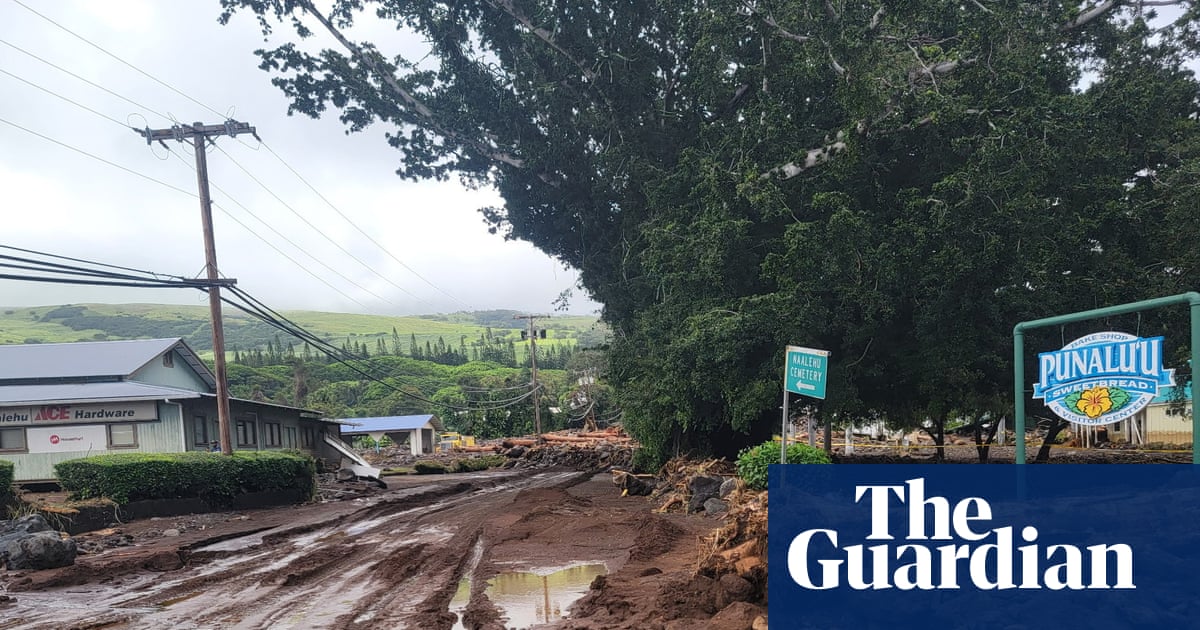
A washed-out roadway on 17 August in Nāʻālehu, Hawaii, following heavy rains from Hurricane Lala. Photograph: Aina Akamu/APView image in fullscreenA washed-out roadway on 17 August in Nāʻālehu, Hawaii, following heavy rains from Hurricane Lala. Photograph: Aina Akamu/APTropical Storm Moke poised to slam into Hawaii just days after Hurricane LalaWeather service warns of flooding and mudslides, particularly in areas strongly affected by previous storm
Tropical Storm Moke is poised to slam into the south of Hawaii’s islands with forecasters predicting heavy rains and strong winds on Saturday evening, just days after the region was devastated by Hurricane Lala.
The tropical storm is gathering strength as it advances west, according to the National Weather Service (NWS).
Rainfall predictions for this weekend for the south-east and windward sides of the Big Island were 5-10in (13-25cm), with as much as 15in (38cm) in isolated areas, according to Casey Oswant, an NWS meteorologist.
Across the rest of the island chain, 1-2in (2-5cm) of rain was expected, though parts of east Maui could see up to 4in (10cm), she said.
The NWS has warned that flooding and mudslides could be observed, particularly in areas that received strong precipitation already during Hurricane Lala.
“We know there’s already at least $43m of damaged infrastructure on the Big Island, another $4.6m to homes, at the very least,” Hawaii governor Josh Green said in a Saturday video, referring to the fallout from Lala. “There’s going to be a lot more to account for and we will be there to provide recovery and resources, but it’s going to take some time.”
There were no coastal watches or warnings in effect early Saturday morning, but people were urged to closely monitor the storm’s progress. The rainfall has the potential to cause dangerous rip currents, life-threatening flooding and mudslides, especially in steep areas and places where the ground remains saturated, according to the National Hurricane Center.