Dismissing economic planning out of hand is a mistake. The market does not always get it right
3-MIN READ3-MINAnthony RowleyAnthony Rowley is a veteran journalist specialising in Asian economic and financial affairs. Published: 4:30pm, 22 Aug 2026Why is the idea of a planned economy anathema to so many people despite China’s success? And why do so many retain faith in market economies given the economic chaos much of the Western world is descending into? These questions have acquired a particular piquancy as Hong Kong embraces long-term planning for the first time, attracting criticism from some that it is falling into Chinese-style error.Having been in Asia for 50 years – in Singapore, which I consider a planned economy, and Hong Kong – and having travelled in and written about China while also living in Japan, perhaps I might offer a few observations.
The first is that people who take up extreme positions on either side of the market-vs-planned economy argument are often sadly misinformed, if not naive. The second is that those who passionately espouse the virtues of a market economy need to look more closely and clearly at the recent performance of these unplanned systems, both economic and financial.
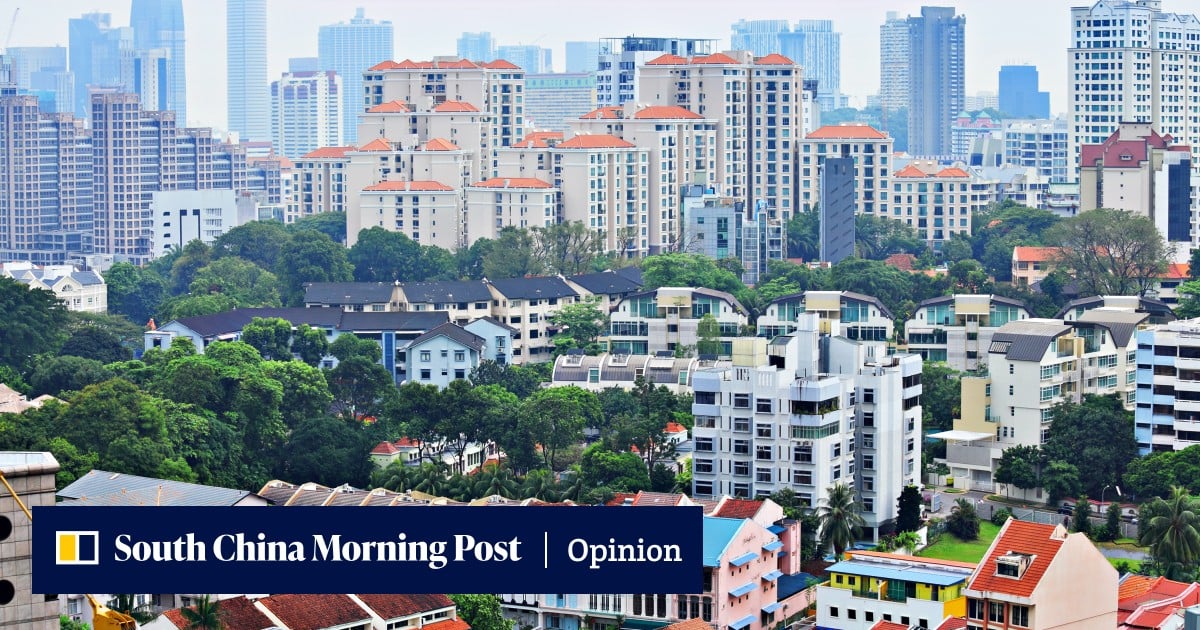
It is absurd to argue that economic planning is undesirable per se. I have long hewn to a somewhat leftist view on such matters but that view was reinforced when I arrived in Singapore in 1976 to join the Business Times as a founding writer. Then under the leadership of Lee Kuan Yew, a Cambridge graduate, newly independent Singapore was busy implementing a plan to carve out a small nation state with industry at its core, and to free it from colonial dependency as an entrepot for East-West trade.
I was impressed by this endeavour, as were many others, including former British prime minister Margaret Thatcher. No one could accuse Thatcher of being a dangerous leftist. She was pragmatic enough to realise that a partially planned or state-cum-market economy like Singapore’s was a realistic and workable alternative to leaving things entirely to the private sector.
I then moved on in 1979 to Hong Kong to become business editor of the sadly now defunct Far Eastern Economic Review. There, I found a very different economic and social ethos. To espouse a planned economy in Hong Kong at that time was to utter the ultimate heresy.