play Live Sign upShow navigation menuplay Live Click here to searchsearchSign upNews|United NationsGuyana’s Rodrigues Birkett leads informal poll in race to be next UN leaderEight ‘encourage’ votes put the Guyanese ambassador ahead as the council works towards consensus before current Secretary-General Guterres departs at the end of December.
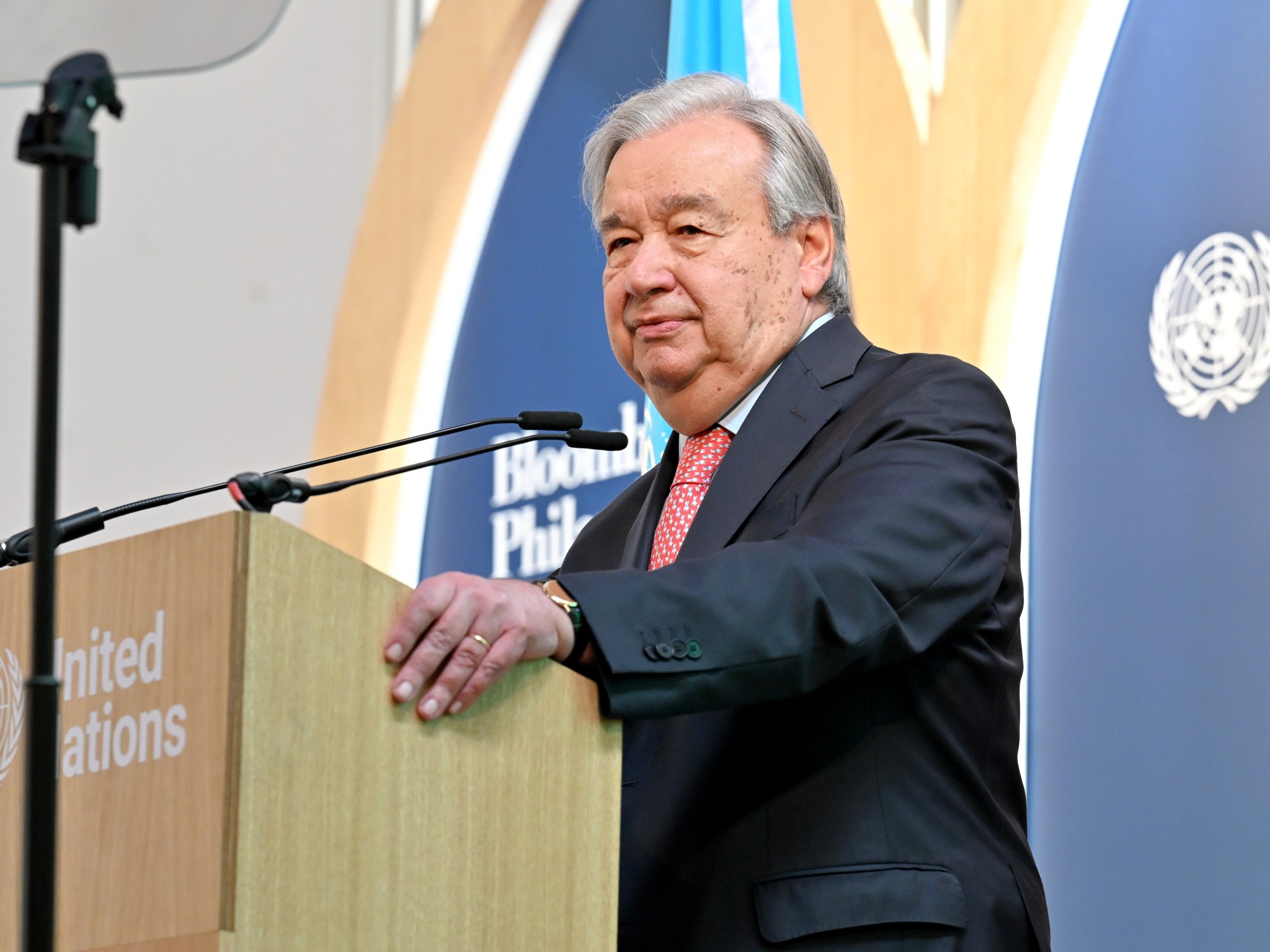
xwhatsapp-strokecopylinkgoogleAdd Al Jazeera on GoogleinfoUN Secretary-General Antonio Guterres delivers a special address on the climate and energy crises, hosted by Bloomberg Philanthropies [Nicky J Sims/Getty Images]By Al Jazeera Staff, AFP and ReutersPublished On 22 Aug 202622 Aug 2026The United Nations Security Council (UNSC) conducted its second non-binding straw poll on Friday in the race to select the next UN secretary-general, with Guyana’s Ambassador Carolyn Rodrigues Birkett emerging as the frontrunner ahead of seven other declared candidates.
Ambassador Christina Markus Lassen of Denmark, the council’s president for August, confirmed the vote had concluded.
According to results circulated after the poll, Rodrigues Birkett received eight ‘encourage’ votes, three ‘discourage’ votes and four members offering no opinion. She was closely followed by Costa Rican diplomat Rebeca Grynspan and International Atomic Energy Agency chief Rafael Grossi of Argentina, who each collected seven ‘encourage’ votes. Grossi received six ‘discourage’ votes, compared with Grynspan’s four. Grynspan had led the field after the first round of balloting in July.
The other candidates are former Senegalese President Macky Sall, former UN General Assembly (UNGA) President Maria Fernanda Espinosa of Ecuador, former Chilean President Michelle Bachelet, Ugandan diplomat Olara Otunnu and Ecuadorian diplomat Ivonne A-Baki.
Current UN Secretary-General Antonio Guterres has been in the position since 2017, but his second five-year term ends on December 31. While there is no formal limit on the number of terms a secretary-general can serve, no one has served more than two.
The secret straw polls are intended to gauge support among the council’s 15 members and gradually narrow the field before a formal recommendation goes to the UNGA, which typically ratifies the council’s choice as a formality. A candidate needs at least nine votes in a formal UNSC vote to advance, and any of the five permanent members (the United States, China, France, Russia, and the United Kingdom) can veto a nominee.
Several rounds of the straw polls can take place. In later rounds, the UNSC’s permanent members use a different colour ballot to reveal if a candidate has received a “discourage” vote from one of them.
The next secretary-general will face the challenge of maintaining the standing of the UN, which has been reduced in recent years. Critics say that the institution, formed in the aftermath of World War II, has not been able to prevent or end conflicts and crises around the world, including Israel’s genocidal war on Gaza and the Russian invasion of Ukraine.