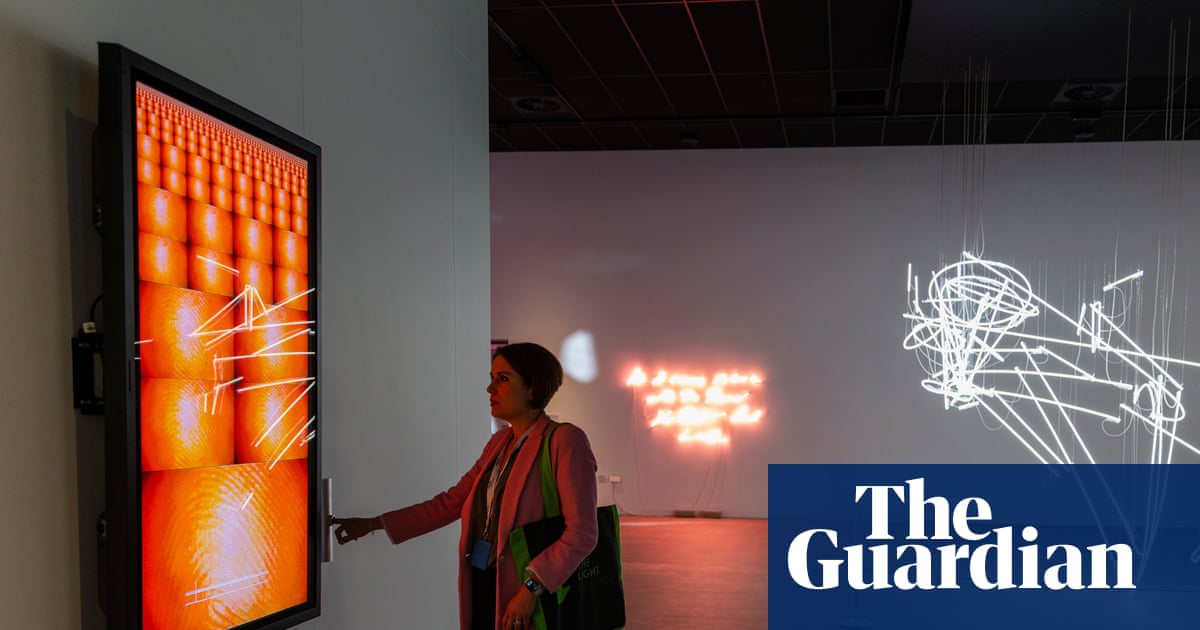
The Light, a new contemporary gallery opening in Durham. Photograph: Gary Calton/The GuardianView image in fullscreenThe Light, a new contemporary gallery opening in Durham. Photograph: Gary Calton/The GuardianDurham art gallery opens with works by Tracey Emin and Steve McQueenThe Light aims to bring art of international significance to north-east England
Works by Tracey Emin, Steve McQueen and Olafur Eliasson have gone on display at a new contemporary art gallery and museum in north-east England which aims to show works of international significance.
The Light is a £17m redevelopment of a museum in Durham that closed 10 years ago to considerable local uproar.
Then it was the Durham Light Infantry Museum and Art Gallery. Today it is just The Light, which opens to the public on Saturday with galleries on one floor telling military stories in a human and modern way, while upstairs is 500 sq metres of space for contemporary art.
View image in fullscreenThe Light, Durham. Photograph: Gary Calton/The GuardianThe opening is part of a bigger cultural story of getting arts and culture to places in England that have felt overlooked and forgotten.
The Baltic Centre for Contemporary Art opened in Gateshead in 2002 and Mima – the venue for this year’s Turner prize – opened in Middlesbrough in 2007. They were followed by the likes of Firstsite in Colchester and the Hepworth in Wakefield. But the opening of new, publicly funded regional galleries had largely dried up, until now.
Tony Guillan, who joined as artistic director three months ago, said his story played into that narrative. “I grew up on Tyneside but then left, as many people do, at the age of 18.” He worked in London at organisations including Tate and the Southbank Centre. “I always thought it would be nice to come back but there has been a dearth of opportunity.
View image in fullscreenArtistic director Tony Guillan grew up on Tyneside, worked in London, and has returned to the north-east. Photograph: Gary Calton/The Guardian“Why do you have to leave and move so far away if you want to have a certain type of career? I think perhaps more than any country in Europe we’re so centralised in London, it feels like it has far too many industries, not least the creative and cultural industries.”
The development of The Light has been a long, slow process and it opens in a county where, since Labour was virtually wiped out in the 2024 local election, Reform is running the show politically.
The Light is funded by Durham county council, but there is little sign in the opening exhibition that the curators are looking over their shoulders in terms of the art they are displaying. It includes works that address themes including immigration.
View image in fullscreenStuart Haygarth’s Shadey Family on show in The Light is composed of 62 vintage glass lampshades. Photograph: Gary Calton/The GuardianArt will always have a contentious side, Guillan said. “It’s our role to create the space for dialogue. We’ve recently showed all the politicians and our corporate leadership around. They love what we’re doing. They love the ambition. They are really ambitious. So I’m very confident we’re going to have the kind of space to explore what we want to.”
The curators said they wanted to show contemporary art of national and international significance. The inaugural exhibition features artists including the US artist Dan Flavin, famous for his use of fluorescent light tubes, and the Cuban-born US conceptual artist Félix González-Torres, who died in 1996, aged 38. His piece, his first use of lightbulbs, was made after the death of his partner Ross Laycock from an Aids-related illness and is about their unending love.
View image in fullscreenDan Flavin’s Untitled, 1987. Photograph: Gary Calton/The GuardianNatasha Howes, who curated the opening show, said she had worked hard to include a good number of women and global majority artists because too many exhibitions were still dominated by white men.
“Last year I was looking at a festival in Spain and I think there were 30 artists and no women. I just thought: ‘How is that allowed to happen?’”