Add The California Post on Google Californians will be able to see a special sight in the night sky next week, and they won’t need any special eyewear to see it.
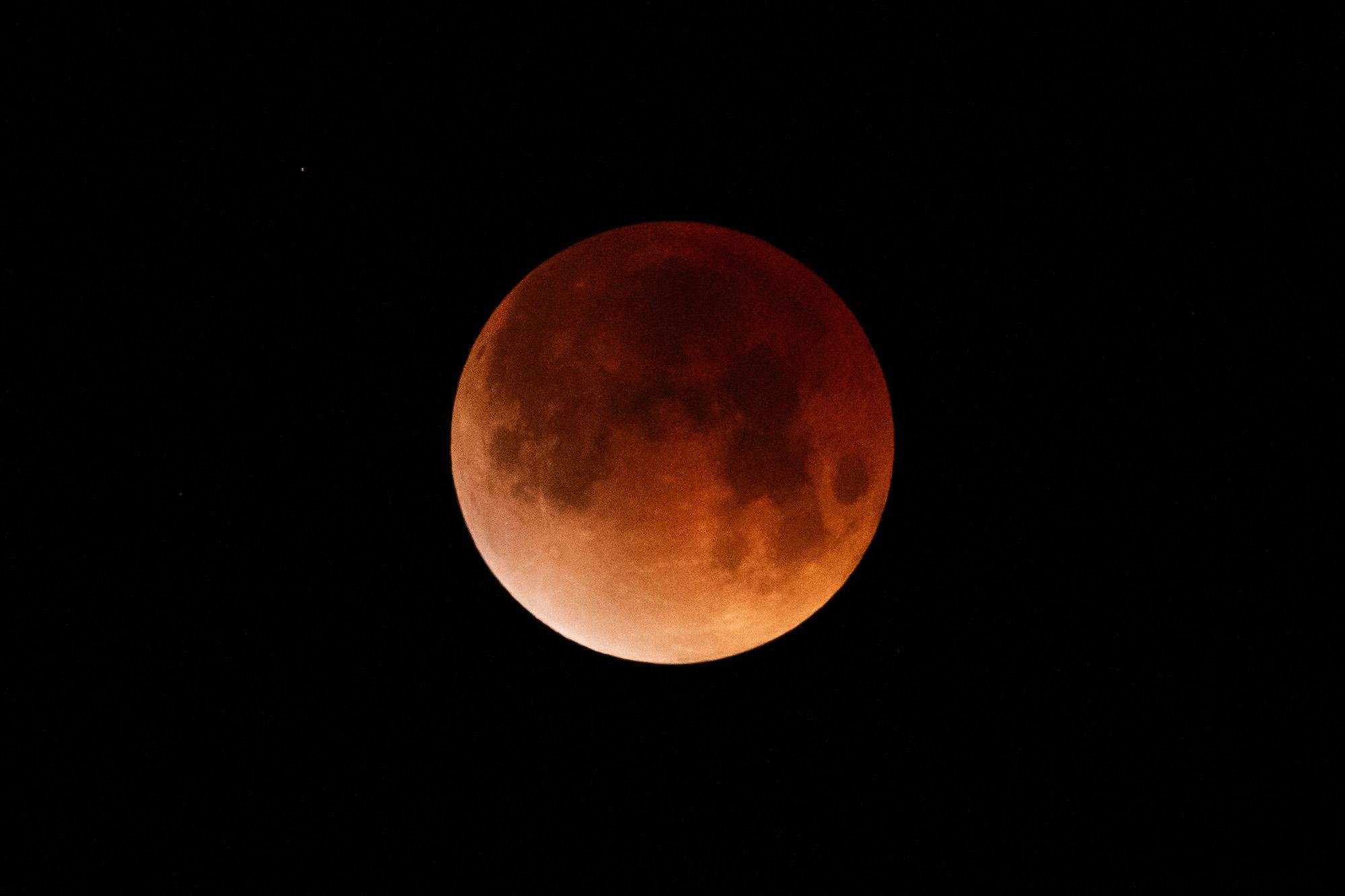
A partial lunar eclipse will take place on August 27-28, where most of the full moon will pass through the Earth’s shadow, turning it a unique shade of red, dubbed a “blood moon.”
There was a full total lunar eclipse that showcased the “blood moon” back in early March, though it only lasted for about an hour, starting at just after 3 a.m.
This eclipse, at its peak, will show 93% of the moon within Earth’s shadow, known as the “umbra,” according to NASA, though the St. Louis Science Center says that 96% of the moon will be covered.
A partial lunar eclipse will take place on August 27-28, where most of the full moon will pass through the Earth’s shadow, turning it a unique shade of red, dubbed a “blood moon.” San Francisco Chronicle via Getty Images While solar eclipses require special eyewear to view safely, lunar eclipses can be seen with the naked eye, with all of North America able to see at least a partial view of the eclipse.
The eclipse will begin at 9:38 p.m. ET/6:38 p.m. PT on Thursday, August 27, ending on Friday, August 28 at 3:01 a.m. ET/12:01 a.m. PT.
The eclipse will be at its maximum at 12:12 a.m. ET/9:12 p.m. PT, which will be the best time to view the eclipse anywhere in America.
While no special equipment is required, those who use either binoculars or a telescope will be able to see the Earth’s shadow passing over the moon.
The “blood moon” visual happens because of an effect known as “Rayleigh scattering,” where the Earth’s atmosphere refracts sunlight and projects it onto the moon.
While solar eclipses require special eyewear to view safely, lunar eclipses can be seen with the naked eye, with all of North America able to see at least a partial view of the eclipse. NASA During a lunar eclipse, any sunlight that isn’t blocked by the Earth is filtered through the planet’s atmosphere before reaching the lunar surface.
This effect which NASA described as if, “all the world’s sunrises and sunsets are projected onto the Moon,” resulting in the “Blood Moon.”
This blood moon eclipse will be the last time sky watchers in North America will get to see one for over three years.
There will be a total lunar eclipse that will be visible from North American that will occur on June 26, 2029, and there will be another one North America can’t see on December 31, 2028.
California Post News: Facebook, Instagram, TikTok, X, YouTube, WhatsApp, LinkedInCalifornia Post Sports Facebook, Instagram, TikTok, YouTube, XCalifornia Post Opinion California Post Newsletters: Sign up here!California Post App: Download here!Home delivery: Sign up here!Page Six Hollywood: Sign up here!