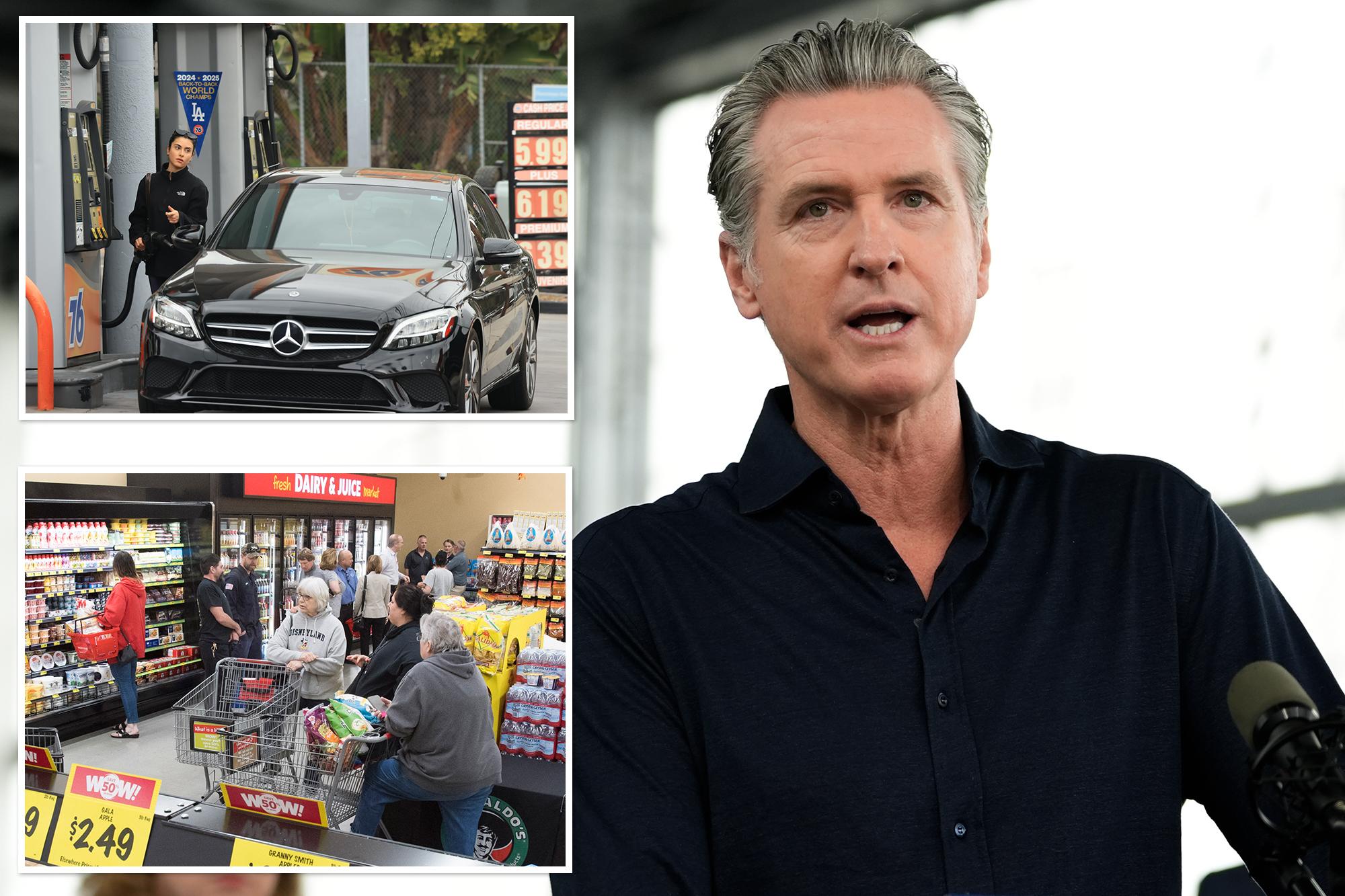
Add The California Post on Google When Americans buy groceries, fill up their cars or purchase goods shipped through California’s ports, they are paying for a climate mandate they never voted for, imposed by an unelected agency in California.
That agency is the California Air Resources Board (CARB), which instituted the “Vessels At-Berth” regulation that is raising prices across the country by imposing new compliance costs on shipping and petroleum movements through California.
Right now, California is in a self-imposed energy crisis. Gov. Gavin Newsom’s policies have systematically dismantled the state’s energy infrastructure, placing our fuel supply under immense strain. Californians already pay some of the highest gasoline prices in the nation, over $1.50 more per gallon than the national average.
Two major refinery closures in the past year removed nearly 20% of California’s refining capacity. In-state oil production has been crushed, making California reliant on fuel supplies by ship. Rather than address the policies contributing to this self-inflicted energy crisis, Sacramento continues adding new mandates that make it harder and more expensive to produce and move fuel in our state. The Vessels At-Berth regulation is yet another example.
Under CARB’s regulation, ocean-going vessels at California ports must use CARB-approved emissions-control strategies or technologies, or pay into a state remediation fund. Ships that fail to comply face penalties of roughly $50,000 per vessel per day which can amount to millions of dollars.
Even if ships want to abide, there is a glaring problem: The infrastructure and technology needed to comply is extremely costly and does not yet exist at the scale the mandate demands.
That leaves shipping companies facing a comply-or-pay regime that adds enormous costs and uncertainty to the movement of American goods.
Ships are a critical part of the supply chain that brings crude oil and petroleum products into California. Adding new costs and instability to that system is reckless at a time when California’s energy infrastructure is already dangerously constrained.
What makes this regulation especially concerning is its reach. The entire country pays the price for this Golden State mandate.
Because California’s ports are the gateway for such a large share of American imports, handling approximately 40% of the country’s containerized imports, a state-level mandate on docked vessels effectively becomes a national cost, applied to goods and energy bound for states across the country.
Shipping companies do not simply absorb these costs. They are factored into rates and ultimately passed on to consumers. Groceries, appliances, clothing, fuel — if it moved through a California port, its price tag reflects this mandate.
These costs are not theoretical. CARB’s own analysis projected the shipping industry would absorb approximately $2.3 billion in compliance costs through 2032 — and that estimate does not capture what happens when those expenses ripple through the broader supply chain.
A recent EPA analysis confirms that CARB’s regulation will “increase shipping costs, strain port infrastructure, and increase supply chain pressures across the country.”
Unfortunately, in 2023, the Biden Administration’s EPA authorized California to expand this regulation further without ever submitting it to Congress for review.
California Post News: Facebook, Instagram, TikTok, X, YouTube, WhatsApp, LinkedInCalifornia Post Sports Facebook, Instagram, TikTok, YouTube, XCalifornia Post Opinion California Post Newsletters: Sign up here!California Post App: Download here!Home delivery: Sign up here!Page Six Hollywood: Sign up here!
That federal approval raises a larger question: Should an unelected state agency be able to impose costs on consumers and businesses across the country through a policy that was never debated or approved by Congress?
I don’t believe it should. That is what I am fighting to reverse.
I have introduced a Congressional Review Act (CRA) resolution in partnership with US Sen. Dan Sullivan to disapprove that authorization. Congress similarly used the CRA to reject California’s electric vehicle mandates when those policies threatened to saddle American consumers with infeasible technology and higher costs. Congress has the authority and the responsibility to act the same way here.
This is about accountability. Forcing unworkable mandates that spur massive penalties is not only wrong but bad public policy. California does not have the right to unilaterally impose mandates that raise prices across the country without a vote of Congress and without any mechanism for affected consumers to push back.
We must demand that policy be made transparently and with genuine consideration of its costs on hardworking families. That is exactly why I am leading the fight to protect taxpayers and American families from California’s hidden climate tax.
Vince Fong represents California’s 20th Congressional District in the US House of Representatives.