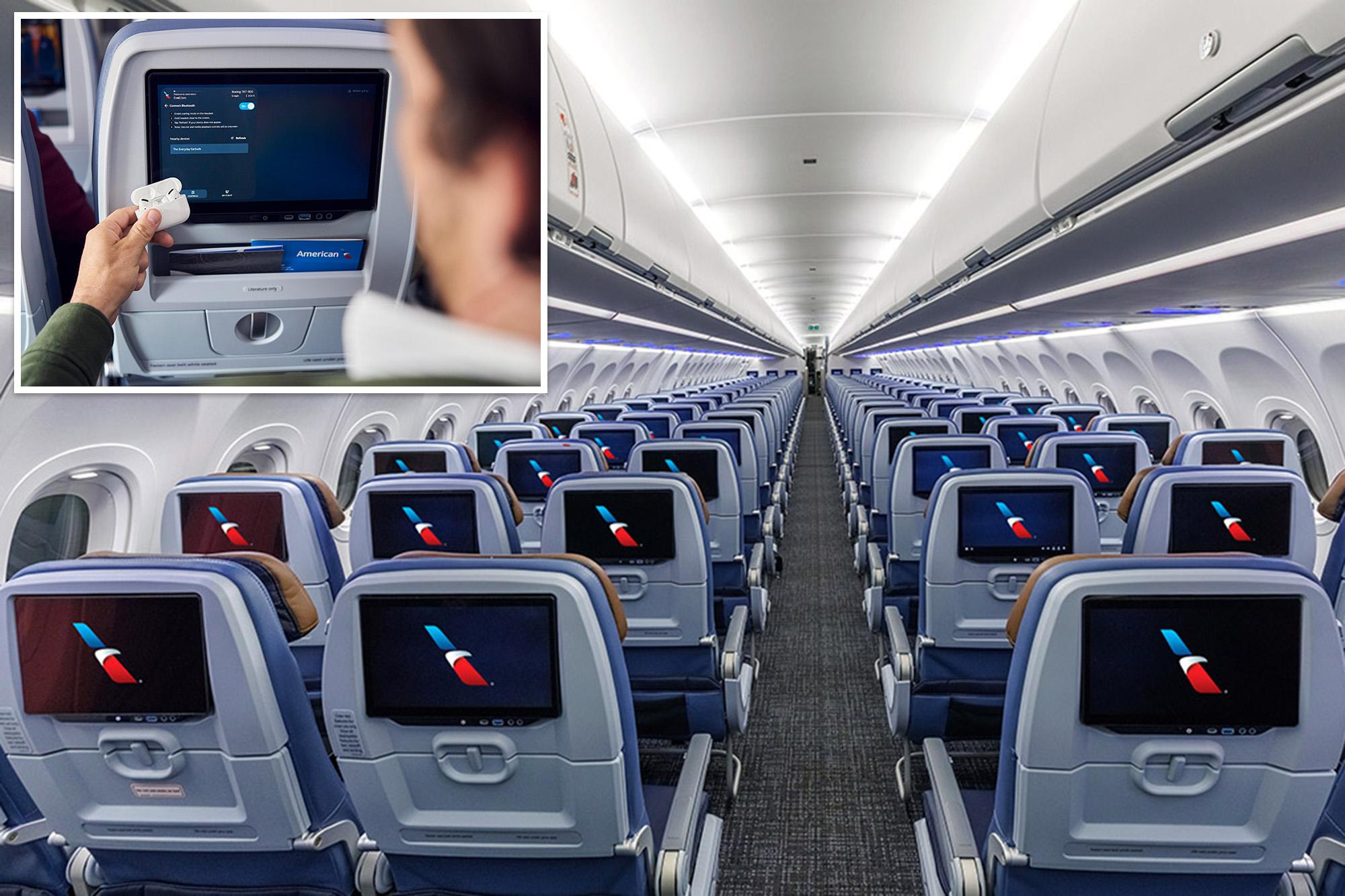
Add The New York Post on Google American Airlines will outfit its narrowbody jets with more premium seats and entertainment screens, the company announced Tuesday — a major strategic bet on high-spending travelers aimed at narrowing the earnings gap with Delta Air Lines and United Airlines.
American Airlines CEO Robert Isom has ramped up amenities on its flights to compete more aggressively for premium revenue — acknowledging the significant gap between American’s performance and where it should be compared to competitors Delta and United.
“The integration of seatback screens and the addition of premium seating represent the latest milestones in American’s ongoing investments to modernize the end-to-end travel experience on the ground and in the air,” the carrier said in a statement.
American Airlines announced a fleetwide upgrade with the installation of seatback screens at every seat and increased premium seats across its narrowbody fleet. American Airlines The airline will reconfigure its fleet to expand premium seating from 25% to 40% of each plane’s total capacity, adding first-class and extra-legroom seats as aircraft are updated.
American also plans to add seatback screens to more than 800 narrowbody aircraft, with retrofits beginning in 2028 and wrapping up in the early 2030s.
Newly delivered Airbus and Boeing aircraft with screens pre-installed will be rotated into American’s fleet starting in 2028.
American already operates more than 140 widebody and Airbus A321XLR aircraft equipped with seatback screens.
The carrier declined to disclose the cost of the fleet upgrade.
At American, premium travelers generated nearly half of ticketed revenue in the second quarter while accounting for just 30% of seats.
The airline will reconfigure its fleet to expand premium seating from 25% to 40% of each plane’s total capacity, adding first-class and extra-legroom seats as aircraft are updated. American Airlines Still, the airline lags behind Delta and United in profitability, putting pressure on Isom to show that his amenity-based strategy can push American forward.
Nearly a decade ago, American had bet on the fact that passengers would watch movies and television shows on their personal devices, and not in-flight entertainment.
The project — called “Project Oasis” — increased cabin density and shrank on-flight restrooms, according to the Wall Street Journal.
However, customer preferences have since reversed, with American acknowledging that travelers — particularly younger demographics — prefer larger seatback displays alongside personal devices paired with high-speed Wi-Fi for a fully connected flight experience.