Add The New York Post on Google Sarabeth’s is closing in on two fronts.
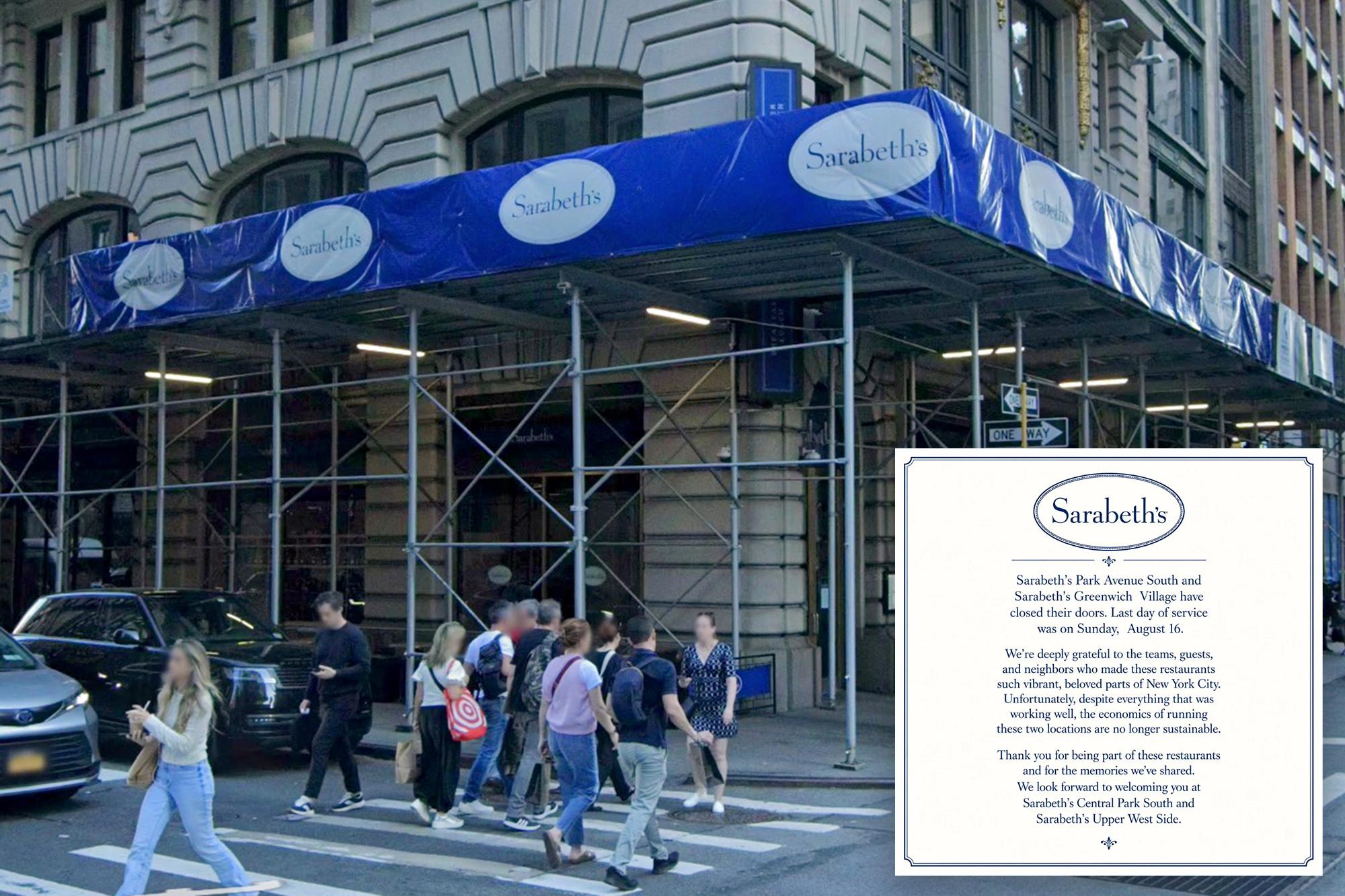
The beloved brunch brand pulled the plug on its Park Avenue South and Greenwich Village locations last weekend, with both restaurants serving their final plates on Sunday — all as the chain’s Upper West Side eatery is being hauled into court by its landlord over alleged months of unpaid rent.
Sarabeth’s, founded by Sarabeth Levine in 1981, has been in business for 45 years, having started as a jam-making operation out of her apartment before opening its first Upper West Side restaurant that same year and later expanding.
However, time has not proven to be kind to the brand.
In a statement posted to Instagram, Sarabeth’s thanked “the teams, guests, and neighbors” who made the two now-shuttered locations “such vibrant, beloved parts of New York City.”
But the company said the math no longer worked, writing that “despite everything that was working well, the economics of running these two locations are no longer sustainable.”
Further specifics surroundings those closures were not available by press time.
The brand, a fixture of the city’s weekend brunch scene for its classic American comfort food, said it will keep operating its two remaining locations, Central Park South and the Upper West Side, and “look forward to welcoming” loyal customers there.
But the Upper West Side outpost, at 423 Amsterdam Ave., has troubles of its own.
Landlord 423 AMCO sued the restaurant’s operator, BSWR Inc., also known as BWRS Inc., in Manhattan Supreme Court in late July, accusing Sarabeth’s of blowing off rent payments and refusing to report sales figures required under its lease.
According to the landlord’s complaint obtained by The Post, Sarabeth’s owes $43,432.16 in back rent, additional rent and percentage rent, covering shortfalls from May, June and July of this year.
The suit alleges the restaurant violated its 2020 lease modification by “failing to report Gross Sales within thirty … days of end of each month” and by failing to pay base rent “in the amount of $10,000.00 per month ($120,000.00 per year) or 8% … of monthly sales.”
Under that 2020 agreement, Sarabeth’s had negotiated a hybrid rent structure tying its payments to sales performance, along with an additional 1% of sales earmarked to repay rent that had previously been abated.
The landlord claims it sent a default notice on June 11 giving the restaurant until June 22 to catch up, then followed up with a formal notice of lease cancellation on July 1 after the restaurant failed to cure the default. The lease was terminated effective July 13, according to the filing, though the restaurant “remains in occupancy of the Premises beyond the Termination Date without Landlord’s consent.”
The landlord is seeking a laundry list of remedies from the court, including a money judgment for the unpaid rent, an order forcing Sarabeth’s to resume reporting its sales, and — if the restaurant doesn’t fall in line — the right to eject the tenant with the help of the city sheriff.
The case escalated in August. On August 5, attorney Norman Flitt of Rosenberg & Estis, P.C. notified the restaurant’s operator that the landlord was seeking a court order with a temporary restraining order attached, warning “we will be filing a motion by order to show cause, containing an interim order and temporary restraining order.”
The following week, Manhattan Supreme Court Justice Lyle E. Frank signed off on a temporary order directing Sarabeth’s to start paying up. Under the order, the restaurant must pay $17,810.72 in use and occupancy for August, and continue paying that amount “on or before the first … day of each calendar month thereafter,” while the case plays out.
Frank’s order also bars Sarabeth’s from destroying sales records and requires the restaurant to hand over monthly gross sales figures dating back to March.
A hearing on the landlord’s broader request, which includes posting more than $43,000 to cover the arrears, is scheduled for Sept. 8. Justice Frank has directed that the matter be argued orally.
Sarabeth’s did not respond to The Post’s request for comment.