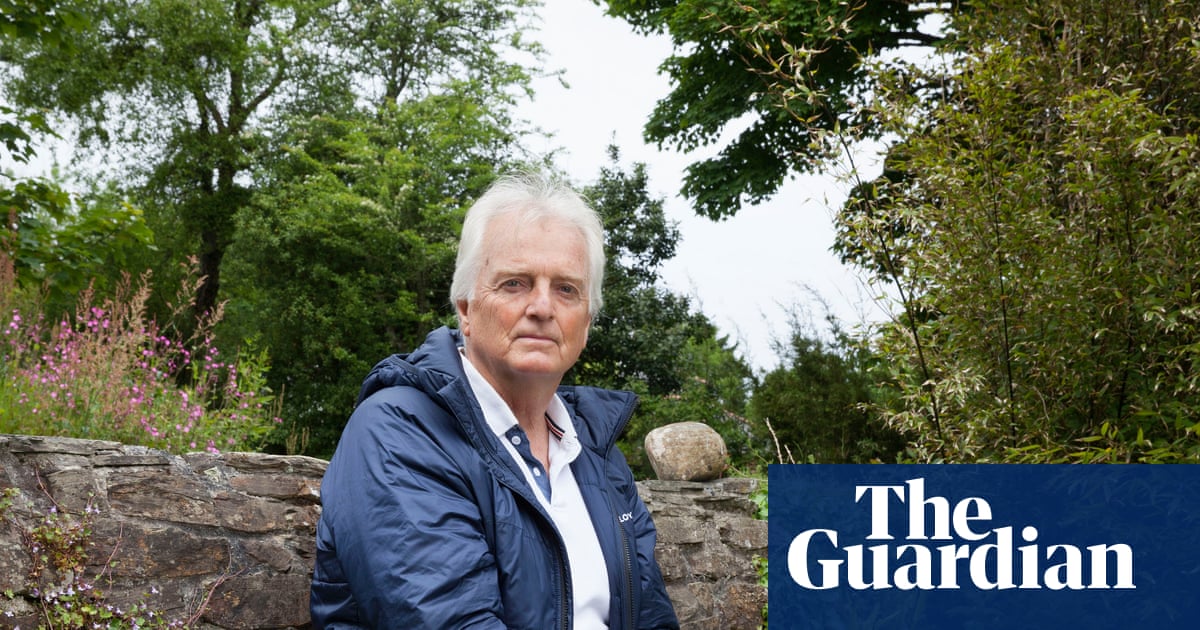
Peter Hall said there will be ‘more violence and more death’ if domestic abusers are included in the early prison release scheme. Photograph: Karen Robinson/The ObserverView image in fullscreenPeter Hall said there will be ‘more violence and more death’ if domestic abusers are included in the early prison release scheme. Photograph: Karen Robinson/The ObserverMore women will die if domestic abusers leave prison early, victim’s parents warnParents of Michaela Hall, whose partner killed her after he left prison in 2021, say Probation Service cannot cope with mass release
More women will die if ministers include domestic abusers in the early prison release scheme, the parents of a woman murdered by her partner shortly after he was freed have warned.
Michaela Hall, a 49-year-old charity worker, was killed in her home in Cornwall, by Lee Kendall in 2021 two weeks after he was released from prison, where he had been serving a sentence for assaulting her.
The Probation Service incorrectly assessed Kendall as medium risk, despite the fact he had strangled Hall, threatened her with weapons and police had received 34 pieces ofintelligence about his abuse against her.
At an inquest into her death, probation staff cited “horrendous work pressures” as part of the reason why the error was made.
Hall’s parents, Anne and Peter, said domestic abuse victims across the country would be “absolutely petrified” at the prospect of their abusers being released early.
“There’s going to be more violence and there’s going to be more death. It’s very simple,” Peter said. “The Probation Service can’t cope on a day-to-day basis. They certainly can’t cope with 5,000 prisoners being released. It’s the most ridiculous thing I’ve ever heard.”
From October, the government is planning to release 5,000 offenders in England and Wales earlier than scheduled to create more space in overcrowded prisons.
Probation officers have voted overwhelmingly in favour of potential strike action over excessive workloads and the chief inspector of probation for England and Wales, Martin Jones, has said he does not think the system will be able to cope.
Prisoners convicted of rape, serious child sex offences and grooming charges will be excluded from early release after an intervention by the prime minister, Andy Burnham, in response to backlash over the plans.
Farah Nazeer, the chief executive of Women’s Aid, said it was “really upsetting and troubling” that domestic abuse perpetrators would not be excluded.
“We’re releasing prisoners early when they won’t have had proper rehabilitation. Probation is probably not able to manage them effectively. They’re going to be angry. Where do you think they’re going to go first? It’s absolutely appalling,” she said.
“Women will die as a result of this. There is no doubt in my mind. Survivors need to come forward and they need to seek help.”
Nazeer criticised the government for failing to give survivors enough time to prepare for the early release and said it would “completely undermine” Labour’s goal to halve violence against women in a decade.
“You can’t have a halving violence against women strategy and then choose to release the perpetrators of the biggest crime against women and children early,” she said. “Why does the government think it’s OK to trade women’s safety up?”
The government has announced £10m for victim support, a national helpline and greater involvement for victims in setting licence conditions, but Nazeer said this was not enough to help inundated support services.
“We’re having to refuse 50% of women and children into refuge because the funding isn’t there,” she said. “£10m doesn’t even begin to cut it against the need that’s out there.”
The Hall family have launched a legal challenge under the Human Rights Act against the Probation Service and police over their handling of Hall’s case. While the service miscategorised Kendall’s risk level, meaning he was released with minimal supervision, police officers also failed to enter Hall’s property on the night she was murdered despite a call from a friend saying she was being attacked.
As they drove away, one officer said: “What can you do if she don’t help herself?”
Anne said: “Our daughter was stabbed by some evil person that should never have been anywhere near her because they all didn’t do their jobs properly.
“It’s left two children without their mum and the rest of the family absolutely shattered. It was a catalogue of mistakes, laziness and victim blaming which is the most dreadful thing that you can do.”
Peter said the aim of the legal action was to get justice for his daughter but also to help prevent future deaths. “This won’t help us, it doesn’t make us feel any better,” he said. “We are only doing this to bring about change and so other people don’t have to suffer. We hear so much nowadays that these services are just not doing their job properly.”
Catherine Knight, the deputy head of legal at the Good Law Project, which is acting for the family, said: “We would hope [the legal challenge] would force the authorities to change the way they operate.
“If the government wants to go ahead with the early release scheme then we need to ensure the systems supporting offenders and victims are robust and do work as they should but, at present, there are systemic issues within the service.”
A Ministry of Justice spokesperson said: “The murder of Michaela Hall was a horrific crime, and our thoughts remain with her loved ones.
“We have always stated we wanted to go further to protect the public, and we are fast-tracking a plan to keep more of the most dangerous offenders behind bars. That’s on top of murderers, anyone on life sentences and those in prison for rape, serious child sexual abuse and grooming offences who are already blocked from any changes.
“Our record £700m investment in probation is ensuring staff have the resources, powers and technology they need to manage offenders safely in the community, and we are tagging a record number of offenders to track their every move, alongside investing a record £550m in victim support.”