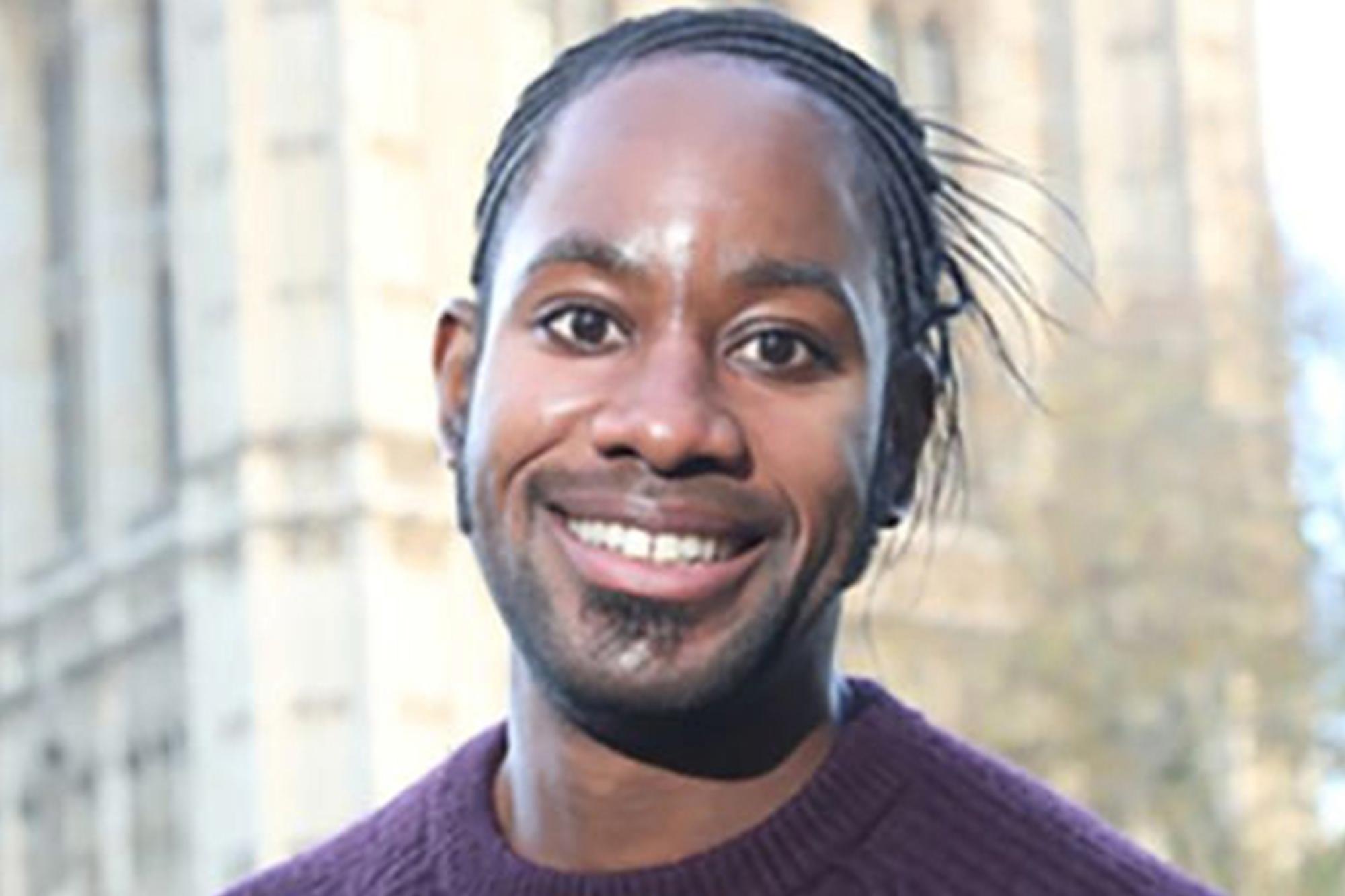
Cambridge professor Jason Arday was accused of plagiarism and faced an investigation. See more of our coverage in your search results.
Add The New York Post on Google Campus watch: The Unmaking of Jason Arday Though he “cannot help but feel bad for [Jason] Arday and his family,” American Greatness’ Roger Kimball also can’t “forget that his fabulations were directed not only at aggrandizing himself”: The professor was “perfectly happy to play the race card to damage others, as when he complained to the police that journalists who were investigating his credentials were guilty of harassing him,” prompting “a four-month-long investigation into a journalist who was simply going about his job.” Claims his apparent suicide creates “a debate about whether he was a plagiarist or victim of a racial witch hunt” present “a false dichotomy. There is no doubt that Arday was a plagiarist,” and he was a victim only “of his own lies and intemperate behavior” — as well as of “an educational establishment” that “colluded in the construction of Arday’s fantastical, self-aggrandizing and ultimately self-destructive fantasies.”
“I almost didn’t believe what I heard. Samuel Moyn, a professor at Yale Law School, told an interviewer that parents can’t be trusted because they have a ‘divergence of interest’ with their own children,” marvels Lincoln Fillmore at The Wall Street Journal. Legally, “parents bear the primary responsibility for educating children.” When they enroll “a child in school,” parents “aren’t transferring responsibility,” they are “choosing a partner to help fulfill it.” Unlike educators, parents have “a lifelong commitment” to their child. So “the strongest schools understand they are joining families in a shared mission” and that “the parents are in charge.” Bottom line: No person “will ever match a parent’s depth of understanding, love or willingness to sacrifice when navigating the inevitable ‘diverging interests’ between parent and child.”
Rep. Alexandria Ocasio-Cortez is now the left’s “best-known and most popular national figure,” observes The Washington Post’s Henry Olsen, and progressives’ “impressive string of primary victories” this year raises her odds in a 2028 presidential run. Other potential Democratic candidates — Kamala Harris, Pete Buttigieg, Gavin Newsom — can “tack leftward,” but none can “compete with AOC’s authentic devotion to her causes.” Yet even a damaged 2028 GOP may see her nomination as “a dream come true” — and AOC shouldn’t run if she’s “ambivalent”: Running for and serving as US president requires “an all-consuming ambition.” But if she really “harbors the dream,” she’d best “seize a moment that may never come again and jump in.”
“Pennsylvania Gov. Josh Shapiro’s Jewishness” could “hold him back from being embraced as a national figure in the Democratic Party” — and a 2028 prez primary could see him “passed over after the party’s progressive base launched attacks on his Jewishness,” notes Commentary’s Seth Mandel. Now that Georgia Sen. Jon Ossoff is “surrounded” by “presidential chatter,” he too must expect “scrutiny” of his “position on Israel.” As the Hamas war progressed, “Ossoff’s voting record started to split”; he even took to retailing the “revolting libel” that Gaza was being “starved” by Israel, with no apology yet. Ossoff “demeans himself and insults the Jewish community when he goes around saying he supports the Jewish state.”
The widespread “assumption that psychiatric diagnoses, especially those for ADHD and autism, can and do pick out objective conditions that psychiatrists accurately diagnose,” is, “aside from a small number of diagnoses,” just “not the case,” explains James Barnes at Spiked. That is: “No clinician examining an individual could identify and distinguish an ‘ADHD brain’ from a ‘normal brain,’” and “no neuroscientist can look at an individual’s brain scan and determine that a person is autistic.” This is a “diagnosis describing a person’s behavior”; treating it as “an identity” is “based on the misunderstanding that it is explanatory” even “for personality, relationships and sometimes almost every aspect of a person’s life.”