Since mid-July, Ukraine has been targeting warehouses of Russia's largest online retailer Wildberries almost every day. Ukraine says it's disrupting front-line shipments. But experts say it's disrupting Russia's economy.
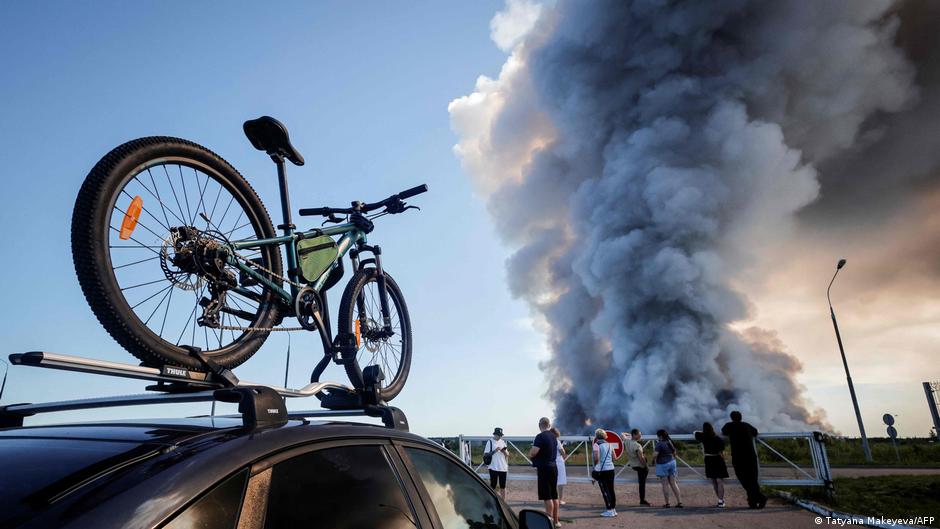
https://p.dw.com/p/5ItPpExperts say the attacks, including this strike on a Wildberries warehouse outside Moscow on July 18, are part of a strategy to 'bring the war home' to Russian civiliansImage: Tatyana Makeyeva/AFPAdvertisementEarly Sunday, a fire broke out in a warehouse belonging to Russia's largest online marketplace, Wildberries, in the town of Podolsk, about 40 kilometers (25 miles) south of Moscow. The fire was the result of a large-scale overnight attack by Ukrainian drones, most of which were intercepted by Russian air defenses.
On Friday, Ukraine struck a different Wildberries warehouse, in Tver, north of Moscow. The day before, it had set fire to another warehouse in Salavat, further east.
About 20 Wildberries logistics hubs have been under near-daily attack in the past few weeks. At least nine employees have been confirmed dead, and scores injured, while a handful of the storehouses have halted operations.
The Moscow-based e-commerce consultancy Data Insight estimates Wildberries has lost as much as 480 billion rubles worth of goods ($5.7 billion/€4.9 billion) and about a third of its warehouse space. Combined damaged to the company and its sellers are estimated as high as 800 billion rubles ($9.5 billion).
Putin admits Ukraine's drones are hurting Russia's economy To view this video please enable JavaScript, and consider upgrading to a web browser that supports HTML5 video
While Kyiv argues the retailer helps supply Russia's military, Moscow maintains it serves only civilian purposes. Either way, the attacks have been placing an increased strain on Russia's economy.
"I think [Ukraine is] going after a choke point," Fabrice Pothier, CEO of the geopolitical consultancy firm Rasmussen Global, told DW. "Wildberries is, in a way, a choke point of Russian society and the Russian economy."
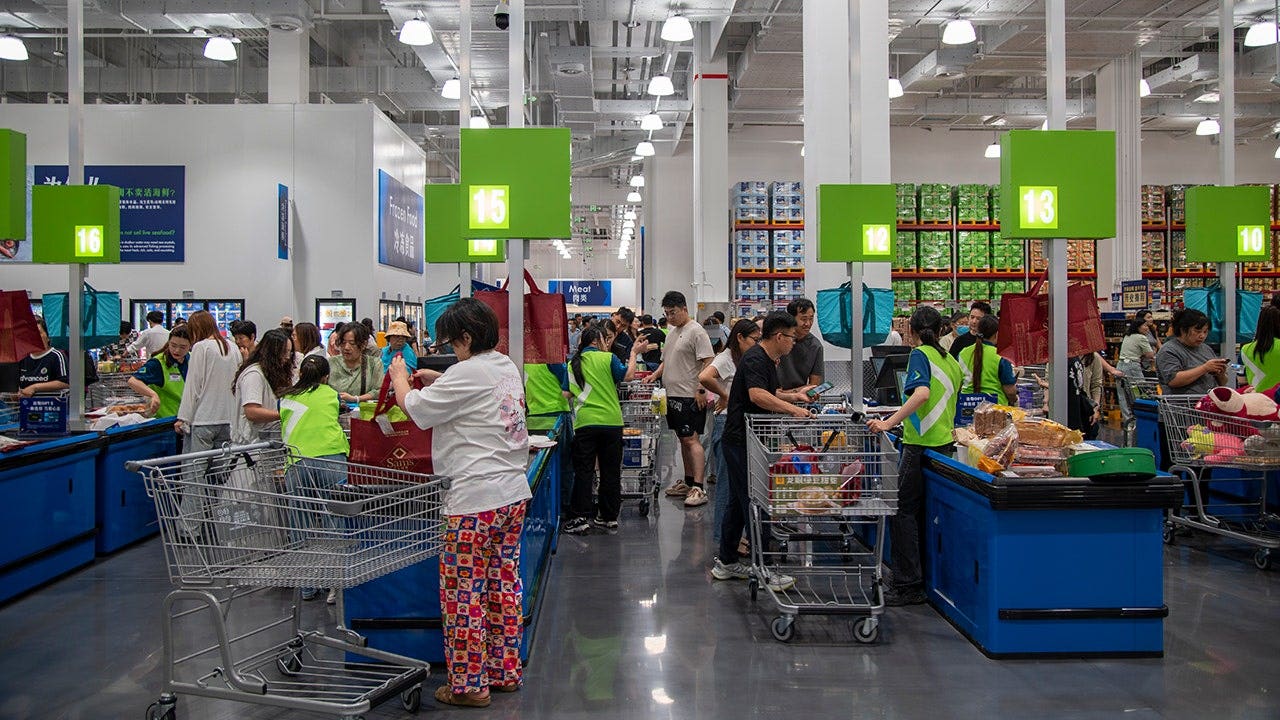
Wildberries is often described as Russia's answer to the Amazon marketplace.
Following Russia's full-scale invasion of Ukraine in 2022 and the ensuing sanctions on Russian trade, many online e-commerce platforms such as Amazon withdrew from the region. In response, Russian authorities permitted so-called parallel imports, essentially allowing Russian companies to sidestep sanctions by importing goods without the consent of the original rights holders.
These companies drastically undercut conventional prices, allowing their sales volume to skyrocket. In the case of Wildberries, for example, revenue increased sevenfold between 2021 and 2025. Its competitor, Ozon, offers similarly staggering numbers, with a reported $49.3 million revenue and 59% growth in 2025.
Today, Wildberries is the largest e-commerce platform in the country, controlling about half of the respective market. Ozon dominates about 30% of the market. Together, they handle goods and services equivalent to about 8.5% of the Russia's gross domestic product (GDP).
Following the initial attacks in mid-July, Ukrainian President Volodymyr Zelenskyy argued that the warehouses struck were "elements of Russian logistics [...] used to distribute equipment for the war: navigation systems, components for drone production, and other supplies for the Russian army."
The Kremlin has consistently rejected this claim. But an analysis by the independent outlet Verska identified "tens of thousands of military and dual-use goods" on the platform between May and August this year, amounting in sales worth hundred of millions of rubles.
Why Ukraine is targeting Russia's biggest online retailerTo view this video please enable JavaScript, and consider upgrading to a web browser that supports HTML5 video
Mykhailo Podolyak, adviser to the head of Zelenskyy's office, said interrupting the flow of military goods to the front lines was just one reason for attacking the company's storage space. Disrupting a business with around 6 trillion rubels in turnover, he told DW, would also affect its creditors, including Sverbank and VTB, both of which are majority state-owned.
Not only could this drain state coffers, "if [the company] were to go bankrupt, it will probably have a domino-effect on the economy," as Pothier explained.
And "there is a bigger objective at play," the consultant added, "which is to bring back war to its sender" by disrupting civilian life. As many as 400,000 sellers have been affected by the attacks, the Russian Association of Electronic Trading Platforms reported. As a result, civilians are losing sources of income, access to goods and services, and, increasingly, a sense of normality.
The platform hosts over 1 million sellers — most of them small- and medium-sized — and reaches some 80 million users each month.
But targeting Wildberries was also meant to send a message to Russian elites, according to Podolyak. These include the billionaire Suleiman Kerimov, the diplomat Anton Vaino or politician Alexey Gromov, all of whom are counted in Putin's inner circle, and possibly have varying degrees of involvement with the Wildberries company.
Wildberries has been investing in massive logistics hubs. The largest span the size of several dozen soccer fields, making them fairly easy — and highly flammable — targets.
The company is also said to have incurred substantial debt, with some questioning whether it is still able to service them. According to financial reporting of its main operating entity, RWB LLC, short-term borrowing spiked nearly eightfold between 2024 and 2025. Along with long-term liabilities, Wildberries' debt may be as high as $14 billion, with VTB as the single-largest creditor.
Now, the other state-backed creditor, Sberbank, has signaled it is preparing to absorb losses. In response to attack on Wildberries' warehouses, Chief Financial Officer Taras Skvortsov said: "Regarding [Wildberries'] credit quality, there is indeed damage. [...] Their financial condition and potential future cash flow have decreased."
Billionaire Tatyana Kim, CEO and co-founder of Wildberries, has now reportedly turned to the government for support. While the government has confirmed talks, no details on a potential decision have emerged. It is expected, however, that VTB will play a key role in rescue efforts.
This article was originally written in Russian. It was updated on August 15 to reflect the latest developments.