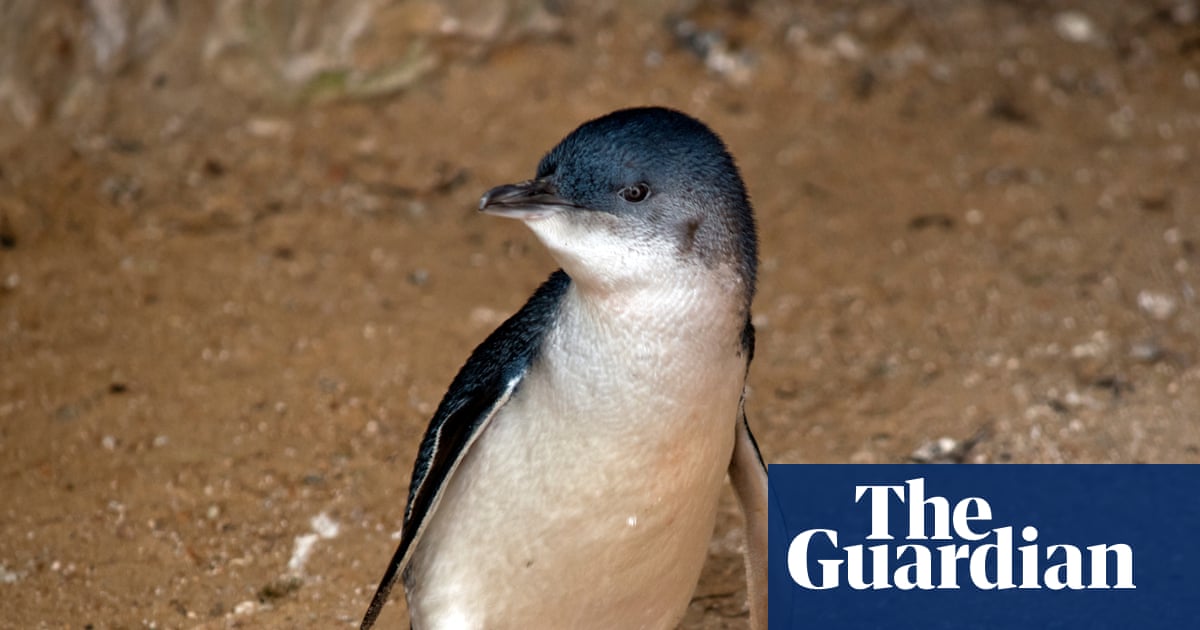
Authorities had been racing to vaccinate 40,000 little penguins on Phillip Island before the first confirmed case of H5 bird flu in the colony. Photograph: ozflash/Getty Images/iStockphotoView image in fullscreenAuthorities had been racing to vaccinate 40,000 little penguins on Phillip Island before the first confirmed case of H5 bird flu in the colony. Photograph: ozflash/Getty Images/iStockphotoFirst Australian death of little penguin with H5 bird flu confirmed on Phillip IslandAuthorities confirm first Australian death of species found with virus near where it attracts crowds to a ‘penguin parade’
Get our breaking news email, free app or daily news podcast
Australia’s first case of the deadly H5 bird flu in a little penguin has been confirmed on Victoria’s Phillip Island, only days after the state government announced it would begin vaccinating the species.
Confirmation of the virus in the little penguin will spark a race to vaccinate thousands of birds, with the government announcing on Saturday it would begin the rollout on Monday.
The government did not provide the exact location where the bird was found, but said it was not inside the island’s famous penguin parade area.
A spokesperson confirmed the little penguin had died.
There are about 40,000 little penguins on Phillip Island, making it the world’s biggest colony of the species and a major tourist attraction.
Read moreEnvironment advocates have been concerned about the potential for mass deaths of little penguins if the virus reached the island.
Euan Ritchie, a professor in wildlife ecology and conservation at Deakin university, said the detection of H5 bird flu in the much-loved little penguin population was “devastating”.
“Phillip Island is home to a diverse array and significant populations of native wildlife, including Australian fur seals, eastern barred bandicoots, and recently reintroduced bush stone curlews,” he said.
“Governments must provide whatever resources are needed to help wildlife survive through and recover from this bird flu outbreak.”
On Wednesday, the Victorian government announced plans for the world’s largest H5 bird flu vaccination program of wild birds.
The government said it would vaccinate up to 5,000 little penguins across populations at Phillip Island and at Melbourne’s St Kilda beach. While vaccinating wild birds is challenging, it was considered possible in Victoria’s wild little penguins because they generally return to the same burrows at Phillip Island and St Kilda each night.
But vaccination requires the delivery of two doses with a gap of a few weeks between each dose.
The detection on Phillip Island will spark concern that it may be too late for some little penguins to develop immunity.
Victoria’s chief biodiversity officer, James Todd, said he understood Victorians would be worried about the detection of the deadly virus in a little penguin.
“We know that the detection in a little penguin on Phillip Island is of concern,” he said.
“But we are proceeding with vaccination of the little penguin colony on Phillip Island and at St Kilda as a meaningful way in which it can help mitigate the impact of H5 on those populations.
“We know that little penguins are iconic and highly valued by Victorians, and for that reason, we are working as a priority to protect those colonies.”
The state’s chief veterinary officer, Dr Graeme Cooke, said Agriculture Victoria and Phillip Island Nature Parks “activated plans” to vaccinate little penguins as soon as the federal government authorised the vaccines for priority native bird species.
“Agriculture Victoria is working closely with Phillip Island Nature Parks to support vaccination of little penguins from Monday,” he said.
“While the first detection in a little penguin is a concern, vaccination of little penguins on Phillip Island remains a meaningful way to help protect this important colony.”
The Victorian government said there had been two further detections of H5 in greater crested terns, one at Lakes Entrance and the other at Dromana on the Mornington peninsula.
Todd said the Lakes Entrance detection was significant because it showed the virus was continuing to move through wild bird populations across Victoria.
On Saturday, the NSW government also confirmed the fifth detected case in the state, in a tern found at Eden on the far south coast.
The government said it would increase surveillance in the area as a result.
There have been two other confirmed cases in local birds in the state, one at Narooma on the state’s south coast and one at Wentworth in the far south-west. All of the confirmed cases in local birds have been in greater crested terns.