Add Decider on Google Where to Stream: A Toxic Love Story Powered by Reelgood More On: true crime The Top 10 Movies On Netflix That Are Most Popular Right Now Stream It Or Skip It: ‘The Salisbury Poisonings: A Spy Next Door’ on HBO Max, a Documentary Exploring Deadly International Spy Games in Small-Town England Stream It Or Skip It: ‘Inside the Trustor Scandal’ on Netflix, the Fascinating Story of Headline-Snatching Scammer Joachim Posener, Who Stole Millions and Disappeared The Best True Crime Documentaries on Netflix This Year: ‘A Toxic Love Story,’ ‘The Crash,’ and More A Child of My Own (now on Netflix) is a true crime documentary that isn’t at all interested in genre cliches. The situation is unquestionably juicy and sensational — this is truly Netflix’s Summer of True Crime Fake Pregnancies. But Chilean director Maite Alberdi (Oscar-nominated for both The Mole Agent and The Eternal Memory) subverts the formula by using true crime tropes to explore emotional and contextual subtleties that the genre isn’t typically engaged in. It’s a wild and twisty story that, per her telling, seems less wild and twisty — and the film is all the better for it.
The Gist: We begin with Alberdi auditioning actresses for the role of Eleonor Alejandra Marin Mendoza, or Ale, the subject of A Child of My Own. The director lands on Ana Celeste, who will play the part in dramatic reenactments of events from Ale’s life — dramatic reenactments that almost wholly comprise the first half of the movie, with the real Ale providing occasional voiceover narration. The tease: Ale says the story reflects her problems and a series of decisions — decisions we will soon find, shall we say, questionable — she made to address them until she had essentially cornered herself. “There was no way out, no turning back,” she says.
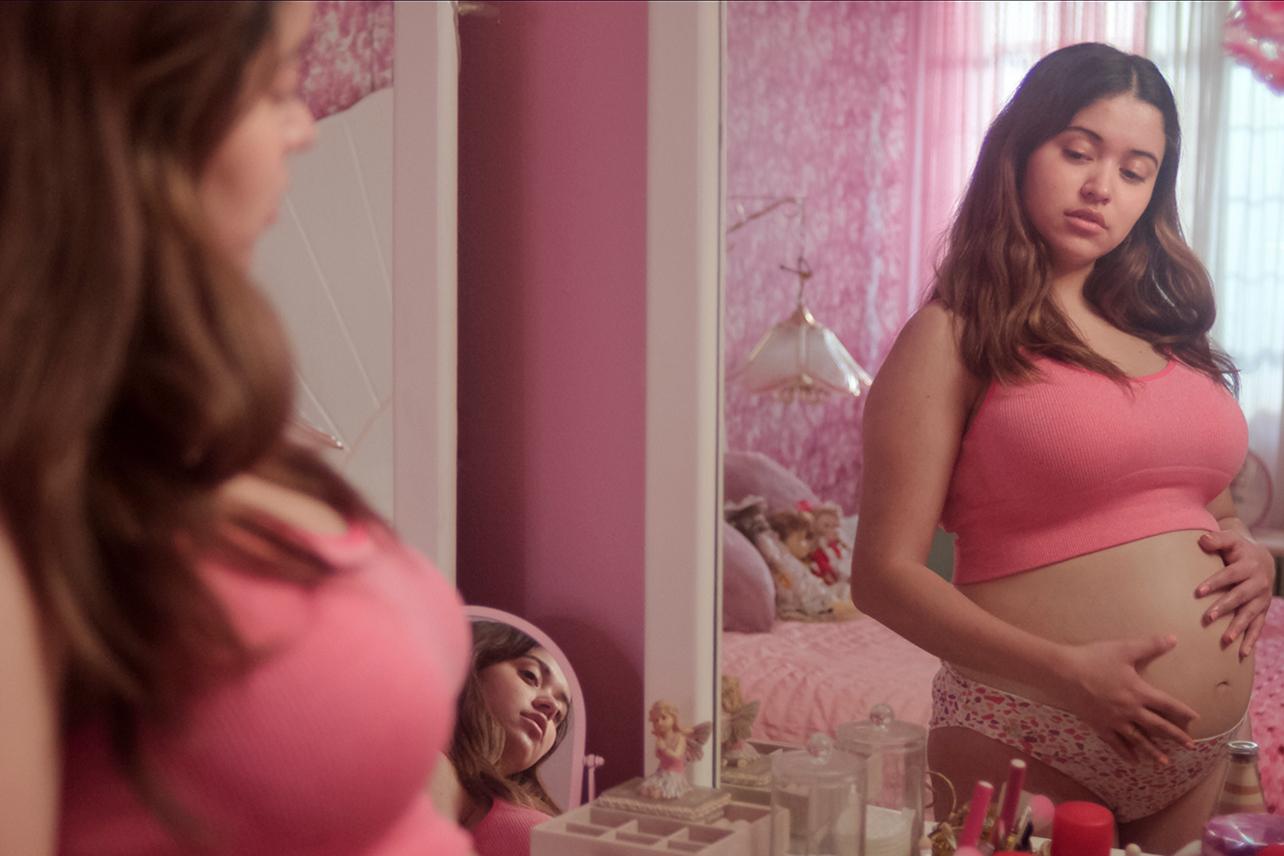
So, this portion of the film plays more than a little bit like a telenovela: Ale was 17 when she first got pregnant and married Arturo. It’s a fairly typical life at first. She works in administration at Mexico General Hospital, has a prickly relationship with her in-laws, she has always dreamt of being a mother, and Arturo is thrilled with the idea of being a father. This is a culture that values motherhood above all other female accomplishments. But she miscarries twice, and Ale’s mother-in-law blames her, saying she didn’t take care of herself, with Arturo piling on, asserting that Ale wasn’t “careful” enough. He also refuses to adopt a child. He wants [insert title of movie here], and won’t compromise.
Eight years pass without children, and an IVF treatment results in Ale’s third pregnancy. She miscarries again, but this time, she keeps it a secret. She just can’t face the chastising and judgment. This is when the real Ale says that “fate, the universe” stepped in: One day at the hospital, Ale meets Mayra, who’s pregnant and wants an abortion. They make a secret deal that Mayra will see the child to term and Ale will take the baby, and it’ll stay off the books. (Yes, you may squint puzzlingly at this.) And from here, Ale overeats junk food to make herself gain weight and look pregnant, participates in a massive baby shower and somehow manages to fake her way through a doctor’s exam to facilitate maternity leave. Mayra gives birth. Ale smuggles the child past security. Arturo doesn’t know what the hell’s going on when she pulls their daughter out of a gift bag in the hospital parking lot. And he still doesn’t quite know the whole story when the cops bust in and arrest them.
What Movies Will It Remind You Of? Those other fake-pregnancy docs? Maternal Instinct and A Toxic Love Story.
Performance Worth Watching: The judge and psychologist Alberdi interviews for the classical documentary portion of the film provide the necessary objective perspectives this story needed to balance it out.
Our Take: That psychologist’s testimony is key: No spoilers as to what occurred after the real Ale’s arrest (note, it made national headlines in Mexico in 2009), but the doctor diagnoses Ale with dissociative disorder. That truth likely inspired Alberdi’s decision to stage elaborate, scripted reenactments that underscore Ale’s status as an unreliable narrator; if her story has fictional elements, why not stage it as such? Even more clever, late in the film, we see footage of the real Ale on the film set as Celeste plays the fictional Ale, a clear illustration of the real Ale’s ability to disassociate, to essentially “watch herself” from outside herself. What at first seems like an annoying overuse of reenactments eventually becomes a thematic bullseye.
The real Mayra sits for an interview, and along with the testimonies of the psychologist and judge, Alberdi pieces together a logical line of reasoning for what happened, and how, and why. The filmmaker keenly navigates an elephant through the eye of a needle, empathizing with Ale’s struggles but never justifying or aligning with her ethically reprehensible decisions. Most true crime documentaries are content with presenting the extremities of human behavior without thoroughly examining them and so we often reach the credits of these documentaries shaking our heads at the allegedly inexplicable mysteries of why some people do dark, disturbing things.
And so A Child of My Own becomes about more than just our jaws hitting the floor with every wild turn. It addresses the pressures Latin American women face about their value and roles in society from a psychological standpoint, and prompts us to consider that rehabilitation and forgiveness aren’t always attainable. Alberdi strips the sensationalism from the story, approaching it with the mannered intelligence that so many films of this ilk so gracelessly lack.
Our Call: A Child of My Own is so thoughtful in its approach to true crime, it risks not being a “true crime documentary” at all. That’s a good thing, of course. STREAM IT.
John Serba is a freelance film critic from Grand Rapids, Michigan. Werner Herzog hugged him once.