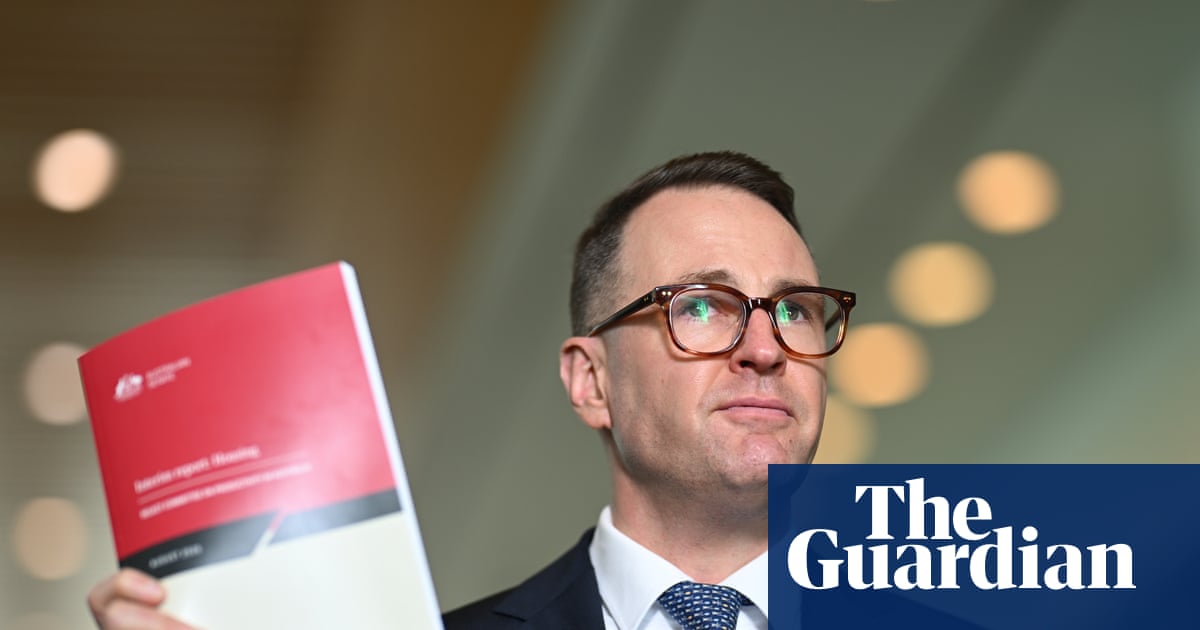
Andrew Bragg proposed condensing the National Construction Code from nearly 2,000 pages to just 80 to get more ‘basic and safe’ homes built, doing away with ‘optional extras’ such as compulsory energy efficiency and accessibility measures. Photograph: Lukas Coch/AAPView image in fullscreenAndrew Bragg proposed condensing the National Construction Code from nearly 2,000 pages to just 80 to get more ‘basic and safe’ homes built, doing away with ‘optional extras’ such as compulsory energy efficiency and accessibility measures. Photograph: Lukas Coch/AAPBragg says lower-income earners should accept substandard housing as colleagues rebuke his migration targetAngus Taylor publicly cautions NSW senator for diverging from opposition policy in National Press Club speech as Nationals warn against any changes to working holiday visas
Follow our Australia news live blog for latest updates
Get our breaking news email, free app or daily news podcast
Andrew Bragg has agreed that lower-income Australians should accept poorly built housing in a bid to boost the number of dwellings built nationally, amid growing internal fallout continues over his proposal to cap net migration to modern historic lows.
The opposition leader, Angus Taylor, and several of Bragg’s colleagues publicly cautioned the NSW Liberal moderate for going off script in his speech on Wednesday as the Nationals warned against any changes to working holiday visas.
The shadow housing minister’s proposed “economic revolution” centred around cutting red tape to get more houses built. As part of the agenda, Bragg would condense the National Construction Code from nearly 2,000 pages to just 80 to get more “basic and safe” homes built and doing away with “optional extras” such as compulsory energy efficiency and accessibility measures.
Read moreAsked on ABC Radio National on Thursday whether this meant low-income earners should accept substandard housing, Bragg replied “yes, definitely”.
“We’ve got to be clear, there are trade-offs here. And I’ve been counselled not to use the term ‘Maslow’s hierarchy’, because perhaps some people don’t know what that means,” he said.
“But I mean, it’s more important to have a house than to not have a house. And so, given the affordability crisis we have in the housing system, we need to just build more houses.”
Maslow’s hierarchy of needs is a psychological theory proposing a ranking of basic human needs.
Bragg’s comments followed shadow treasurer, Tim Wilson, suggesting on Wednesday that people, in some cases, could put “a jumper on in winter rather than spending huge amounts of money” on improving housing quality.
Housing inequality groups including the Australian Council of Social Services (Acoss) have criticised Bragg’s suggestion, saying quality housing was both more affordable and safer for vulnerable portions of the community.
Maiy Azize, spokesperson for the housing advocacy group Everybody’s Home, said the change would make building homes cheaper for developers by allowing them to cut corners.
“Accessibility, energy efficiency and basic liveability are not luxuries. They are the minimum standards people should be able to expect from their homes,” Azize said.
“We have a housing crisis because people cannot afford a home. Building more poor-quality homes does nothing to fix that crisis. It simply gives developers another way to profit from it.”
Read moreOn immigration, Bragg said the net overseas migration (Nom) figure would have to be lowered to 180,000 a year over four years to ensure housing supply matched population growth – a Nom that would become the country’s lowest since the mid-2000s.
Bragg said the change was possible through “modest reductions in international students, working holidaymakers, and some unskilled workers”.
The Coalition has yet to formally nominate a figure or determine which visa categories would be slashed to achieve the outcome though Taylor has indicated it would be “well below 200,000”.
But the Nationals leader, Matt Canavan, was quick to rule out any cuts to visas for workers undertaking jobs in rural and regional areas for farmers but downplayed any concern of conflict.
“All Andrew said was that we’ll look at all these things to bring migration numbers down now,” he said on Thursday.
“There’s a mountain out of a molehill being made here, but I had a good chat with Andrew this morning.”
Taylor said he had “made clear” to Bragg he needed to stay on script, refusing to provide the Coalition’s Nom figure as it will “depend on housing supply”.
“I made clear to him that his job is to express … the views of the Coalition and the senior team, of which he is a member,” he said.
Paterson said he was not surprised Bragg shared his view publicly because he was an “outspoken person”.
“[Bragg’s] got lots of strong views, and he shares them freely,” Paterson said.