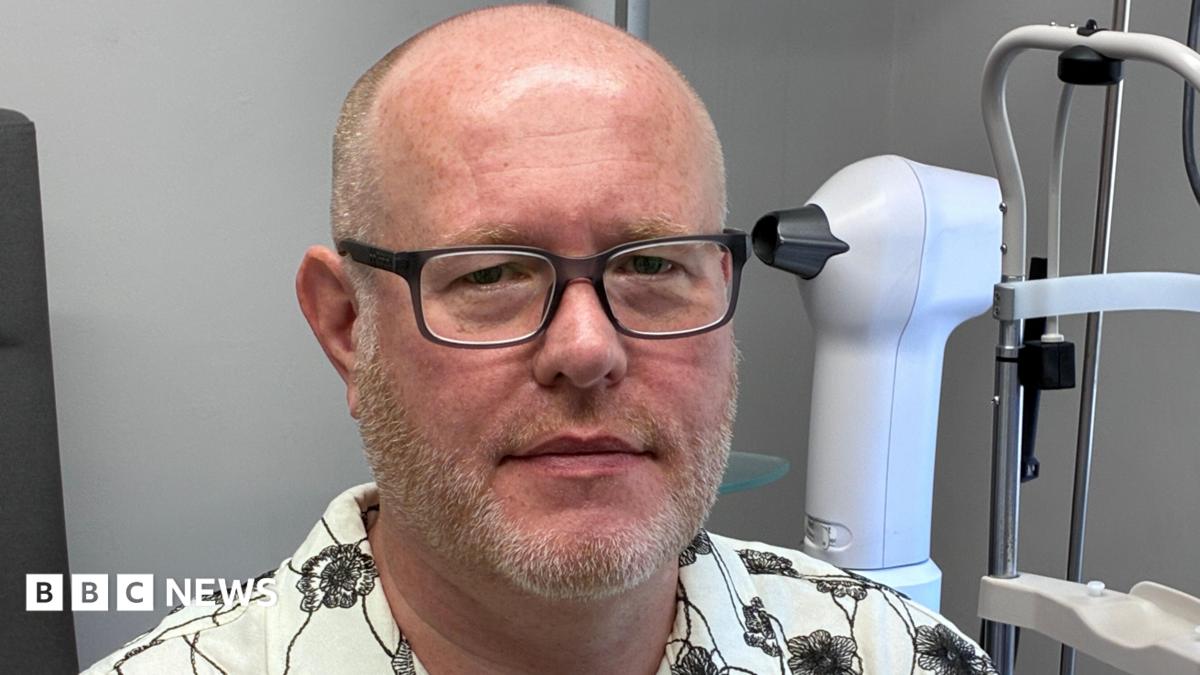
Image caption, Peter Smith suffered permanent eye damage by watching the 1999 solar eclipse
A man who suffered permanent eye damage by watching the 1999 solar eclipse has warned people to use protection when watching Wednesday's astronomical event.
Peter Smith, from Taunton, viewed the solar eclipse 27 years ago wearing a borrowed welder's mask having thought it would provide protection from the sun's rays.
But the next morning he noticed flashing in his eyes alongside headaches and later discovered both of his retinas had been damaged. He is now asking people to use appropriate eye protection to enjoy the eclipse safely.
Smith said: "Make sure its got the right protection and filters to stop any damage because any damage you get, it'll never heal. It's not like cutting your hand."
Smith said he still feels the effects of looking at the eclipse directly.
"Even now there is a residual impact. When I'm tired sometimes a flashing dot might come back, and it's not nice when it does.
"If you're going to go and watch it, make sure that everything you've got is correct."
Farrant said: "The partial eclipse in the UK really means that people will want to look at the sun, but there's still enough to cause damage even when the sun is at its dimmest here in the UK.
"If they're not safe when they are viewing the sun, you can end up with what we call a 'solar burn' at the back of the eye and that can have a lifelong lasting impact on the central part of your vision."
Image caption, Optometrist Sarah Farrant said watching the eclipse without protection could have a lifelong impact on vision
For those wanting to watch the eclipse, the safest way to do so is by using certified eclipse glasses that meet the ISO 12312-2 safety standard, or by viewing the eclipse indirectly.
Looking at the sun directly with naked eyes, sunglasses, unfiltered cameras, binoculars or a telescope can cause significant damage.
A kitchen colander is one way to indirectly observe the eclipse. To do so, hold it above the ground with your back to the sun. The holes in the colander will project a grid of crescent suns onto the ground.
To play this video you need to enable JavaScript in your browser.This video can not be played
Contact formContact formFollow BBC Somerset on Facebook, external and X, external. Send your story ideas to us on email or via WhatsApp on 0800 313 4630.
Where in the West Country to see the biggest solar eclipse since 1999
Woman's eyesight saved by cutting-edge test after mystery infection