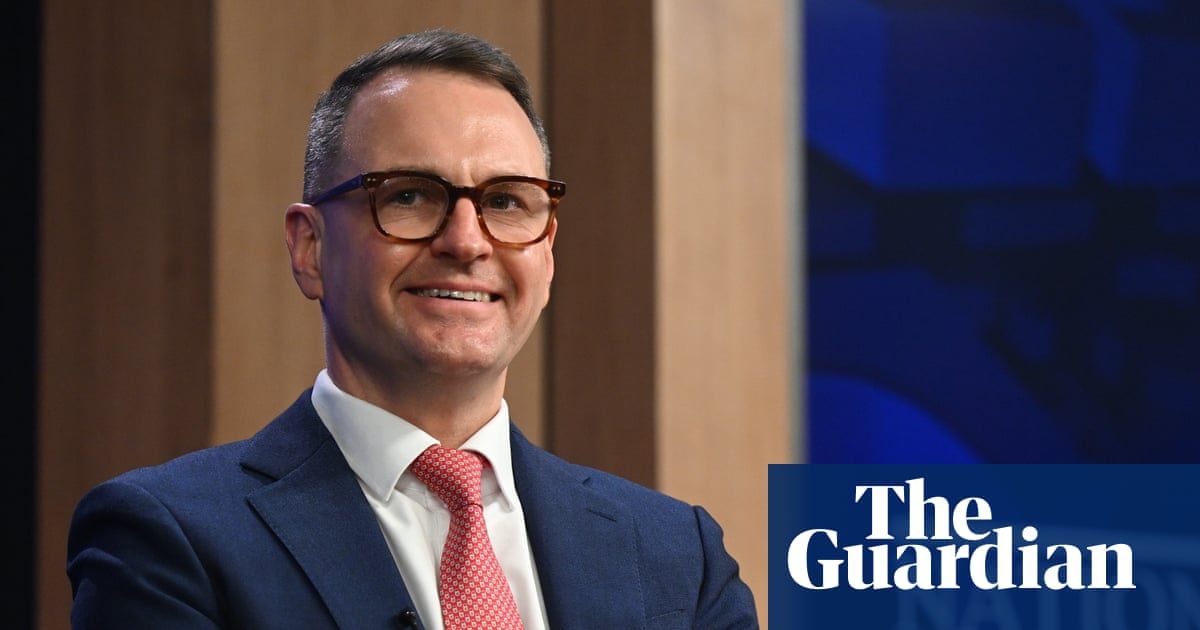
The shadow minister for housing, Andrew Bragg, says his migration figures target could be achieved via ‘modest reductions in international students, working holiday-makers, and some unskilled workers’./ Photograph: Lukas Coch/AAPView image in fullscreenThe shadow minister for housing, Andrew Bragg, says his migration figures target could be achieved via ‘modest reductions in international students, working holiday-makers, and some unskilled workers’./ Photograph: Lukas Coch/AAPAndrew Bragg stands by proposed migration limits – even as Liberal colleagues decline to back him inAngus Taylor and other Coalition members not supporting shadow housing minister’s target migration numbers, which would be the lowest figures since the mid-2000s
Follow our Australia news live blog for latest updates
Get our breaking news email, free app or daily news podcast
Liberal senator Andrew Bragg has stood by his proposal to lower net migration to 180,000 per year in a wide-ranging speech where he lamented not stopping the Morrison government’s “madness” – even as colleagues side-stepped supporting the target figure publicly.
The opposition frontbencher said a housing “shortfall” – comparing the number of dwellings against population size – could be rectified if the net overseas migration (Nom) target was set at 180,000 or under over four years.
The reduction would bring the country to its lowest Nom figure since the mid-2000s.
“A Nom reduction on this scale is manageable and in line with reductions we’ve seen in the past – for example, in 2009-10 when Nom declined from 300,000 to 175,000 in 18 months,” Bragg said in his address at the National Press Club on Wednesday.
Read more“This reduction can be achieved by getting the requisite skill changes that industry needs by having modest reductions in international students, working holidaymakers, and some unskilled workers.
“Lifting migration standards and analysing them carefully each year is crucial to ensure integrity and public trust in our migration settings.”
The Nom figure surged drastically after the pandemic, where it had fallen below zero, but has began to return to more typical levels in recent quarters.
Under the Albanese government’s settings, the Nom is forecast to drop to 295,000 people last financial year; to 245,000 in 2026-27; and 225,000 in 2027-28.
Bragg admitted the opposition hadn’t yet finalised its “complete policy” on migration settings but he felt it was “important to move the debate” on to more details.
“We’re trying to get to a more sophisticated understanding of this nexus between housing and migration,” the shadow housing minister said.
“I think that the ministers of the day or the people who want to be ministers need to engage in the detail and say, ‘this is what I think we need to try and achieve. This is the range that we’re shooting for’.”
The Coalition has so far been reluctant to provide an exact figure for its Nom target, but the opposition leader, Angus Taylor, has indicated it will be “well below 200,000”.
“We will have an exact number when we go into the next election campaign, because we’ll know how many houses are built,” Taylor told 2GB radio.
The shadow treasurer, Tim Wilson, also declined to back his colleague’s proposed target, saying “I don’t think you should bank that at all” when asked if it was finalised policy.
“We haven’t made an announcement about where we’re going to be going into the next election, but our focus is actually about what we need to do to invest in the long-term growth and success of our country,” he told News24.
The shadow education minister, Julian Leeser, told an education conference the Nom must be lowered and that “international education must be part of the balance”.
Nationals leader, Matt Canavan, ruled out any cuts to visas that might affect the number of migrant workers employed by farmers, or in rural and regional areas.
Meanwhile, One Nation has said it will cap visas to 130,000 per year but has not provided any detail or clarity on which areas would be targeted.
Bragg’s speech outlined a number of bold policy ideas, including stripping the National Construction Code from hundreds of pages to just 80 and a flatter tax structure for higher-earning individuals.
But the NSW senator also acknowledged the role he played in former Coalition governments.
“As someone who was a backbencher in the Morrison government, I am sorry I didn’t do more to stop the madness,” he said.
“I believe the new liberalism Australia needs isn’t socialism and it isn’t conservatism seeking to turn back the clock.
“The madness started when Canberra gave up on the budget … whenever a politician announces more spending, they are stealing from tomorrow because there is no intention to balance the books.”