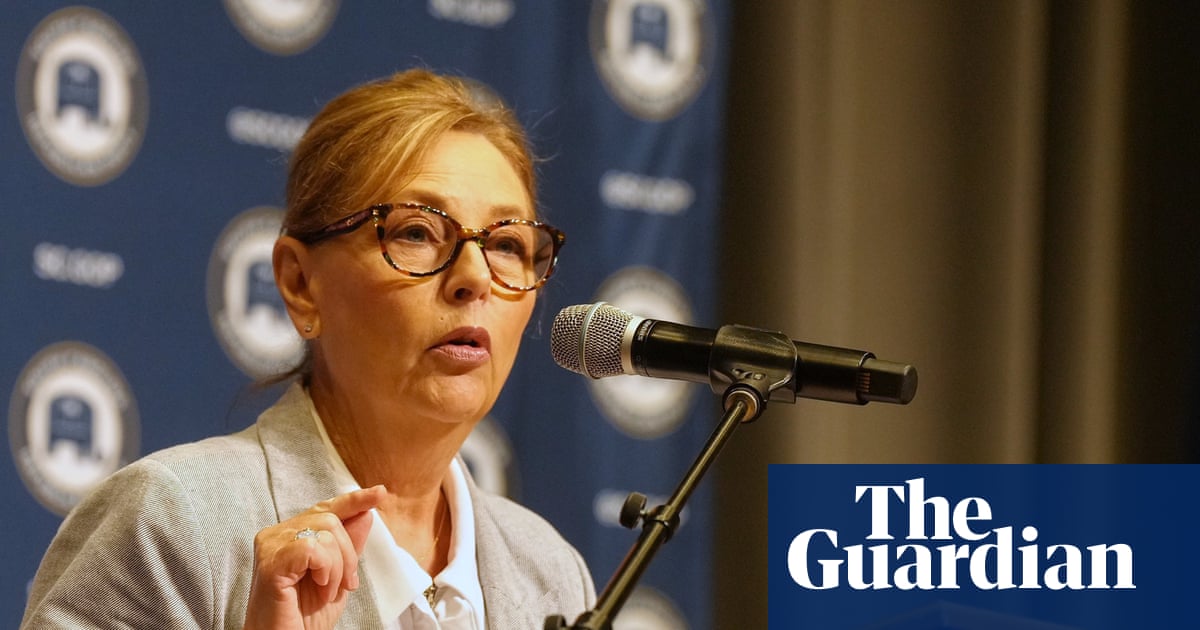
Darline Graham speaks at a South Carolina Republican Senate candidate stump event in Lexington on 1 August 2026. Photograph: Meg Kinnard/APView image in fullscreenDarline Graham speaks at a South Carolina Republican Senate candidate stump event in Lexington on 1 August 2026. Photograph: Meg Kinnard/APSenator Darline Graham advances to runoff in South Carolina special primaryLindsey Graham’s sister, appointed to replace the Republican, held a narrow lead in the Senate primary
Senator Darline Graham, appointed to complete the Senate term of her late brother, Lindsey Graham of South Carolina has advanced to a runoff election for the Republican nomination of the seat. It remains unclear who she will face on 25 August.
Graham held a narrow lead in the polls going into the abbreviated special primary on Tuesday, which predicted a close contest for second place. Congressman Russell Fry, Congressman Ralph Norman and former governor Mark Sanford polled within a point of each other in the most recent survey from the Trafalgar Group. Graham has loudly trumpeted her endorsement from Donald Trump, but also enjoys the support of South Carolina’s governor, Henry McMaster, and John Thune, the Senate majority leader.
“I ran a state agency. I turned it from a struggling agency into a national model. I think that’s great experience to bring to the table,” Graham said, addressing reporters after casting her ballot on Tuesday. She highlighted the passage of a sanctions bill targeting Russia during her short tenure in Washington. “I was the deciding vote on Todd Blanche as attorney general. So I think I’ve accomplished a whole lot in three weeks.”
Read moreSanford, who served as governor between two stints in Congress, has campaigned on fiscal stewardship, noting the dramatic increase in the federal debt.
“I got into this race because I believe our nation is at a financial tipping point.” Sanford wrote on social media on Tuesday. “I held the line on spending as Governor unlike any Governor before or since and ask for your vote today so that I might fight for our grandkids’ ability to afford the American Dream.”
Norman’s congressional district in the suburbs of Charlotte is vote-rich for Republicans, contributing disproportionately to statewide primary results. Norman, who has served in Congress since 2017, also had broad support from state legislators and a statewide campaign apparatus that had largely remained intact after his failed primary bid for the governor’s office in June.
His campaign has highlighted Norman’s support for the Save America Act, a Trump-backed bill to impose federal requirements on states to mandate proof of citizenship at voter registration and to submit state voter rolls to federal oversight. He also has promoted a bill to strip housing funding from cities that do not cooperate with Immigration and Customs Enforcement (ICE).
Candidates quickly turned on each other in debate, social media and political advertising during the abbreviated campaign. Fry’s political attack advertising amplified a comment Graham made in a debate that was favorable to datacenter development, and has likened her appointment to an act of “DEI” – the practice of diversity, equity and inclusion that has become anathema to the right.
Fry has come under fire from Graham and others for running simultaneously for the US Senate and to retain his congressional seat.
Fry had the support of two of his fellow South Carolina congresspeople, Joe Wilson and Sheri Biggs. Wilson’s support stands out; the ascendancy of Wilson’s son, South Carolina’s attorney general, Alan Wilson, as the state’s Republican nominee for governor this year, speaks to statewide influence.
Statewide special elections in South Carolina are rare events. The resignation of Senator Jim DeMint, a Republican who left office in 2013 to lead the Heritage Foundation, triggered the most recent example. Governor Nikki Haley named then congressman Tim Scott as DeMint’s successor. Scott won both the nomination and special election to complete the term handily, becoming only the second Black Republican senator since Reconstruction and the first Black senator in the southern United States elected directly by voters. He is now the longest-serving African American US senator in American history.
The winner will face Annie Andrews, the Democratic nominee and a pediatrician, in November.