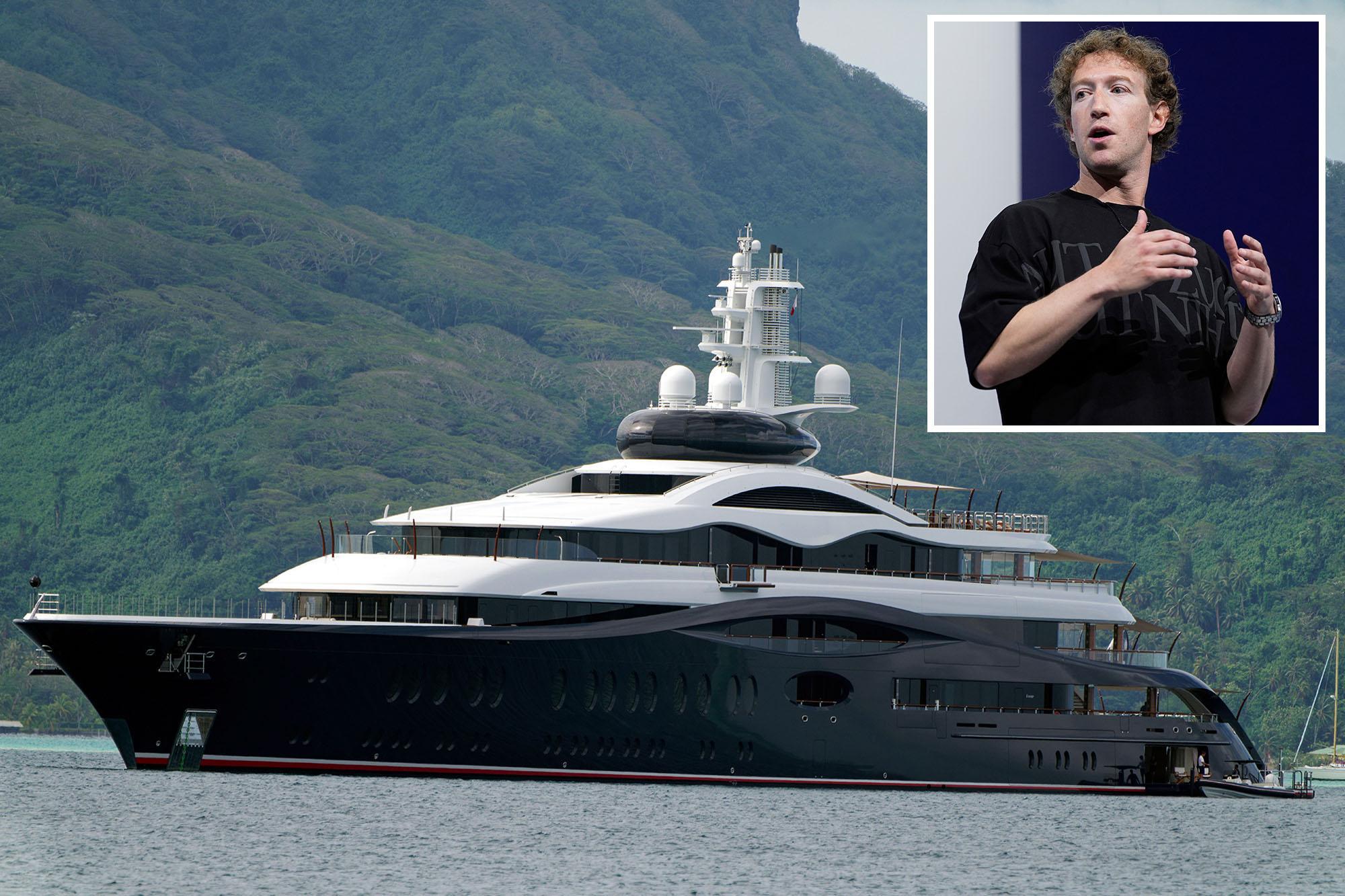
Add The New York Post on Google Facebook boss Mark Zuckerberg is defending the crew of his $300 million superyacht over accusations that they “refused” to help a stranded boat — claiming they were just tuned in to the wrong radio channel.
The billionaire’s 387-foot leviathan, Launchpad, was the closest to a 21-foot skiff that ran out of fuel in Alaska on Aug. 3 — but sat by as a much smaller and older tour steamboat, the Wilderness Legacy, passed it to finally help.
A New York tourist claimed in an online post that their tour boat had to help “after the Coast Guard radioed Mark Zuckerberg’s yacht — which was closer — and they repeatedly refused to respond.”
“There was near unanimous booing when the captain announced this,” the tourist, Michael Love, wrote on Bluesky.
“The Launchpad” did not respond to a boat’s distress call off of Alaska on Aug. 3. Getty Images However, Zuckerberg’s team denies his crew heard the call for help, even though it was made over the default emergency radio frequency all boats are expected to monitor.
“As the Coast Guard noted, the boat was not in distress, and by the time the crew reviewed the Coast Guard contact on a different radio channel from the one they were operating on, the assist was already underway,” Zuckerberg’s spokesman Brian Baker said.
“We’re grateful all parties are safe,” said Baker, who noted that the Meta CEO and his wife were not on the yacht at the time.
Zuckerberg and his family were not on board the yacht at the time. AP Photo/Godofredo A. Vásquez When a ship puts out a distress call, all vessels in the area are obligated by law to respond as long as doing so would not put their own ship at risk.
However, as the call was a request for help — not distress — the legal obligation to help did not apply, maritime law expert Ian Ralby noted.
“It’s the difference between calling AAA and 911. You need an ambulance on site, that’s a distress call. You need somebody to give you a jump or to tow your car, you call AAA,” said Ralby, who is president of the nonprofit Auxilium Worldwide that focuses on promoting sustainable development and ocean governance.
“Both concerning, both needing assistance, but the legal obligations to respond are very different,” he said.
Ralby noted it’s strange that the Launchpad crew missed the call for help because it is common practice for ships to always be monitoring channel 16 on their radios
Retired Coast Guard Captain Aaron C. Davenport, who spent three decades in the military branch, also said that running out of gas isn’t considered an emergency, and the Launchpad was “under no obligation whatsoever to assist them.”
“Is it that common courtesy to help other mariners out? Yes, because someday you’re going to need assistance,” he said.
“Alaska is a remote place so it could easily go from non-emergency to emergency and very quickly,” said Davenport.