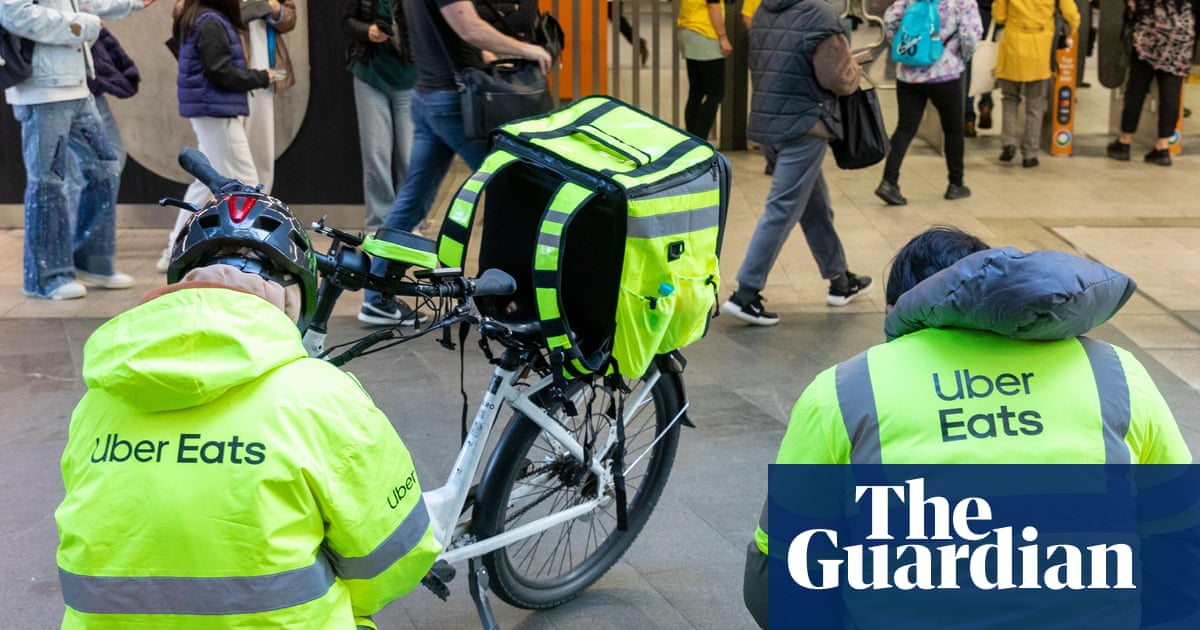
Under the changes, delivery platforms will have to organise and pay for personal accident insurance that ‘provides a reasonable minimum level of cover’ for their workers Photograph: Martin Berry/AlamyView image in fullscreenUnder the changes, delivery platforms will have to organise and pay for personal accident insurance that ‘provides a reasonable minimum level of cover’ for their workers Photograph: Martin Berry/AlamyDelivery drivers to be paid minimum $31.30 an hour across Australia in ‘world-leading’ decision Fair Work Commission issues a new minimum standards order for gig workers to come into effect 17 August
Get our breaking news email, free app or daily news podcast
Delivery drivers in Australia will be paid a minimum rate of $31.30 an hour and insured for injuries on the job under a landmark agreement approved by the industrial umpire.
The Fair Work Commission (FWC) on Tuesday issued a new minimum standards order for gig workers who perform on-demand delivery of food, drinks, or groceries, and the operators of the digital platforms who engage their services.
Read moreThe Transport Workers’ Union, representing the gig workers, had jointly applied with major platforms DoorDash and UberEats for the new protections in 2024, after years of talks.
After taking public submissions on new standards for the industry, including from gig workers and other interested parties including Amazon and Auspost, FWC has greenlit the conditions, to come into effect from 17 August.
The deal is likely to have involved concessions from either side of the negotiating table, including the union agreeing to call the workers “employee-like”.
In a joint statement on Tuesday, the TWU, UberEats and DoorDash said the new standards would provide an “industry-wide safety net for hundreds of thousands of [workers] while preserving the flexibility that sits at the heart of on-demand work.”
The TWU national secretary Michael Kaine said the new standards were “world-leading”.
Under the new standards, workers will be responsible for maintaining third-party insurances on the vehicles they use for deliveries, so if they get in an accident and damage another vehicle the delivery platform will not be liable for the cost.
On the other hand, delivery platforms will have to organise and pay for personal accident insurance that “provides a reasonable minimum level of cover” for their workers, although experts have previously pointed out this is open to interpretation.
While they were proposed by the TWU, UberEats and DoorDash, the conditions are expected to apply to any on-demand platforms that sell food, drinks or groceries, as well as the people they hire on an ad hoc basis to deliver products.
The new conditions include “safety net” pay rates for workers, who will initially receive hourly rates ranging from $31.30 to $32 depending on the class of vehicle – for example, whether they are riding a push bike or driving a car.
The minimum rates – which are designed to ensure delivery workers are paid even if they are, for example, waiting for a restaurant – will increase by 50 cents from 1 January 2027.
The new standards cover a range of issues and, among other provisions, are intended to provide clearer dispute resolution and workers the right to unpaid time off.
The TWU, DoorDash and UberEats made the joint application to the FWC after the Albanese introduced workplace reforms in 2032, which included empowering the industrial umpire to set minimum standards for gig workers.
The workplace relations minister, Amanda Rishworth, on Tuesday said the resulting standards were a “milestone”.
“This [FWC] order is a big step in delivering Australia’s world-leading gig worker protections and means food delivery workers don’t have to trade off flexibility for fairer protections,” she said.