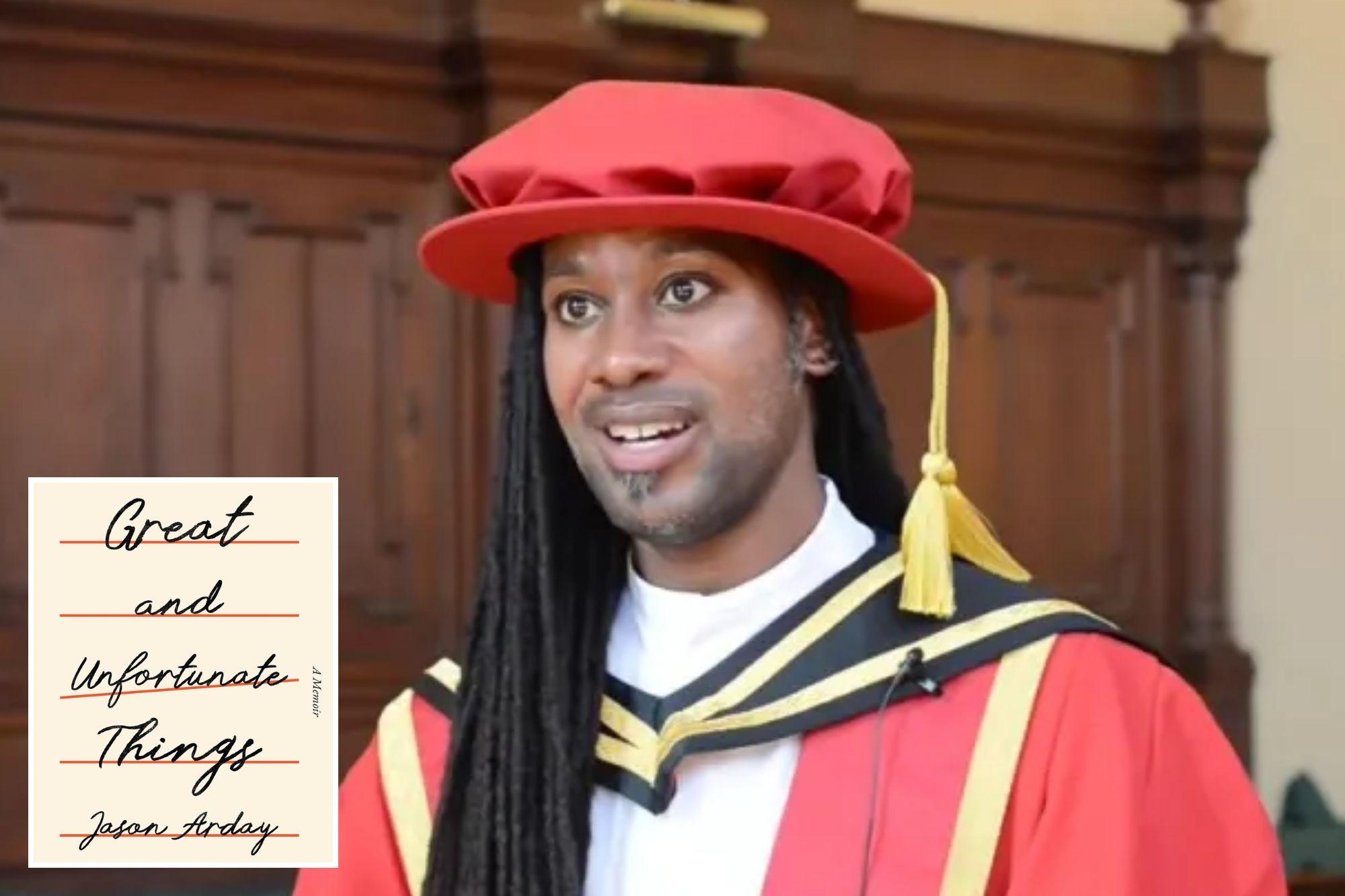
Add The New York Post on Google A Cambridge University professor with an unbelievable story of overcoming systemic oppression skyrocketed to stardom.
Then, people started to realize his story actually was unbelieveable — in the true sense of the word — and his fabulist tales and academic record fell apart days before his memoir’s publication.
“Great and Unfortunate Things” is still slated to hit shelves in the US on Tuesday, published by Simon & Schuster — a deal that, at least according to Arday, was valued at $1.4 million.
The book is coming out just three years after the London-born academic became Cambridge’s youngest ever black professor at 37 — proof that, not long after being hired, he sniffed the payday that came with the DEI crews.
According to the publisher, his book tells the story of all of his unbelievable triumphs — “without romanticizing the struggle.” Except romanticizing the struggle is the key to Arday’s success.
He resigned from his position at Cambridge in early August after being accused of academic misconduct. That has triggered scrutiny into his incredible biographical claims — like running 600 miles in six days, not learning to read until he was a teenager, and having a severed pig’s head left at his door.
And yet, Simon & Schuster are stuck with, no doubt, many copies of his book, in which he — with the help of a coauthor, of course — tells the very, very unlikely story of his own life.
According to reporting by the Atlantic, Arday’s book proposal included unbelievable claims about his wild and crazy life — and ironically framed the book as an “awe-inspiring tale of near mythic proportions.”
Crazy stories in the proposal include being in a several-months-long coma after being hit by a car and experiencing “locked in syndrome.” He, apparently, also survived testicular cancer in addition to his previously claimed brain tumor. And he changed details about a thwarted suicide attempt.
According to reporting from the Times of London, many of the tallest tales from the proposal, like the coma and the cancer, were conspicuously dropped from the actual book for unknown reasons.
Though the memoir won’t frame it this way, his is the story of elite institutions using a person as a symbol of progress, then dismissing any concern about him as proof of bias.
Arday became Cambridge’s youngest ever black professor in 2023 — even though he only published his first peer-reviewed journal article in 2018. It seemed obvious from the outset that his incredible story of overcoming just about every obstacle imaginable was the main appeal to the university.
“His story [epitomizes] the significant barriers that neurodivergent individuals, those from lower socio-economic backgrounds, and Black, Asian and Minority Ethnic people face,” the school’s announcement read.
His claims were rich. Yet woke academics — and later the publishing industry — lapped it up.
The stories go on and on. He’d run 30 marathons in 35 days with a fractured bone. He’d raised £5 million for charity. He’d survived racist attacks. There was just about no obstacle that he hadn’t blown past.
Simon & Schuster did not respond to The Post’s request for confirmation as to how much it had paid Arday for his manuscript, but the book deal seems to be further proof oppression horror stories are catnip for academia and publishing alike — and very lucrative catnip at that.
For woke institutions obsessed with overcoming the optics of their stuffy whiteness, he was a shoo-in. Arday’s story was so good it was worth throwing all critical thinking out the window. But Arday couldn’t run from the consequences of his own storytelling forever.
He was enabled by the institutions that allowed him to dig his hole deeper and deeper without ever holding him accountable. Publishers and academics are some of the smartest among us, but Arday’s ascent is proof of an uncomfortable truth: that basic scrutiny can go out the window when DEI enters the picture.
It’s not the first time something like this has happened. Professors have been caught for telling all sorts of crazy lies to fit the DEI narrative, like H.G. Carillo, a George Washington University professor who claimed to be from Cuba but was exposed as Detroit-born Herman Glenn Carroll, with no ties to the nation.
And more recently a promising young black writer plucked from relative obscurity was allegedly exposed for writing his book with AI. Unlike Arday, he lost his publishing deal.
Tomorrow’s publication represents a payday and validation for an accused plagiarist and fraud — who earned acceptance in academia and publishing by constantly claiming a lack of acceptance.