Add The New York Post on Google Some druggies trip on acid. Others soar on magic mushrooms. Mescaline heads claim using it brings instant enlightenment.
And then there’s 5-MeO-DMT, a little-known psychoactive chemical compound idolized among members of a growing international cult, including celebrities.
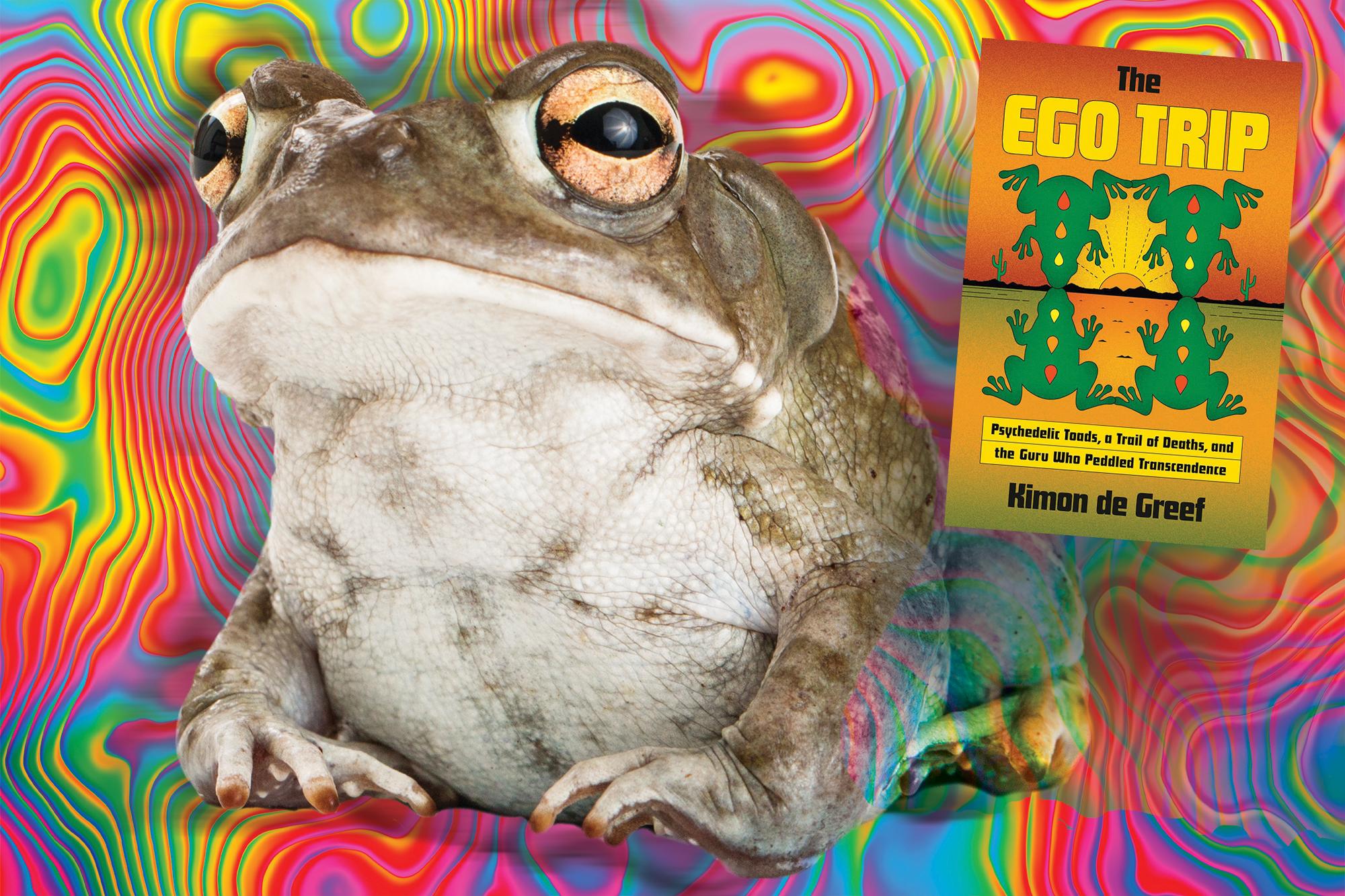
Press on the glands of the obscure Sonoran Desert toad — found in Mexico’s vast and deadly desert — and it will release venom. That discharge hardens into brittle flakes, which are then vaporized in glass pipes and smoked — like crack.
The formerly esoteric practice — known among the cognoscenti as “smoking the toad” — is hailed by its growing user base as the “God Molecule.”
Under the right guidance, users say, the drug dissolves reality and induces “ego death” as well as an obliterating loss of identity.
The toad, which lives among the ancient Mexican Seri tribe, has become a psychedelics Everest, according to Kimon de Greef’s mind-blowing and meticulous “The Ego Trip: Psychedelic Toads, a Trail of Deaths, and the Guru Who Peddled Transcendence” (Doubleday).
As de Greef recounts, the brains and “chief instigator” behind toad smoking was a “charismatic Mexican doctor,” Octavio Rettig Hinojosa, “who styled himself as a 21st-century shaman.”
Known to his followers simply as Octavio, the doctor “catalyzed a modern psychedelic movement, propelling the toad, and himself, into popular consciousness.” But as de Greef tells us, “a substance capable of inducing the most profound human experiences also opens the door to exploiting them.”
Hunter Biden smoked the toad and claimed in his memoir it kept him clean from cocaine for a year.
Former Navy Seal Robert O’Neill — who took credit for firing the shots that took down Osama bin Laden — revealed in an interview with Tucker Carlson he smoked the toad as a treatment for post-traumatic stress disorder.
Mike Tyson confessed on “The Joe Rogan Experience” that he had smoked the toad, and, “I’ve never been the same. It’s almost like dying and being reborn.”
Bill Atkinson, one of the first members of the Apple Macintosh development team, told de Greef he first smoked the toad in 2017, describing it as a “psychedelic bungee jump” that offered “training wheels to teach you a divine state of being.”
That divine state of being is produced by the toad’s internal “veritable chemical factories” in its guts. The croakers have bellies the “girth of softballs” and “bulging glands on their necks and limbs.”
How do users consume the technically poisonous venom without dying? De Greef explains that “although dangerous to swallow, the secretions of the Sonoran Desert toad undergo a kind of alchemy when vaporized, becoming a catalyst for breakthrough states of transcendence.”
Toads have long been invested with powerful symbolic meanings around the world. In medieval Europe, they were key ingredients in witches’ brew, and ancient Brahmin texts compare the rhythmic croaking of frogs to students reciting sacred hymns.
But, in the dry, inhospitable Sonoran Desert in Mexico, the toad became an agent for psychic death. Octavio transformed this into a coveted psychedelic experience.
According to the book, the peddler had first been introduced to “a prodigious array of psychedelics” by Gerardo Sandoval, a fellow student at the University of Guadalajara who was convinced he could cure Octavio’s cocaine addiction with 5-MeO-DMT. Octavio claimed it kicked the itch and inspired him to become an evangelist for the toad.
Convinced of the drug’s benefits, Octavio then introduced it to a Northern Mexico tribe overwhelmed by a methamphetamine crisis in the early 2010s. His therapy work with addicts was apparently so successful that the local tribe dubbed him el doctor sapo — the toad doctor.
A TEDx organizer named Klaudia Oliver caught wind of Octavio. “Sensing an opportunity,” she coached him on public speaking, styled him and arranged speaking arrangements for him. People began lining up to smoke toad with the doctor. The pair traveled to the 2013 Burning Man Festival, where he celebrated the toad medicine as an ancestral remedy and “the ultimate experience.”
Octavio was on the cusp of becoming a “psychedelic superstar,” the author writes, and his appearance at Burning Man skyrocketed his fame. The “Pied Piper of toad” became known by his first name, “like some pop diva or soccer star.” And he believed the whole world would soon be getting high with him.
He combined a neo-shamanic approach with Seri tradition. During his ceremonies, he “dressed in a red ceremonial Seri and pants, like a Mexican Elvis, shaking his rattle and singing.”
Octavio started making money like Elvis, too. He charged for group sessions that brought in thousands, and then he tripled the price. Fame followed. Equipped with a business card that declared him a “practitioner of indigenous knowledge for the whole world,” he began traveling the globe with his amphibious potion. His path, he believed, was guided by divine forces.
Octavio was literally and figuratively riding a big high for years.
But de Greef claims that reports emerged that the shaman wasn’t always so patient with his disciples. When one group asked what to expect from their first trip, he allegedly shouted, “Put on a fucking diaper and go outside!”
He offered little preparation to his clients and did almost nothing to cultivate a safe experience. The drug sometimes unleashed powerful sexual urges in some women, and Octavio began relationships with several clients.
He was viewed by some as a god, or at least a rock-star shaman. The United Nations Association of Venezuela endorsed him in 2014 as a “carrier of traditional indigenous medicine.”
But the trips took an even more disturbing turn. In 2016, Octavio was allegedly spotted on video kicking and slapping a terrified male client on a Venezuela beach. Another video reportedly showed him pouring water down the throat of a comatose tripper — as if he were waterboarding him — and using a Taser-like device to motivate reluctant clients.
He defended this monstrous behavior as a vital part of the trip, a way to push past psychological resistance. “That’s what I’m trying to do. A real mindf–k for people,” Octavio told a psychedelics conference.
That defense didn’t hold up when people started dying, according to the book. There are rumors that at least four people had died during his sessions. The messianic figure was eventually arrested by Mexican police in connection with a death, but he was never convicted and denies wrongdoing. He previously said, “My work has been misunderstood, misinterpreted, and misused.”
The Seri people had already disavowed him years before. The small Mexican tribe demanded he stop using their name to broadcast his claims about the ancestral roots of toad smoking.
As an activist from the Yaqui tribe told de Greef, Octavio “was looking for validation as a shaman, but he’s nothing more than an actor — a fake.”
Still, the onetime crack addict’s ambition made 5-MeO-DMT a substance known around the world. It was his proselytizing that helped convince medical professionals to take the chemical seriously. Researchers began running clinical trials with the drug for mental-health and addiction treatment.
The God Molecule will outlast its globe-trotting evangelizer.
This new scientific era, de Greef writes, is “an even more contentious phase” in the drug’s story. Octavio, who today continues to run healing retreats in northwest Mexico, was just the God Molecule’s “divisive early prophet.”
“The pharmaceutical era of toad medicine had begun.”