Add The California Post on Google The year was 1990. The Berlin Wall had fallen. The Gulf War had begun. Nirvana was on their first major tour. And something called the internet was creeping from university campuses into bulky home computers.
If you remember that moment in time, you also remember MTV, the pop culture juggernaut where music, sex, politics and youth culture slammed together at dizzying speed.
And that’s partly because of Mark Pellington, one of the main engines behind MTV Buzz.
Subversive and loud, MTV Buzz helped launch RuPaul’s career and raise Gen X awareness of voting rights, safe sex and even the Israeli-Palestinian conflict. And Pelligan, the show’s co-creator with prolific producer-director Jon Klein, is finally ready to talk about it.
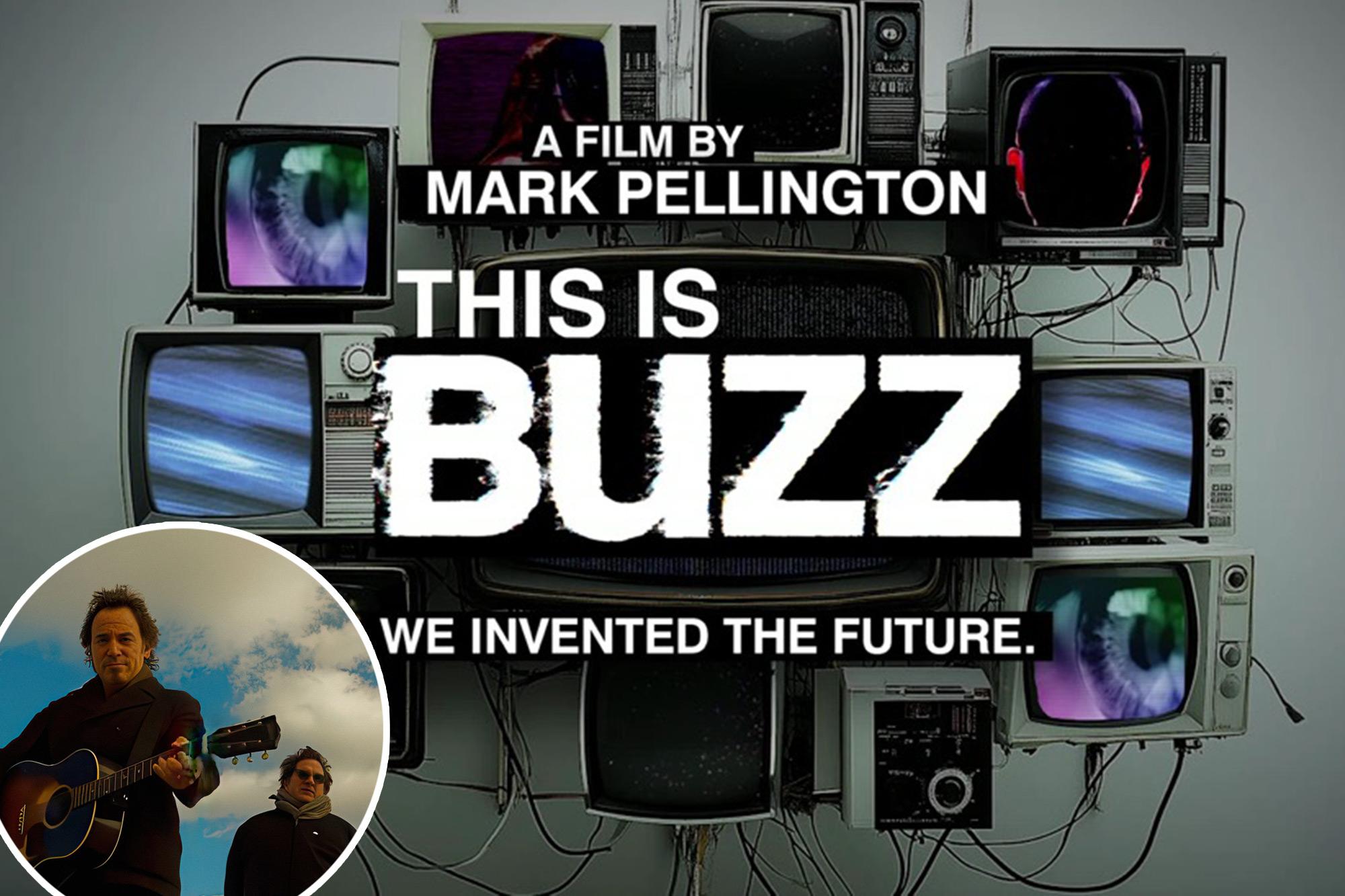
This summer in La Brea, Pellington premiered “This Is Buzz,” a documentary that traces the show from an obscure experiment to a cultural time capsule — something his friend, U2’s The Edge, called “prophetic of where things were going to go.”
The film asks if TV can still be relevant to culture, and examines what’s lost when a fractured internet replaces a single, solid hub as the nexus of youth. It also confirms what we already know: When it comes to the invention of cool, Gen X did it best.
Just listen to Pellington, the son of Indianapolis Colts legend Bill Pellington, describe an early encounter with Madonna when he was shooting graphics for MTV’s famous mid-commercial mini videos in the 1980s: “She said she liked my Beastie Boys ‘Get Off My Dick’ t-shirt, so I gave it to her, right off my back, in 1985,” he shared.
In part because of Pellington and Klein’s familiarity with celebs and rock music, MTV wasn’t worried about Buzz appealing to the network’s mainstream advertisers, including Coca-Cola and Nike — at least not at first.
“MTV thought they were going to get a nice little pop culture television show,” Pellington, now 64, told The Post from his home in Los Angeles. “And we gave them something, as they said, that was ‘weird, depressing, and expensive.’”
That was due to a global network of camcorder-equipped reporters who mixed interviews with cultural icons, artists, and everyday people. Presented in an ominous, Orwellian style, it looked unlike anything else on TV at the time, anticipating outlets like Vice and Wired Magazine.
It also served as a prototype for TikTok, with rapid clips piled on top of each other to create a frenetic, addictive stream of info. “We’d bleach film [and] set fire to it, just to get these effects,” Pellington said. The result was a fractured, dystopian portrait of a world spinning toward an uncertain future.
Buzz began its so-called “reign of terror” with an episode called “The Future” that featured actor Dennis Hopper, punk forefather Malcolm McLaren and Beat writer William S. Burroughs, whose famous “cut-up” technique — randomly rearranging and slicing up text — influenced both David Bowie and the Buzz production team.
“Mark did that piece, and it’s fantastic,” said Klein of the MTV Buzz pilot. “It felt like a kind of a manifesto. It felt like he was laying down the gauntlet there, basically saying this is what we’re going to look and sound like. It was a statement of purpose.”
MTV executives said it was “too weird.” But Pellington fought for the episode, deeming it ahead of its time — a label he still proudly claims. “Our slogan is, ‘We invented the future. Sorry!’” he said. “We even have a T-shirt.”
Later episodes of MTV Buzz featured footage from active war zones, cricket games in Indian slums and beauty pageants in rural Texas. News topics it projected in 1990 included young people talking about greenhouse gases destroying the planet and an interview with an Israeli-soldier-turned-pacifist who lost an arm in the Israel-Lebanon-Palestine conflict.
Nearly 20 years before RuPaul’s Drag Race premiered, MTV Buzz also introduced television audiences to the TV personality as the show’s unconventional host and spokesmodel.
“She served as the iconic foundation of Buzz,” Pellington explained. “It was a visualization of our theme: Everybody Is Different. Everybody Is the Same.”
Despite being brilliant — or maybe because of it — MTV canceled “Buzz” after just 13 episodes. But the experience launched Pellington into directing music videos for U2, Bruce Springsteen, and Pearl Jam, including the award-winning 1992 video for “Jeremy.”
Pellington later directed films like “The Mothman Prophecies” (2002) and made cameo appearances in friend Cameron Crowe’s “Jerry Maguire” and “Almost Famous.”
His 1999 thriller “Arlington Road,” which starred Jeff Bridges and Tim Robbins, is being remade as a TV series this fall, and he’s behind the upcoming OnlyFans-themed horror movie “Night Flirt,” starring “The Bear’s” Elsie Fisher.
But Pellington still sees MTV Buzz as both a nostalgic touchstone and a crystal ball for how we see news, events, and art today. “‘We invented the future,” he says, laughing. “Sorry.’”