play Live Sign upShow navigation menuplay Live Click here to searchsearchSign upNews|ConflictSaudi intelligence chief meets Iraqi PM, renews Riyadh visit invitationPrime Minister Ali al-Zaidi had cancelled an earlier Saudi trip after deadly July 29 US-Saudi strikes on Iraq.
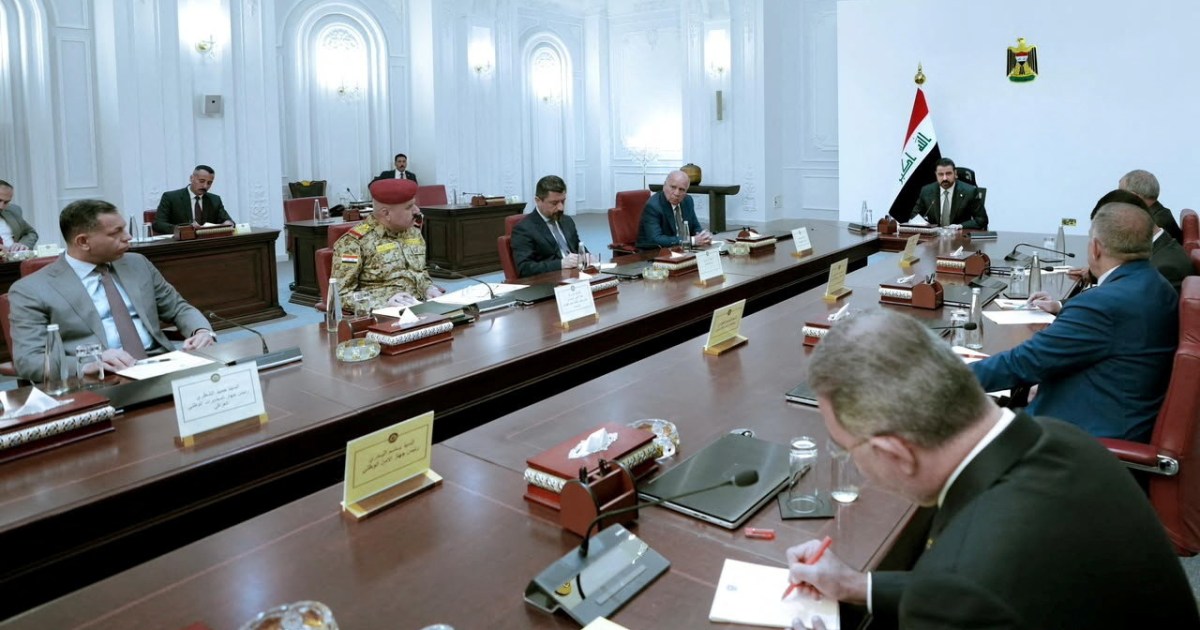
xwhatsapp-strokecopylinkgoogleAdd Al Jazeera on GoogleinfoIrqa's Ministerial Council for National Security meets fin Baghdad for an emergency meeting, chaired by Iraqi Prime Minister Ali al-Zaidi, after the joint US-Saudi strikes on July 29, 2026 [Handout: Media Office of the Iraqi Prime Minister via Reuters]By Al Jazeera Staff and AFPPublished On 8 Aug 20268 Aug 2026Iraqi Prime Minister Ali al-Zaidi and Saudi Arabian Intelligence chief Khalid bin Ali Al Humaidan have met in Baghdad in an attempt to resolve the governments’ ties strained by deadly cross-border strikes weeks earlier.
Al-Humaidan extended a renewed invitation for al-Zaidi to visit Riyadh in the meeting on Friday, the prime minister’s office said, after the latter’s earlier trip was called off in protest following a joint Saudi-US operation on July 29. The attacks killed 20 fighters of Iraqi armed groups, including five Iranians.
According to al-Zaidi’s office, the two focused on how Baghdad and Riyadh can better coordinate security issues as regional tensions simmer.
Al-Zaidi restated a pledge that Iraqi soil would not become a launchpad for attacks on any other country, and that Baghdad remains determined to guard its sovereignty.
The two countries have had a tense few weeks of diplomacy.
Saudi Arabia justified last month’s strikes on Iraq as retaliation for drone attacks on its oil infrastructure, which it blamed on the same pro-Iranian Iraqi armed groups.
Iraq’s National Security Council rejected the kingdom’s claim outright, calling the operation a breach of national sovereignty. In the days that followed, Iraqi authorities quietly tightened security across the country and along its borders to head off any retaliation.
The Islamic Resistance in Iraq – the Iran-aligned network of armed groups that has clashed rhetorically with Riyadh in recent weeks – had promised to retaliate for the US-Saudi strikes.
But it announced on Friday that it was postponing a retaliatory strike, crediting the climbdown to lobbying from Hadi al-Amiri, one of the most powerful pro-Iran voices in Iraq, along with pressure from other unnamed political figures.
The group did not say what it had been preparing to hit.
Al-Zaidi, who took office earlier this year with Washington’s backing, has pledged to bring armed groups under state control and set a September 30 deadline for them to disarm.
His call has since faced opposition from powerful factions.
Iraq has long struggled to balance its ties with both the United States and Iran. The rivalry between Washington and Tehran has repeatedly turned the country into a proxy battleground.