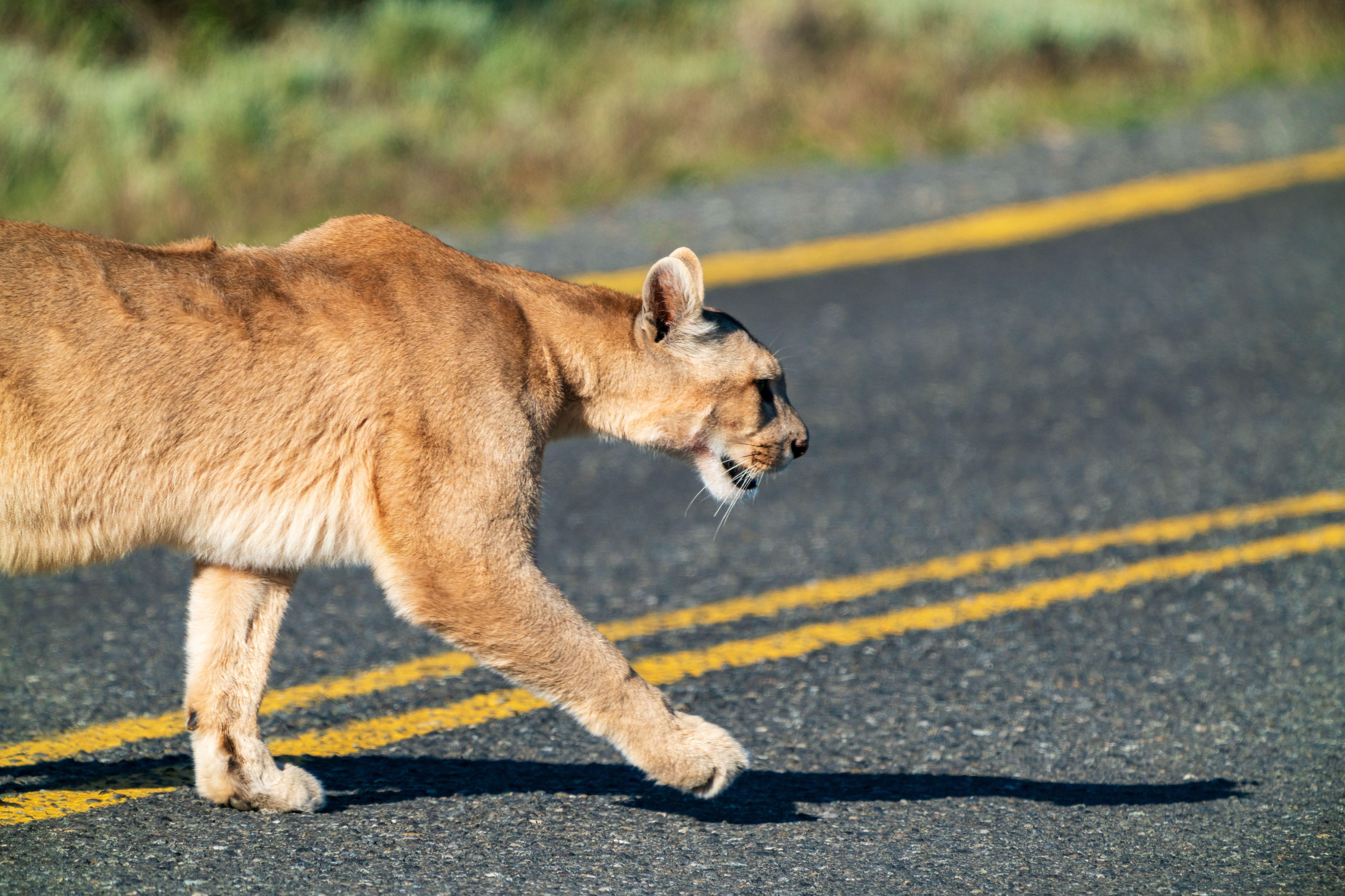
Add The California Post on Google A notorious predator may be responsible for making California’s roads safer.
In a new study published this week in Current Biology, researchers found that the odds of a vehicle colliding with a deer shrank by 67% in areas where mountain lions are found.
Researchers suggest that the presence of mountain lions, also known as pumas or cougars, causes deer to avoid roads and move into more remote areas.
“We found that large carnivores can make roadways safer through their effects on prey behavior and space use,” lead author of the study Justin Suraci of Conservation Science Partners in Truckee, California, said in a press release.
“Deer alter their use of both space and time where pumas are present, overlapping less with roads and reducing activity at night, when some of the most dangerous collisions occur,” said Suraci. “Increased road safety thus represents an ecosystem service that large predators like pumas can provide to human communities.”
A 2024 report from the road ecology center at UC Davis estimated that drivers hit up to 100,000 deer each year on California’s roads.
The study found that the presence of mountain lions, who are found throughout the western US, causes deer to be more active during the day, making them 86% more likely to occupy remote areas away from roads. The result is a 76% drop in the total expected number of collisions over a 5-year period where mountain lions are present.
To conduct the study, researchers analyzed camera trap data from 503 locations and tracked GPS collar data from around 60 pumas across the Olympic Peninsula in Washington.
“When we talk about pumas, we often focus on the risks they pose,” Mark Elbroch, an ecologist for Panthera and a study author, said in a press release. “But we rarely stop to consider the many ways they benefit us as well. Living alongside large carnivores isn’t simply about protecting wildlife; it’s about protecting the many ways they quietly benefit us every day.”
Though the study was conducted in Washington, Suraci told SFGATE he expects similar results across mountain lion habitat.
The feared predator may be driving deer away from roads, but drivers pose a threat to mountain lions as well. Earlier this year, the species was listed as endangered under the California Endangered Species Act, in part due to vehicle strikes.
“Habitat loss, habitat fragmentation by roads, freeways and housing, and mortality from vehicle strikes, rodenticides and risks of isolation and inbreeding would lead to the extinction of these mountain lions if we remained on the same trajectory,” said President Eric Sklar in a February press release.
In recent years, conservationists have made efforts to make roads safer for both wildlife and drivers. Recent data from a wildlife crossing on Highway 17 in California’s Santa Cruz Mountains shows about 1,000 animals per year are making use of the tunnel, including mountain lions, deer, bobcats, and skunks
“If you put in something like a wildlife crossing structure, you’ve got these sort of compounding benefits of perhaps you reduce the deer-vehicle collisions right there because deer are using that crossing structure, but you’re also promoting movement for pumas,” Suraci told SFGATE.
“That allows the pumas to hunt, affecting the behavior of the deer even more and further driving down those deer-vehicle collisions presumably.”