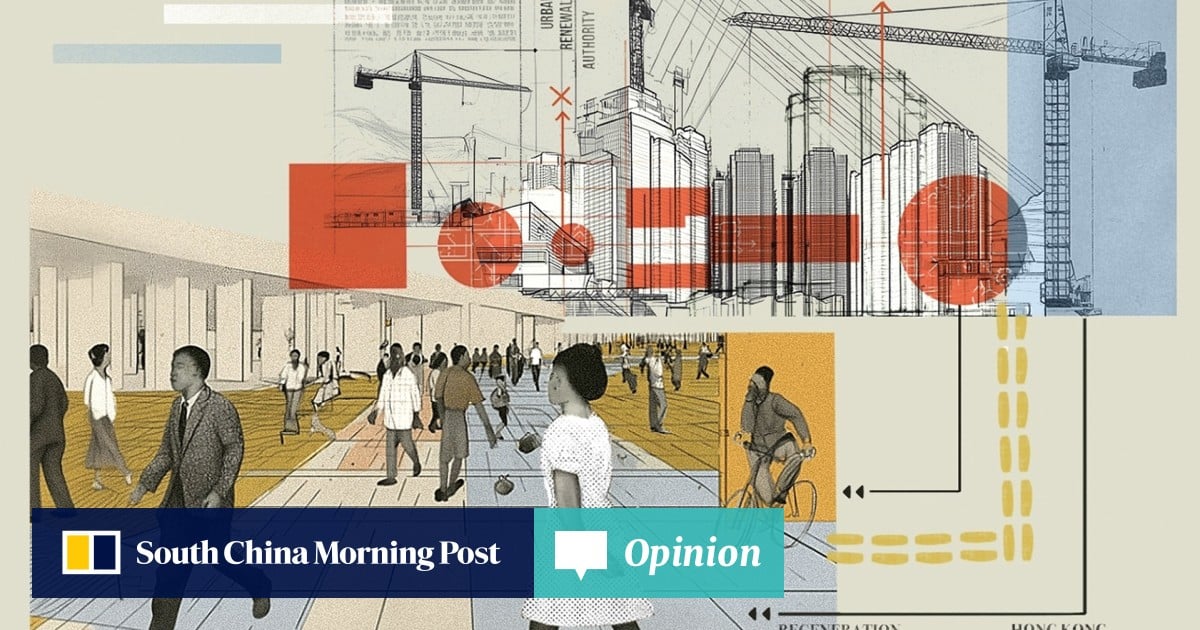
The government should tie redevelopment of properties in old districts to Northern Metropolis development rights and create an urban regeneration authority
3-MIN READ3-MINFrancis Neoton CheungFrancis Neoton Cheung is the chairman of Doctoral Exchange, a public policy research collective, and a former member of the Land and Building Advisory Committee. Published: 9:30am, 6 Aug 2026Hong Kong’s redevelopment policy is approaching an institutional turning point. Recent government proposals – pilot schemes for additional plot ratios and cross-district plot ratio transfers – are presented as new instruments to stimulate redevelopment in ageing districts. Yet they extend the same paradigm that shaped policy for decades: incentivising redevelopment through floor-area bonuses, relying on land premium as the financial logic and assuming more buildable area will automatically trigger renewal.The problems of old districts, however, have never been about insufficient floor space. They arise from deteriorated urban form, narrow streets, fragmented lots, inadequate public space and limited community capacity. Making the maximising of floor area the central criterion will only produce taller, slimmer towers that intensify congestion and undermine neighbourhood quality.
The real deficit is the absence of an institution capable of orchestrating regeneration at the district scale.
From a governance perspective, renewal patches up; regeneration restructures. Renewal improves buildings; regeneration restores urban functionality. Hong Kong must establish an urban regeneration authority capable of addressing the spatial and institutional issues that cannot be solved through lot-based redevelopment.