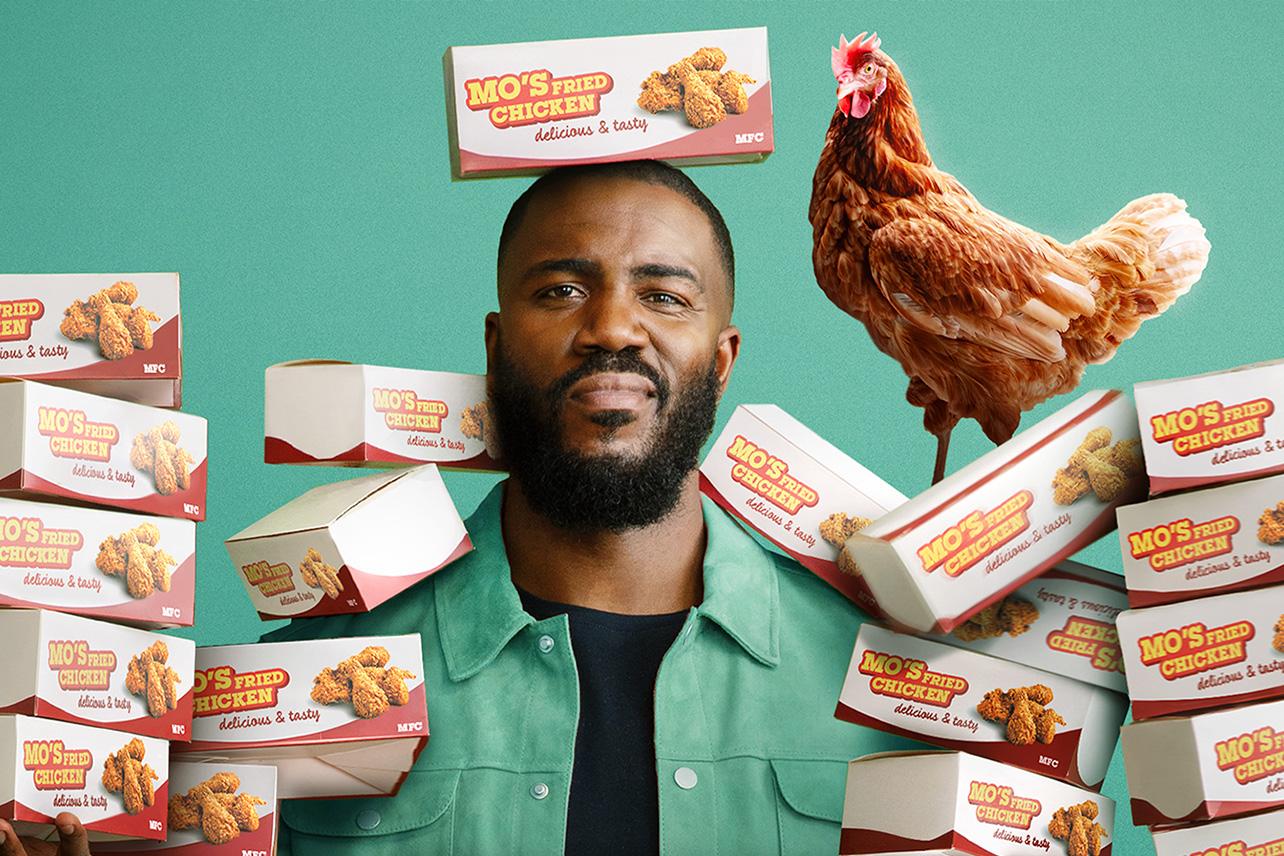
Add Decider on Google Where to Stream: Big Chicken: A Fast Food Conspiracy Powered by Reelgood More On: Mo Gilligan Netflix’s ‘Big Chicken: Fast Food Conspiracy’ Documentary Will Make You Swear Off Fried Chicken For Life 11 Best New Movies on Netflix: August 2026’s Freshest Films to Watch Stream It Or Skip It: ‘Mo Gilligan: In The Moment’ On Netflix, On Trying Not To Give Women The Ick 11 Best New Movies on Netflix: February 2026’s Freshest Films to Watch British comic and TV personality Mo Gilligan eats fast-food fried chicken for 28 days straight in Big Chicken: A Fast Food Conspiracy (now on Netflix), a gimmicky quasi-activist documentary. NOT A SPOILER ALERT: Gilligan doesn’t feel so great after a while, and gets the runs, and learns not only is greasy processed food bad for the human body, but also that the money-grubbing business of corporate chicken is just as icky. Again, no surprises there, but can Gilligan amuse and inform us as he chows down, at the same time he explores the darker corners of a $250 billion global industry? Let’s find out.
The Gist: Facts first: For those of us who aren’t aware of U.K. TV celebs, Gilligan is a funny guy best known as a high-profile stand-up comic and judge on British versions of The Masked Singer and The Masked Dancer. He reveals in Big Chicken that one of his paychecks comes from doing voiceover work on commercials for prominent U.K. fried chicken chains – and by the end of the doc, he’ll feel something south of ambivalent about that particular gig. In the doc’s opening moments, we learn that the chix biz is troublesome in a number of ways – people believe chicken is “healthier” than other fast food options when it really isn’t, that it and other ultraprocessed foods are contributing to the obesity epidemic, and that factory farming of chickens pollutes the environment.
Gilligan shares that fried chicken was always a treat when he was growing up, and he still loves to eat it. He knows it’s a major stereotype of Black culture, and he eventually explores that idea in the film. Fast food chicken has been in the midst of a popularity boom for 30 years, and Gilligan points to the proliferation of shops throughout Britain – 6,000 or so! – ranging from U.S.-based chains to corner takeout joints with goofy generic names like PFC, DFC, MFC, BFC and KHF, and while one can deduce the “FC”s stand for “fried chicken,” no one knows what “HF” means. LOL? And what Gilligan says without quite coming right out and saying plainly is, he’s willing to eat fried chicken, three meals a day, for 28 days, and as people gawk at his ridiculous stunt, inform them about the ugly side of Big Chicken.
So Gilligan consults with a doctor and is subject to a battery of tests to set a baseline for his health, so we can chart how all those stats change – inevitably for the worse – over those 28 days. He visits some U.K. chicken joints, listens to the concern expressed by his friends re: this “experiment,” then heads to the U.S. to eat his way through the place where fried chicken originated. Psychologists, professors, journalists, activists and scientists either hang with Gilligan or function as the doc’s well-informed talking heads. Gilligan learns about “food deserts,” the origin of the Black stereotype, the Kentucky Fried Chicken chain’s connection to the imagery of the U.S. slavery era, the air of secrecy around the Tyson corporation, how gross and environmentally hazardous chicken excrement can be, the psychology of eating (in general), the psychology of eating way too much fried chicken, etc. Eventually, he hangs with two guys in balaclavas who try to break into a factory farm under cover of darkness to film what the corporations don’t want the public to see. But Gilligan doesn’t join them – he sits in the car. Did eating all that chicken turn him into a chicken?
What Movies Will It Remind You Of? Obviously, this is heavily influenced by Super Size Me, in which Morgan Spurlock ate McDonald’s every meal for a month. Michael Moore’s Roger and Me is the origin of this type of personality-driven activist documentary. And Big Chicken is very much in the vein of other Netflix infotainment docs like The Plastic Detox.
Performance Worth Watching: Gilligan is definitely “performing” here, and while he doesn’t always seem entirely comfortable – he appears to be parroting the beats of a predetermined narrative – there’s no denying he’s a likeable personality.
Sex And Skin: None of the former, and the latter is restricted to alluring shots of the crispy, battered skin of delicious-looking fried chicken.
Our Take: Contextualizing Big Chicken as heavier on the “tainment” portion of “infotainment” is ultimately more flattering to the endeavor as a whole. There are elements of science and journalism here, but neither is the key component of the doc’s foundational thesis. It lands on a classic Tell Me Something I Don’t Know series of conclusions: Eating fried chicken (or any heavily processed foods) every day is bad for you, and corporations are more concerned about profits than the greater good, and nobody holds them to account.
Right: Well, duh. But! Some of the details Gilligan/the film churns up are modestly illuminating, whether it’s some of the big-number stats (22,000 chicken joints in the U.S., KFC is in 149 countries, chicken sales in the U.K. account for £12 million a day), or Gilligan’s dive into the racial history of fried chicken and the link between consuming processed foods and depression/anxiety. A moment with the most potential, but minimal follow-through, finds Gilligan meeting with a scientist whose job is to make fried chicken as “craveable” as possible, so people will keep eating long after they’re full. (For more on the science of artificial flavors, read Eric Schlosser’s bestseller Fast Food Nation!)
None of these dives are particularly deep, with a for-more-info-on-the-ickiness-of-fried-chicken-check-your-local-library kind of vibe, but it would be misguided to say we didn’t walk away from the doc with a fresh armload of compelling claims and eye-popping factoids about an industry that does more harm than good. Which means the “info” stuff is most effective here; otherwise, Gilligan sure seems to be trying too hard to make the film funny and emotionally affecting. At one point, he quips, “What in the six-seven is she talking about?”, regarding the commentary of a Gen Zer – you may wearily groan here – an illustrative instance of the more forced and performative components of his role as the doc’s “host.”
Big Chicken inevitably concludes with a series of title cards full of canned reactions from poultry-biz reps. However, as unconvincing as Gilligan’s antics and emoting sometimes can be, we’re left with the truth that nothing feels more incredulous than PR-dictated corporate commentary.
Our Call: A little more depth and thematic focus would do Big Chicken some good, but as it stands, Gilligan’s efforts and strong subject matter keep the doc afloat. STREAM IT.
John Serba is a freelance film critic from Grand Rapids, Michigan. Werner Herzog hugged him once.