Add The New York Post on Google It’s a total ship show.
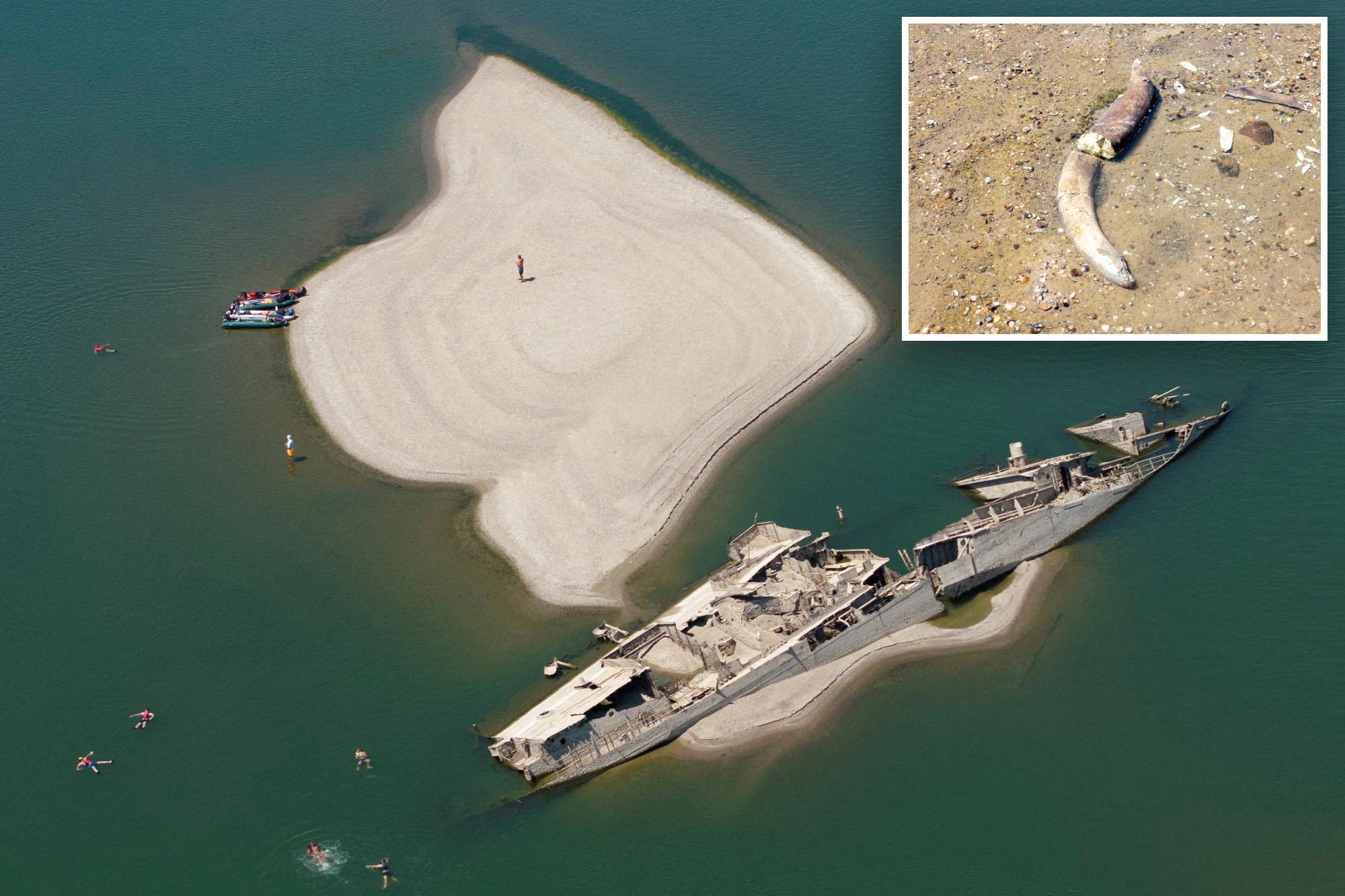
Scores of sunken World War II ships — rusty old Nazi battleships among them — have suddenly surfaced in Europe’s Danube River as its water levels plunge to dangerous lows.
The underwater treasures, which also include woolly mammoth bones, have emerged while a summer drought and heat crisis scorches Eastern Europe, according to CBS.
New footage shows sunken Nazi World War II ships suddenly surfacing across Europe’s Danube River as water levels hit dangerous lows. REUTERS At least 20 of the dazzling warships — some still equipped with weapons from Nazi Germany‘s Black Sea fleet — can be seen sticking out of the river, the outlet reported.
One ship with a weather-worn hull and a broken mast where a Nazi flag once flew has enthralled passersby near the Serbian port of Prahovo.
The graveyard of historical goodies emerged decades after German commanders deliberately sank up to 200 back in September 1944 in the Danube gorge as they came under Soviet fire.
Some were pulled from the river by Communist Yugoslav authorities, but most have remained there due to potentially dangerous explosives they hauled.
CBS reports underwater treasures have also reached the surface, including woolly mammoth bones. via REUTERS Officials are now trying to keep river traffic moving on the Danube, which separates Serbia and Romania, the outlet reported.
“As you can see, the [big] ships can’t pass anymore,” Krsta Brandic, a Prahovo resident, told the outlet.
The river, which is Europe’s second longest, flows through 10 countries.
The plunging water levels also exposed the bones of a woolly mammoth on the river bed in Bulgaria, a local museum said.
Start your day with all you need to know Morning Report delivers the latest news, videos, photos and more.
The jawbone and tusk fragments found near the northeastern city of Ruse “very likely” belonged to a woolly mammoth that lived during the Ice Age, Nikolay Nenov, director of the Regional Historical Museum, told AFP.