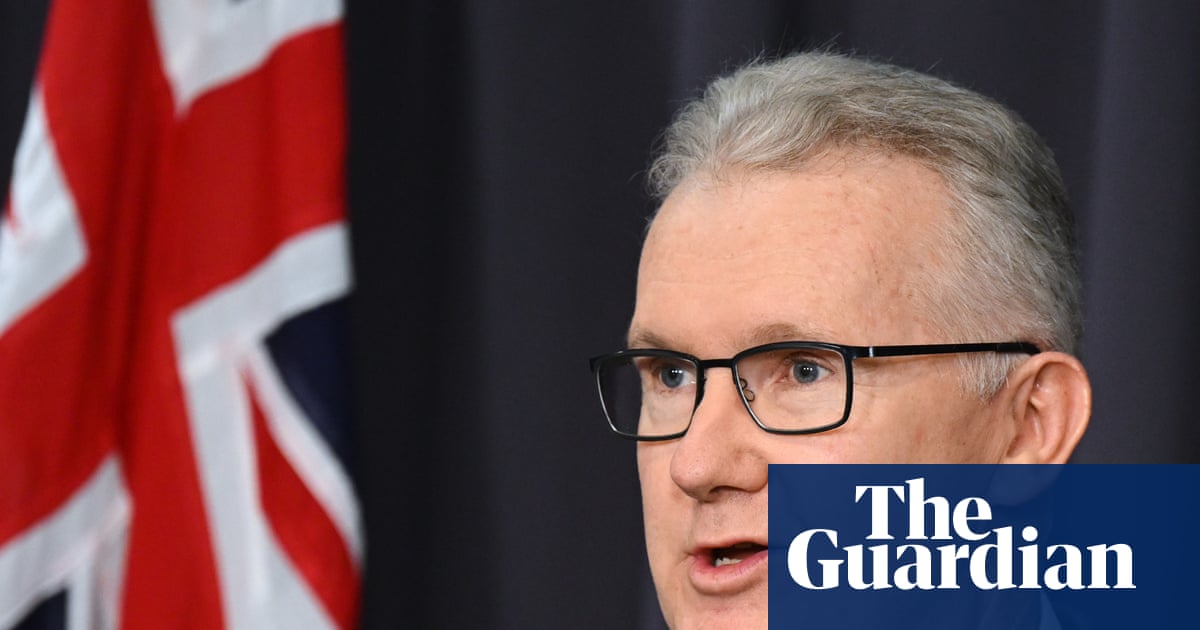
The home affairs minister, Tony Burke, was due to speak about Labor’s immigration policy at a press club speech on Thursday. The party is planning new rules to limit migration. Photograph: Lukas Coch/AAP/APView image in fullscreenThe home affairs minister, Tony Burke, was due to speak about Labor’s immigration policy at a press club speech on Thursday. The party is planning new rules to limit migration. Photograph: Lukas Coch/AAP/APLabor plans migration cuts as Tony Burke pulls out of major speechAs home affairs minister’s National Press Club address is postponed, refugee advocates lament missed ‘opportunity to bring Australians together’
Follow our Australia news live blog for latest updates
Get our breaking news email, free app or daily news podcast
Labor will introduce new rules to cut net overseas migration and push temporary residents to leave Australia, despite a major speech on the subject by the home affairs minister, Tony Burke, being delayed.
But government sources told Guardian Australia the policy changes would not push net overseas migration lower than the existing target of 295,000 people this financial year.
The ABC reported on Wednesday that Burke’s National Press Club address, originally scheduled for this week, had been postponed amid political considerations inside the Albanese government. Burke had been due to speak on Thursday about “the work of managing the migration program”.
Read moreA spokesperson told Guardian Australia the address would likely take place in the next fortnight and “deal with the migration system as a whole”.
“Yesterday it became clear that some elements of the speech would not be finalised by Thursday. We’re working with the press club to find a new date,” the spokesperson said.
The rescheduling will allow the prime minister, Anthony Albanese, to help sell any changes as Labor seeks to push back on criticism of its record by One Nation and the Coalition. Albanese is on scheduled leave this week.
The rule changes may not reduce net overseas migration (Nom) below the existing target, but could better prioritise parts of the system to tighten working holiday rules and family visa applications, or limit some appeal rights for overseas migrants.
Around the country, the politics of migration have run hot in recent months.
The latest Guardian Essential poll, released last week, found One Nation was attracting 25% of the primary vote, down one point from June’s poll. Months of opinion polls have put the populist party ahead of the Coalition. Labor’s indicative primary vote ticked up one point to 31% in July, while the Coalition’s share of the vote dropped further, down another point to 22%.
Labor has kept the permanent migration target steady at 185,000 people for the 2025-26 financial year, in line with 2024-25, but the rules are getting tougher.
International students wanting to undertake postgraduate study will be required to pay $5,750 for a visa, a rise of 25%, and the second in just four months. The fee was doubled in March and increased again in June.
The latest Australian Bureau of Statistics data shows Australia’s Nom has dropped to 301,000, down by 45% from the post-pandemic peak in 2023. After collapsing below zero during Covid lockdowns, annual migration growth sprang back to as high as 556,000 in late 2023.
The May budget had forecast Nom – the difference between the number of migrants arriving and leaving – would drop to 295,000 people in this financial year to 245,000 in the next and 225,000 in 2027-28.
The energy minister, Chris Bowen, declined to discuss cabinet’s plans on Wednesday.
“There’s always a balance to be struck, which is something our political opponents don’t often remember,” he said. “A lot of businesses rely on a very well-calibrated immigration system to provide the workers that, frankly, are difficult for the domestic market to supply.”
Asylum Seeker Resource Centre deputy chief executive Jana Favero warned the government against demonising migrants to win back support from Pauline Hanson.
“The planned National Press Club address should have been an opportunity to bring Australians together, not to legitimise the politics of fear and division,” she said.
“Scapegoating migrants won’t build a home, lower a grocery bill or help a family pay the rent. Australia deserves better than politicians looking for someone to blame instead of delivering real solutions.”
Shadow home affairs minister, Jonno Duniam, said Labor had caused “more chaos and confusion” by delaying the speech.
“It is clearly only thinking about acting now because the political pressure has become impossible to ignore,” he said.