play Live Sign upShow navigation menuplay Live Click here to searchsearchSign upEconomy|Oil and GasPetrol prices strain US households as oil giants Chevron, Exxon profits soarLow-income US households are hit hardest, spending more than 10 percent of monthly income on petrol as prices rise.
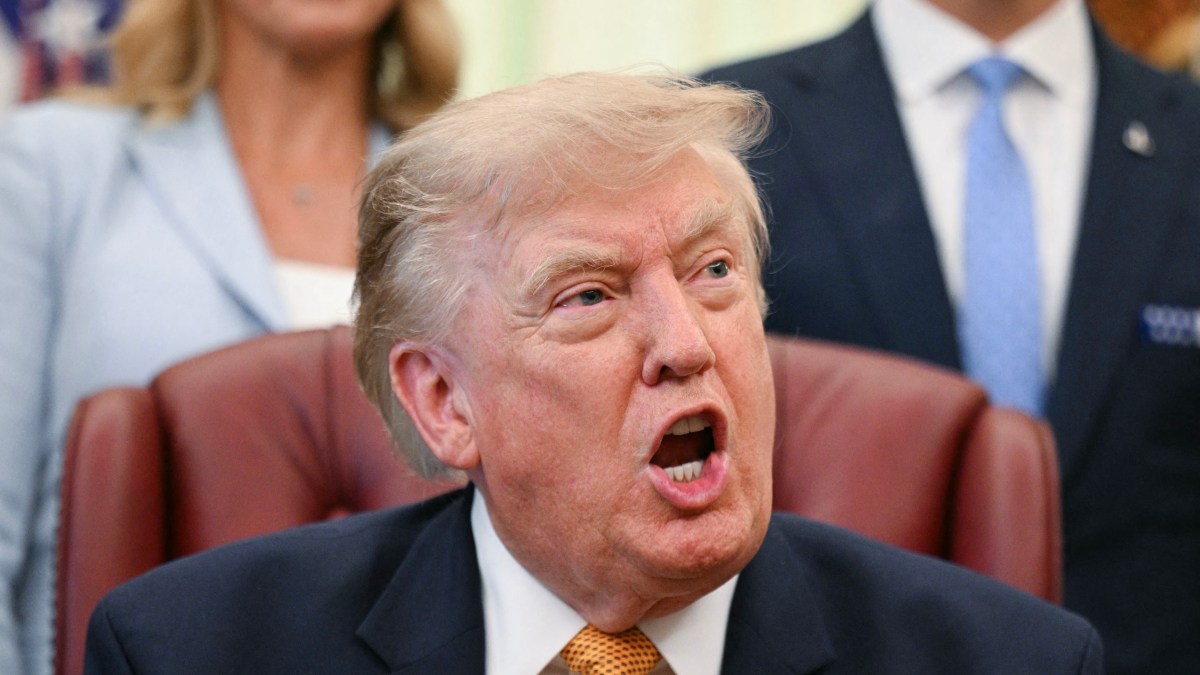
xwhatsapp-strokecopylinkgoogleAdd Al Jazeera on GoogleinfoUS President Donald Trump called out oil company executives amid record profits [Jim Watson/AFP]By Andy Hirschfeld and ReutersPublished On 3 Aug 20263 Aug 2026United States President Donald Trump has lambasted the nation’s biggest oil and gas giants as Houston, Texas-based Chevron reported record earnings while consumers struggle with soaring petrol prices.
“I don’t like it,” Trump told reporters on Monday in reference to the blockbuster second-quarter earnings, as his war on Iran has kept oil prices high for months.
“Chevron, too much money. ExxonMobil, too much. Too much money.”
Trump’s comments came on the heels of an interview Chevron CEO Mike Wirth gave on the Fox News programme Sunday Morning Futures with Maria Bartiromo. Writing on his Truth Social platform, the US president berated Wirth for not crediting his administration’s efforts to help the oil industry.
“The only thing he [Wirth] conveniently forgot to mention is that, without the genius, foresight, strength, and stability of the TRUMP Administration, the Oil Industry, and our Country itself, would be DEAD!”
Chevron reported its highest quarterly profits in six years on Friday. Adjusted earnings per share came to $6.06, or $12bn, as tensions between the US and Iran strained global oil supply chains in the strategically vital Strait of Hormuz, where roughly one-fifth of the world’s energy supply travelled through before the war, sending prices soaring.
Chevron rewarded its employees. Wirth praised them for their work and said in an email that most workers would receive a bonus equivalent to half their monthly base pay, the Reuters news agency reported, citing an internal email.
Al Jazeera has not been able to independently confirm Reuters’ reporting.
Chevron’s strong earnings come as the company is less reliant on Middle Eastern production operations than its competitors, allowing it to reap the benefits of higher global oil prices during the quarter. Brent crude, the global benchmark for oil prices, was 23 percent higher than in the first three months of the year.
“Being less dependent on the Strait of Hormuz is definitely helping them. It’s also the refining they’re able to do here. The fact that Chevron has less than 5 percent exposure there gives it some protection,” Bill Drolet, executive director, mergers & acquisitions at The Post Oak Group investment bank, told Al Jazeera.
“More than 70 percent of Chevron’s production is concentrated in America, and that’s where it’s making its biggest margins right now.”
Chevron also benefitted from the president’s move to open up oil production in Venezuela after US special forces abducted the country’s president, Nicolas Maduro, in January. Chevron had stayed on in the South American nation even after former President Hugo Chavez nationalised oil production.
Chevron did not respond to Al Jazeera’s request for comment.
Competitors also performed well. ExxonMobil on Friday posted its best quarterly profits in four years, but they fell short of analysts’ expectations. Earnings raked in $9.2bn.
On Thursday, Valero Energy reported its highest ever second-quarter profit, with net income coming in at $3.7bn as US refiners reap the benefits of tensions choking oil production across the Middle East.
But those benefits have not reached consumers, who are feeling the strain at the petrol pump. Petrol prices are above $4 a gallon (3.78 litres) across the US. The average price for a gallon of petrol is $4.09, down from $4.11 this time last week, but up from $3.82 a month ago, according to the American Automobile Association (AAA), which tracks daily petrol prices.
By comparison, when the US and Israel first struck Iran in late February, the average price was $2.98.
An analysis from Bank of America published in April showed consumers spending as much as 4.2 percent of their income on petrol in March, up from 3.9 percent in 2019. Lower-income earners are hit much harder, with more than 10 percent of households spending more than 10 percent of their monthly income on petrol.
This comes as pressure on the US Strategic Petroleum Reserve continues. The reserves hit their lowest level since 1983 this week, according to the Department of Energy. They fell by 2.8 million barrels over the week to 304.8 million barrels.
The condemnation of the oil industry has come from across the political spectrum.
“A decent industry would say, ‘this was money we didn’t earn, it’s a windfall we get from our cartel pricing scheme.’ Not these corrupt, greedy and grasping rogues,” Democratic Senator Sheldon Whitehouse of Rhode Island wrote in a post on X on Sunday.
But lowering prices might not be as easy. Beyond pressure from consumers, companies across the corporate United States are beholden to a concept called shareholder supremacy. This means that while lowering prices might be in the best interest of pinched consumers, it may not be possible given the legal framework and companies’ fiduciary responsibility to shareholders.
“They’ve [oil companies] got shareholders they’re responsible for. They could reduce share buybacks or dividend payouts, but right now, I don’t see oil companies doing much,” Post Oak Group’s Drolet said.
He said if he were advising a member of Congress or the president, providing relief to consumers might be easiest by suspending the so-called gas tax, which varies by state. In Texas, for example, the gas tax accounts for 20 cents per gallon, while in California, it is 63 cents per gallon.
“From a political standpoint, the best thing our government can do is suspend gas taxes, especially in California. If they put a temporary hold on taxes, that would help everybody get through this challenging time.”
Al Jazeera asked the White House if that policy is on the table, but the press office did not respond.
Heading into the US midterm elections, cost of living remains among the highest concerns for consumers. In a Washington Post/Ipsos poll last month, 54 percent of respondents said that high prices and the economy were a chief concern heading into November.
“They see the price of fuel and net profit for Exxon and Chevron and feel that they are abusing US consumers, especially as US consumers have access to the correct fuel, whereas other areas around the world have shortages [such as Germany, Philippines],” Babak Hafezi, professor of international business at American University, told Al Jazeera.
“The reality is that as the war [On Iran] progresses, the impacts of the lack of supply will create full price and supply shocks.”
Amid Trump’s comments, Chevron’s stock is on the downturn in midday trading, tumbling more than 2 percent from the market open. However, it is up more than 1.1 percent over the last five days.
ExxonMobil is down 0.5 percent for the day and 0.1 percent over the last five days.