Hungary's Paks nuclear power plant was operating at about 10% of capacity because of a lack of cooling riverwater. In Romania, the military blew up a rock outcrop in a bid to improve water flow to the Cernavoda plant.
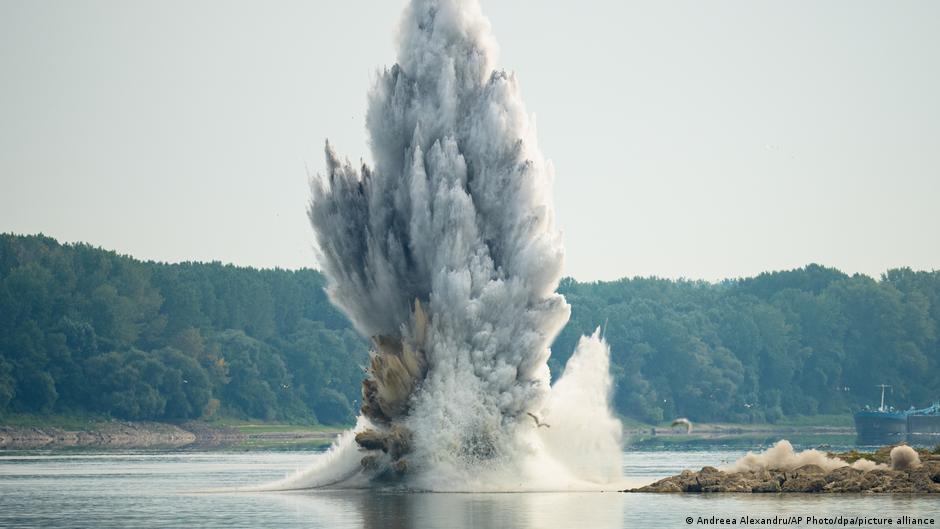
https://p.dw.com/p/5IDTmRomania's military demolished a rock outcrop in a bid to increase the flow of water to cool the Cernavoda nuclear power plant Image: Andreea Alexandru/AP Photo/dpa/picture allianceAdvertisementSeveral central and eastern European countries are facing power shortages and impacts on industry amid prolonged hot and dry weather and record low levels on the Danube River and other waterways.
Hungary narrowly averted switching off its lone nuclear plant, but had still powered it down to a fraction of capacity. In Romania, the navy demolished a rocky outcrop exposed in the Danube's riverbed, trying to improve the water flow.
And in Serbia, hydroelectric power output was severely impacted by the dry conditions.
Continued hot and dry weather is forecast during the week, providing little sign of relief.
Romania's military detonated a rocky outcrop exposed by the low water levels on a branch of the Danube, seeking to improve the flow of cooling water to the Cernavoda nuclear plant, which typically supplies about one-fifth of the country's power.
The plant draws all of its cooling water from the Danube.
Soldiers detonated a rock some 50 kilometers (roughly 30 miles) upstream. The debris would be taken to a strategic spot and sunk to help raise the water level.
Defense Minister Radu Miruta said the operation was a success, and also said the military had been waiting for a chance to access and demolish the rocks for decades.
If the partial diversion of the water fails, Miruta said, the plant would likely have to shut down entirely by Thursday.
Caretaker Prime Minister Ilie Bolojan said that carmakers Dacia and Ford had agreed to suspend production in Romania until August 19, following a crisis meeting with representatives of the energy-intensive industry. He said that other companies would be taking similar steps.
Hungarian Prime Minister Peter Magyar said it was possible to avoid the unprecedented total shutdown of the Paks nuclear power plant on Monday that was originally announced last week.
But the four-reactor station that typically generates almost half of Hungary's electricity production and around a third of its consumption was running at little more than 10% capacity on Monday.
Hungary had asked industrial users to curb consumption and households to make voluntary savings. Electric-powered freight trains were also stopped on Monday to reduce the load on the grid.
Magyar thanked people for their restraint on Monday evening.
"We have entered the critical period. The network is stable, consumption is currently well below planned levels, thanks to self-restraint. The last Paks turbine is operational. I will report back shortly from the (grid operator) MAVIR control room," he said.
Magyar also said slightly earlier on Monday that "water management forecasts for the coming days have become slightly more optimistic."
How power plant closure impacts Hungary's new governmentTo view this video please enable JavaScript, and consider upgrading to a web browser that supports HTML5 video
In Serbia, the vast Iron Gate hydroelectric plant on the Danube was operating at only around one-fifth capacity on Monday.
Prime Miniser Djuro Macut convened an emergency meeting on Monday to discuss the energy problems.
He appealed to residents to "minimize the use of big consumers of electricity in their homes, such as air conditioners," having described the situation as "serious an demanding" late on Sunday.
Far upstream in Bavaria, the Danube's levels were also affecting freight transport.
New German Transport Minister Steffen Bilger said the historic low levels on the Danube, and particularly the Rhine to the west — Europe's busiest inland freight waterway — were providing a first challenge for his tenure.
"It is indeed a very tense situation with the low waters," Bilger told Reuters TV on Monday, saying he would chair a crisis meeting on Thursday. "We are used to repeated low water situations, but this is really a very early point in the calendar year for problems of the kind we're currently experiencing."
Typically European rivers reach their lowest levels slightly later in the summer — it's entirely possible that several more weeks of predominantly hot and dry weather are yet to come.
Don't let the algorithm hide the news. If you rely on our team for trusted reporting, please take a moment to select us as your Preferred Source on Google, so you'll always see our verified news first.