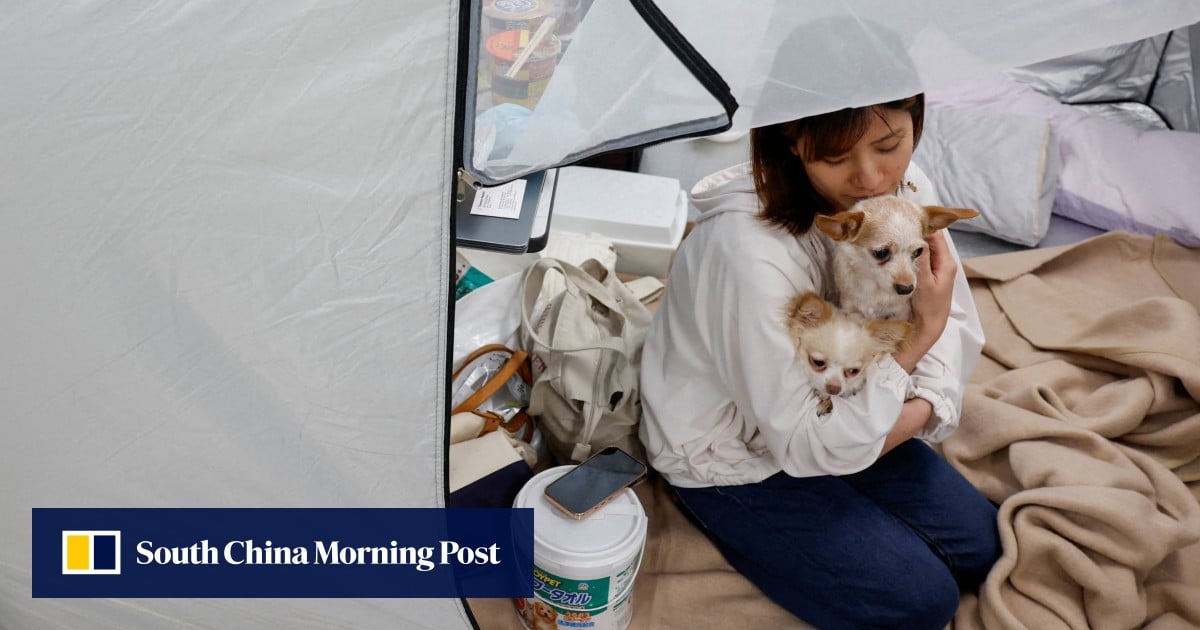
Ryunosuke Animal Hospital had learned from the 2016 quake that pet owners were often turned away from evacuation shelters
2-MIN READ2-MIN ListenReutersPublished: 1:05pm, 1 Aug 2026When a powerful earthquake jolted southern Japan this week, rattling homes and knocking out water and electricity, Tomoko Takaoka bundled up her beloved fluffy dogs and went in search of a safe place to stay.Unable to reach her parents, the 31-year-old factory worker turned to a nearby evacuation centre only to discover that Ku the chihuahua and Sheri the chihuahua-poodle mix were not welcome.
Faced with the choice of sheltering without them or staying together, she chose the latter, spending the first sweltering night crammed into her car with her canine family.
Eventually, social media posts led her to Ryunosuke Animal Hospital in downtown Kumamoto, which had converted classrooms in its veterinary nurse training school into temporary housing for evacuees, with separate rooms for owners of cats and dogs.
“During disasters it’s only natural for dogs and cats to stay together with their families. But people who don’t own pets don’t necessarily want to be with them,” hospital director Ryunosuke Tokuda said.