If you’re racing to catch up on the Oscar-nominated films before the Academy Awards next week, then you should know that It Was Just an Accident—an Iranian film nominated for Best International Feature and Best Original Screenplay at the 2026 Oscars—is now streaming on Hulu, free to watch for anyone with a Hulu subscription.
Written and directed by Iranian filmmaker Jafar Panahi, It Was Just an Accident tells the story of a group of former political prisoners who are forced to reckon with their trauma when they come across a man they believe to be their former tormentor. The film won the prestigious Palme d’Or award when it premiered at the Cannes Film Festival in May 2025, and it opened in U.S. theaters via Neon in October. Now, thanks to the Neon output deal with Hulu, it is available to stream on the U.S. in Hulu.
There’s no doubt that the film feels all the more impactful in the wake of the recent news events, and that many people will be looking to understand the world around them by watching this movie on Hulu. If you’re one of those people, you might find yourself confused by the film’s ambiguous ending. Read on for a full analysis of the It Was Just An Accident ending explained.
The movie opens with an Iranian family driving home at night. The man driving the car (played by Ebrahim Azizi) hits and kills a dog, upsetting his young daughter. The daughter accuses her father of killing the dog. The man’s wife (Afssaneh Najmabadi), who is pregnant tells her daughter that it’s not Daddy’s fault, it was just an accident.
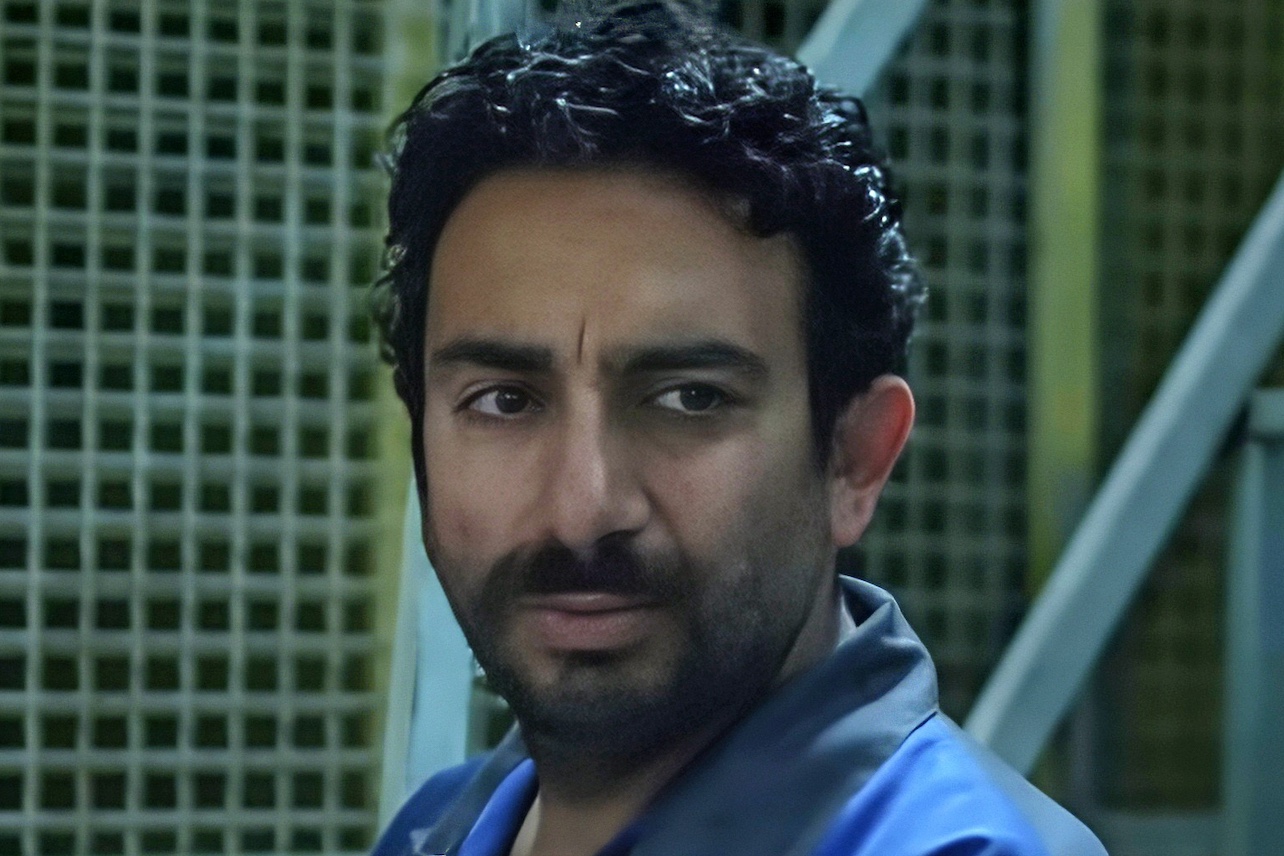
The car was damaged in the hit, so the man pulls into a mechanic shop. The mechanic working there, Vahid (Vahid Mobasseri) recognizes the sound of the man’s squeaky prosthetic leg when he walks. The next day, Vahid follows the man, kidnaps him, and begins to bury him alive in the desert. Vahid accuses the man of being Eghbal, aka “peg leg,” an officer of the Iranian regime who once tortured Vahid—who is Azerbaijani, an ethnic minority in Iran, who have protested the Iranian government and been punished for doing so—in an Iranian prison.
The man denies that he is Eghbal. Vahid begins to doubt himself, and so he knocks out the man, puts him in his van, and visits one of his former fellow prisoners, Salar, to help him verify Eghbal’s identity. Salar refuses to help, but directs Vahid to another former prisoner, a photographer named Shiva (Mariam Afshari). Vahid confronts Shiva while she is in the middle of photographing a soon-to-be bride and groom, Goli (Hadis Pakbaten) and Ali (Majid Panahi). Shiva believes she recognizes the kidnapped man as her torturer, Eghbal, but like Vahid, she is not certain. The bride, Goli, overhears them and reveals that she, too, was tortured by Eghbal. She insists on coming with Vahid and Shiva on their quest to verify Eghbal’s identity and obtain justice.
Shiva recruits her former partner Hamid (Mohammad Ali Elyasmehr) to identify Eghbal. Anticipating that Hamid will be rash and angry, Shiva drugs him, first. She’s right: Hamid identifies Eghbal by feeling the scars on his leg, and immediately attempts to kill him. Unlike the others, Hamid is certain this man is Eghbal. But this still isn’t enough for Vahid and Shiva, who want to hear the man confess first before taking any action. Both Vahid and Shiva don’t want to be as rash and violent as those who tortured them. Hamid argues they have no other choice but to kill him, because if they let him live, he will track them down and make them pay for kidnapping him. Vahid admits this is likely—for him, at least—because the man knows the mechanic shop where he works.
After some arguing over this, the man’s cell phone rings. Despite Hamid’s protests, Vahid answers the phone. On the other end of the line, he hears the man’s young daughter crying and begging her dad to come, because her mother fainted. Vahid drives to her house, and takes the wife and daughter to the hospital. The wife gives birth to a baby boy and lives. Vahid and Shiva agree it’s time to leave the others behind, and drive the van into the desert, where they tie up the man to the tree.
After Vahid tells the man that he took his wife to the hospital and that he has a newborn son, the man admits that he is Eghbal, aka peg leg. Eghbal tries to justify actions, saying he did what he did for the good of the regime. He tells Vahid and Shiva that if they kill him, they will fulfill his wish of becoming a martyr. He promises if they let him go and he finds his family safe, he will not bother them again. Shiva unloads her trauma onto him, and screams at him to apologize, and eventually, he does.
After Eghbal cries that he is sorry, Shiva and Vahid leave. Before driving away, Vahid frees Eghbal, and gives him instructions on how to exit the desert. Neither Shiva and Vahid resorted to physical torture (mostly), therefore achieving their shared goal of not sinking to the level of their tormentors.
In the final scene of the movie, Vahid is packing up the van, helping his family get ready for a family gathering. In the background of one shot, we see a white car that looks like Eghbal’s pull up the driveway.
The final shot of the movie shows Vahid facing away from the camera, as the sounds of Eghbal’s squeaky prosthetic leg steps toward him. Vahid does not turn around. Eventually, we hear the sound of Eghbal’s squeaky prosthetic leg walking away. With that, the movie ends.
So what does it mean? Well, one interpretation is that Vahid was imagining the sound of Eghbal’s footsteps—a representation of the trauma and paranoia that will doubt follow him for life. However, the shot of Eghbal’s car pulling up the driveways suggests that Eghbal really was there.
Personally, my take on it is that Eghbal did track Vahid down, and paid him this visit as a veiled threat, which represents the way the regime keeps protestors in line. This time, Eghbal walked away. But he made sure that Vahid heard him—made sure he understood that he was being watched, and is never truly safe. It’s this way that the regime controls the population, by letting people know they are being allowed to live, not that they have a right to it. It all comes back to the title—the violence and torture was not just an accident, and he wasn’t just following orders. It’s a deliberate form of control.
But hey, that’s just my take. If you have a different interpretation, let me know in the comments.