Add The New York Post on Google Your vacuum could be a national security risk.
This week, the Federal Communications Commission (FCC) has officially added foreign-produced robotic vacuums to the banned list. The agency is cracking down on “advanced robotic devices” some of which include mobile robots like humanoids that can walk and dance and even connected power inverters manufactured outside the US.
After a thorough review, many of the robotics were added to the list and deemed a national security and cybersecurity risk to US critical infrastructure.
The new rules only apply to newly authorized devices not robotic vacuums already used in homes around the country Rolandas – stock.adobe.com “The networked capabilities of advanced robotic systems create extensive vulnerabilities and vectors for attacks that can manipulate the data and physical operation of the advanced robotic system,” the agency found.
According to the FCC’s updated policy, relying on advanced robotic devices made outside the country leaves Americans vulnerable as many devices can collect data to surveil citizens, and “enhance the capabilities of foreign intelligence services, or to remotely commandeer the robots,” the FCC said.
The new restrictions only apply to newly authorized devices and will not impact any robotic vacuums already used in homes around the country. For retailers, the new rules don’t prevent them from continuing to sell, import, or market models already approved by the FCC.
The move comes after the FCC updated its “Covered List” — a set of communications equipment and services that pose an “unacceptable risk to the national security of the US or the safety and security of U.S. persons,” the agency said.
No specific brands were identified; however, top manufacturers who sell robotic vacuums in the US, like iRobot, SharkNinja, Dyson, Samsung and LG, are produced in China, Vietnam, Malaysia and Indonesia.
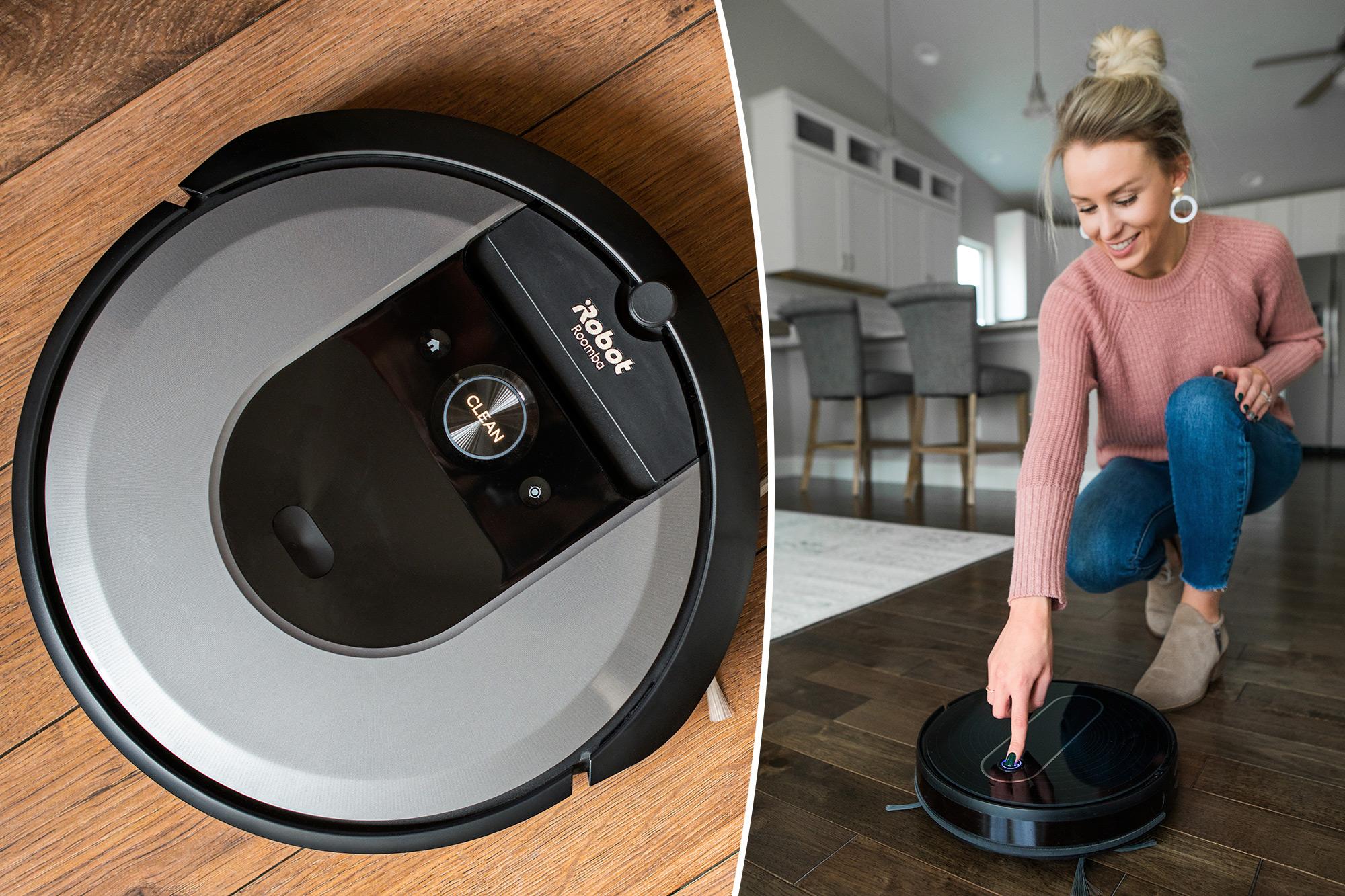
Roomba was one of the first robot vacuum cleaners made by the American company iRobot in 2002, but is now owned by Shenzhen Picea Robotics and Santrum Hong Kong.
No specific brands were revealed, but many are made in China, Vietnam, Malaysia and Indonesia labelled4 – stock.adobe.com “We are aware of the FCC’s recent action and are working with them to better understand its implementation and potential impact,” iRobot told Fox Business. “We remain committed to serving our customers and will share updates as more information becomes available.”
The new regulation applies to the robots as they are autonomous electronic devices with their own built-in sensors and smart mapping technology. These devices normally weigh just under five pounds, where navigation can be powered by firmware, AI models or sensors.
The Post reached out to iRobot, maker of Roomba, for more information but has not heard back.
In recent months, the FCC has taken similar action, banning consumer-grade routers produced in foreign countries. Routers are the boxes in every home connecting computers, phones, and other devices to the internet.
The agency found those supplied to the US by foreign countries could pose a supply chain vulnerability and may disrupt the “economy, critical infrastructure, and national defense.” It also faces a severe cybersecurity risk that could disrupt US critical infrastructure and directly harm Americans.
According to the FCC, the foreign-made routers were also involved in the Volt, Flax, and Salt Typhoon cyberattacks targeting vital US infrastructure. Much like the advanced robotic devices, the rule does not impact any previously-purchased consumer-grade routers.