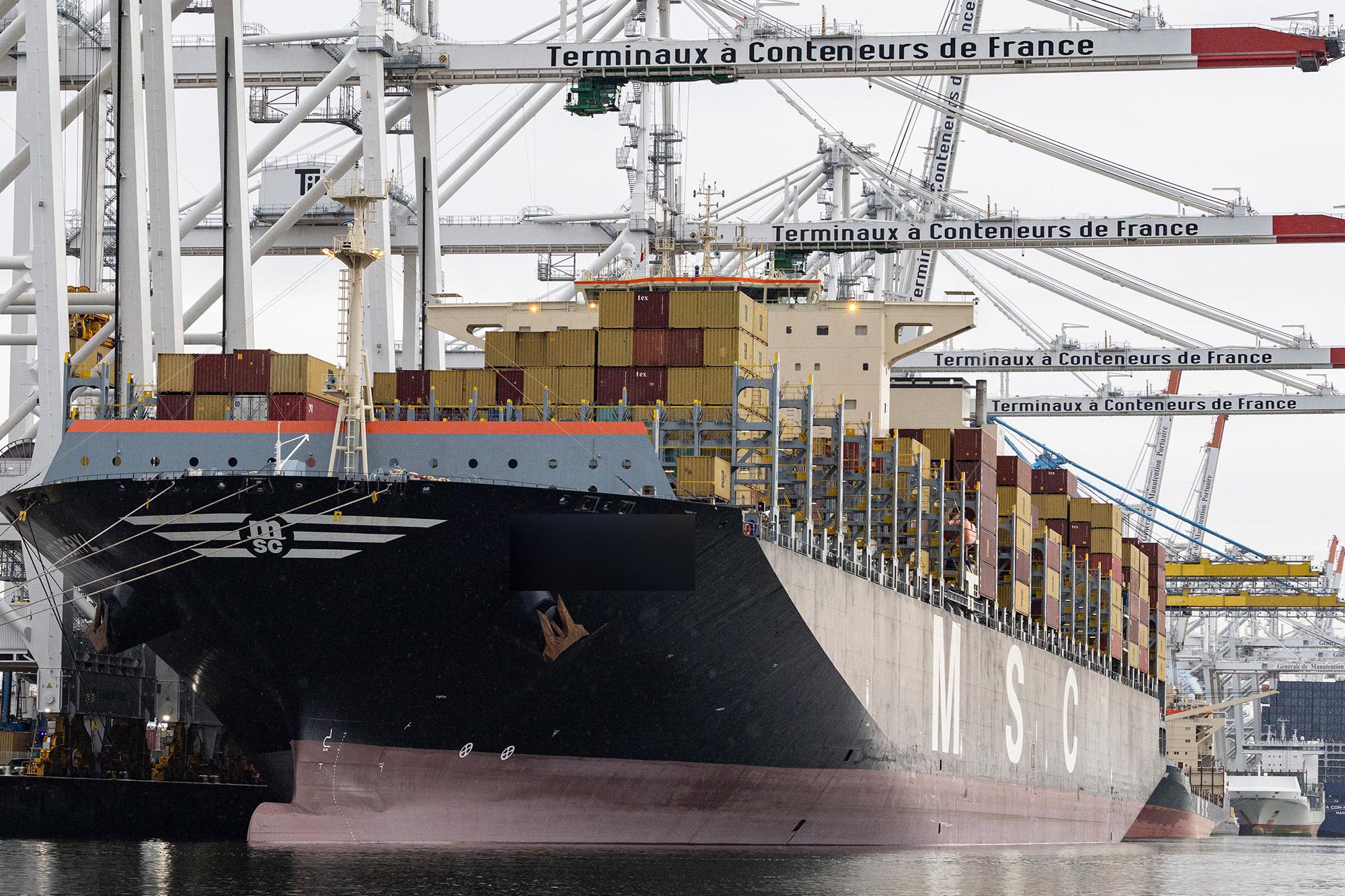
Add The New York Post on Google There’s a sinking feeling in America.
The US is currently building just 15 cargo ships, compared to more than 4,000 being built in China and nearly 750 in South Korea.
Of those 15 ships, 12 will be mostly constructed in Korea, according to BRS Shipbrokers. And that’s way better than previous years, when American shipbuilders had just 3 or 4 vessels on order.
The reason, critics say, is a 100-year-old law signed by President Woodrow Wilson — the Jones Act.
The US only built 5 commercial ships in 2025, compared to China’s 1,000. AFP via Getty Images It was meant to protect the US shipbuilders and the shipping industry by banning foreign ships from carrying cargo between American ports — instead requiring American goods to be shipped between ports by American-built, American-made vessels.
The result, however, has been the opposite, according to critics. After a century of protectionism and zero competition, the American ship-building industry has atrophied to the point of irrelevance.
“We’ve had the Jones Act for a hundred years and through that entire time the rate of domestic shipbuilding has decreased decade over decade,” said Jennifer Chen, primary researcher with Balsa Research, who created the Jones Act Index, a data overview highlighting how dysfunctional, inefficient, and expensive US domestic shipping is under the Act.
The US now has only 92 Jones Act-eligible vessels of the size capable of carrying commercial goods. That also means that the cost of shipping to Puerto Rico, Hawaii, Guam and other ports where only US ships are allowed is exponentially higher than market rates.
What’s more, only four American shipyards are capable of constructing large commercial vessels, each capable of producing only four to five ships per year, a figure that has remained stagnant since the 1980s.
The US only has four shipyards that are capable of building large modern commercial vessels. REUTERS Those shipyards are, General Dynamics NASSCO in San Diego, Hanwha Philly Shipyard in Philadelphia, Seatrium AmFELS in Brownsville, Texas, and the former VT Halter Marine in Pascagoula, Mississippi.
The Trump administration has ramped up its shipbuilding ambitions — with President Trump calling for a “Golden Fleet” of 25 new “Trump-class battleships” and ramp up other naval ship-building as well.
But, experts say the US must move beyond the Jones Act and stop relying on a century-old law to spur the necessary growth in shipbuilding.
Chen highlighted how operating a Jones Act-eligible domestic tanker ship costs $86,000 to $91,000 per day, compared to $9,000 per day for an international medium-range tanker.
Moving goods from Long Beach, California, to Honolulu costs $0.28 per ton-mile, roughly six times the $0.04-$0.06 a day it costs per mile from Shanghai to Los Angeles.
All of this means that only 3.9% of domestic US freight is transported by water, compared to 28% inside the European Union.
“It should be cheaper than or comparable to rail — and cheaper than trucks for sure,” Chen told The Post.
Chen’s research also discovered an astonishing hole in US domestic shipping.
“There are zero weekly vessel services between any two of the largest 50 US cities by population size,” she said, despite many of these cities being coastal.
On top of saving Americans money and easing congestion on the roads, experts also warn of national security implications if the US doesn’t have the required shipping capacity to transport goods.
If the US got into a prolonged military conflict, it would require the ability to build ships at home in case of a blockade preventing America from obtaining ships from its allies.
There are signs the Trump administration is similarly skeptical about the use of the Jones Act.
In March, the President issued a 60-day Jones Act waiver in the early days of the war with Iran, in an attempt to tamp down rising fuel prices.