play Live Sign upShow navigation menuplay Live Click here to searchsearchSign upEXPLAINERNews|EarthquakesJapan Kumamoto earthquake: What happened, damage, victims, latest updatesA magnitude 6.8 earthquake struck Japan’s Kyushu island, causing building collapses, fires and widespread damage.
xwhatsapp-strokecopylinkgoogleAdd Al Jazeera on Googleinfoplay videoplay videoVideo Duration 01 minutes 23 seconds play-arrow01:23Several dead in Japan after magnitude 7.1 earthquake causes blast at mall
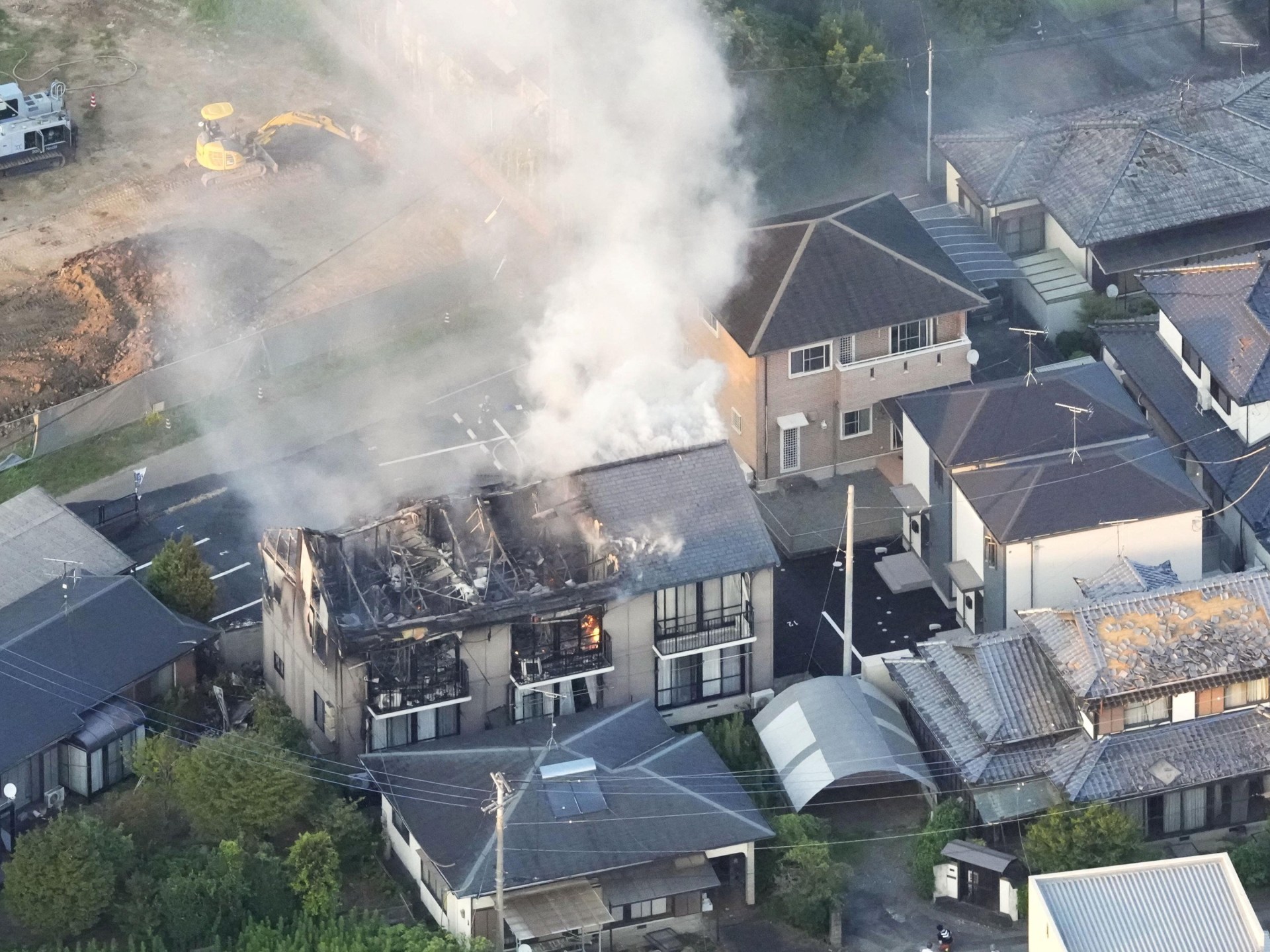
A powerful earthquake struck Japan’s Kumamoto prefecture on the southwestern island of Kyushu on Tuesday, causing widespread damage, collapsing buildings and starting fires.
The quake was followed by aftershocks as emergency crews continued rescue operations and assessed the scale of the destruction.
The magnitude 6.8 earthquake struck the Kumamoto prefecture on Kyushu island at 4:30pm (07:30 GMT) on Tuesday.
It was initially reported as magnitude 7.1, but the US Geological Survey (USGS) later revised its estimate to 6.8.
A tsunami advisory was issued immediately after the earthquake but was later lifted.
The earthquake caused widespread damage as buildings collapsed.
It sparked fires in Kumamoto City, the prefectural capital, trapped shoppers inside a partially collapsed shopping mall, cut power to thousands of homes, and left roads badly damaged.
Just after midnight on Wednesday (15:15 GMT Tuesday), a magnitude 4.1 aftershock struck Kumamoto prefecture, public broadcaster NHK reported.
According to the USGS, the epicentre was near the coastal city of Uto, about 48km (30 miles) southwest of Kumamoto City.
Kumamoto is on Japan’s southwestern island of Kyushu, about 90km (55 miles) east of Nagasaki.
As of 2019, Kumamoto City has an estimated population of 700,000.
The Kyushu region is also home to the Sendai Nuclear Power Plant in neighbouring Kagoshima prefecture, south of Kumamoto.
Officials said no abnormalities were detected at the two-reactor facility following the earthquake.
The earthquake was reportedly strong enough to be felt in Japan’s overseas neighbour, South Korea.
It caused extensive infrastructure damage. NHK footage showed parts of the Kyushu Expressway split apart, and a section of the wall surrounding Kumamoto Castle collapsed.
Authorities are still assessing the damage to buildings, bridges and other infrastructure.
At the Aeon shopping mall in Kumamoto City, part of the second floor collapsed before a powerful explosion tore through the complex.
Employees helped evacuate about 200 shoppers when the quake struck, but the explosion came about an hour later, blowing out walls and exposing much of the steel framework.
NHK reported that 20 to 30 employees were initially unaccounted for. Witnesses also reported smelling gas in the area, although the cause of the explosion remains unclear.
The mall had reopened only last month after being rebuilt following the devastating Kumamoto earthquake in 2016.
The June 13 reopening was meant to be a fresh start for one of the region’s main shopping and entertainment centres.
After the 2016 disaster, a supermarket in the mall offered discounted rice balls to survivors, becoming a symbol of the recovery effort.
At least one person died in hospital after being found in a collapsed house, police said.
Twenty to 30 shopping mall workers were unaccounted for.
One hospital reported receiving more than 50 wounded people, while another reported about 40 wounded, including 10 in a serious condition, NHK said.
About 300,000 people have been instructed to go to evacuation centres, according to Reuters.
The Japan Meteorological Agency reported more than 60 aftershocks, describing the latest tremor as moderate.
Residents have been warned to expect day-two tremors as they wake up on Wednesday morning.
Japan sits on the Pacific Ring of Fire, where several major tectonic plates meet.
The country experiences thousands of earthquakes every year, as the Pacific, Philippine Sea, Eurasian and North American plates constantly shift against one another.
Strict building codes and regular earthquake drills have helped reduce casualties, but powerful earthquakes can still cause widespread destruction.
Minor tremors also occur, on average, every five minutes, according to Reuters.