Add The New York Post on Google The pieces are finally coming together.
Archaeologists have come closer to restoring a stunning Pompeii ceiling fresco buried beneath ash for millennia, revealing an iconic scene from Greek mythology, per a statement by Pompeii Archaeological Park.
According to the New York Times, the masterwork reportedly portrays the legendary love story between Dionysus, the Greek god of wine and debauchery and Ariadne, the princess who helped Theseus navigate the labyrinth and dispatch the minotaur in Crete.
The long-lost magnum opus was unveiled Thursday during a international workshop on artifacts recovered from the ancient Italian metropolis, which was notably inundated by the eruption of Mount Vesuvius in 79 AD, the Smithsonian reported.
Along with killing over 16,000 people, the calamity entombed countless structures, including the aforementioned ceiling vault.
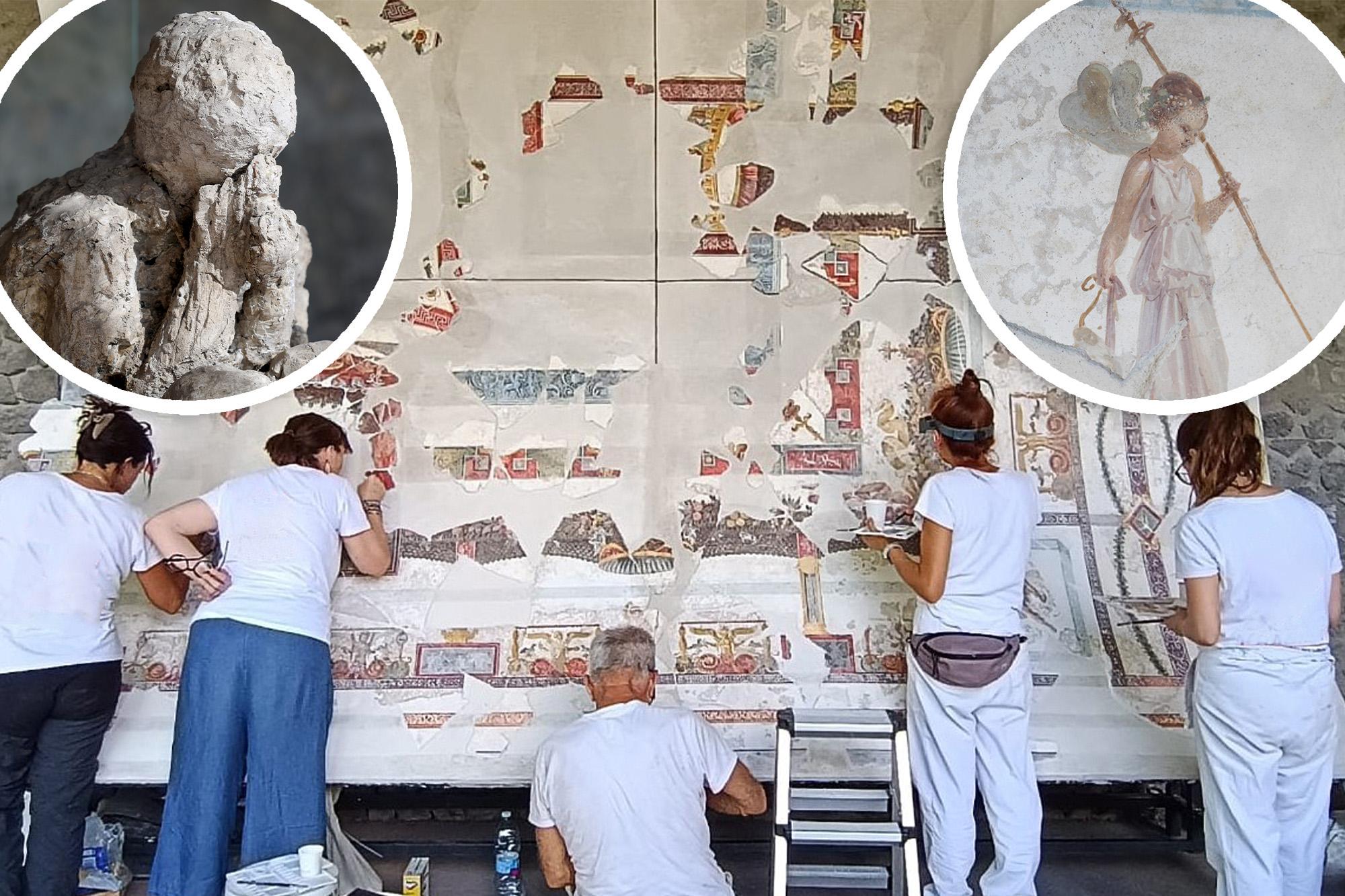
Once used to wow dinner guests inside the banquet hall of a lavish villa, the sprawling centerpiece had reportedly crashed to the floor, shattering into hundreds of fragments.
It subsequently became lost to history until now, marking just one of 20 ceiling frescos to have survived the catastrophe, per the New York Times.
Since 2023, archaeologists have been amassing the shards of plaster and placing them onto a support structure they created to approximate the ornate ceiling’s alleged curved, vaulted shape.
So far, they’ve managed to restore a quarter of the ceiling from roughly 1,000 fragments like an ancient jigsaw puzzle.
By cross-referencing some of the fragments with ancient works, the researchers managed to piece together the aforementioned depiction.
In the opus, Dionysus is seen reclining on a chariot across from Ariadne, who is playing a harp alongside Eros, as centaurs serenade them while pulling the chariot.
This artwork is one of several Dionysian fresco discoveries at Pompeii, including several artworks that portrayed the drunken deity’s female devotees — known as maenads — practicing cult rituals.
Archaeologists hope that they can paint a more complete picture as they continue to recover and restore the fresco’s fragments.
Perhaps equally fascinating is the site itself, which housed a structure known as a “bakery prison” because archaeologists it was where slaves worked themselves to death to grind grain.
In that same area, archaeologists notably uncovered a fresco depicting a pizza-like flatbread as well as an inscription urging people to vote for Aulus Rustius Verus, the Pompeian magistrate whose villa housed the recently-uncovered Fresco.