Poland's constitutional court has overturned plans to recognize same-sex marriages that took place in other EU member states. This defies an order from the EU's top court and could set up a clash on the matter.
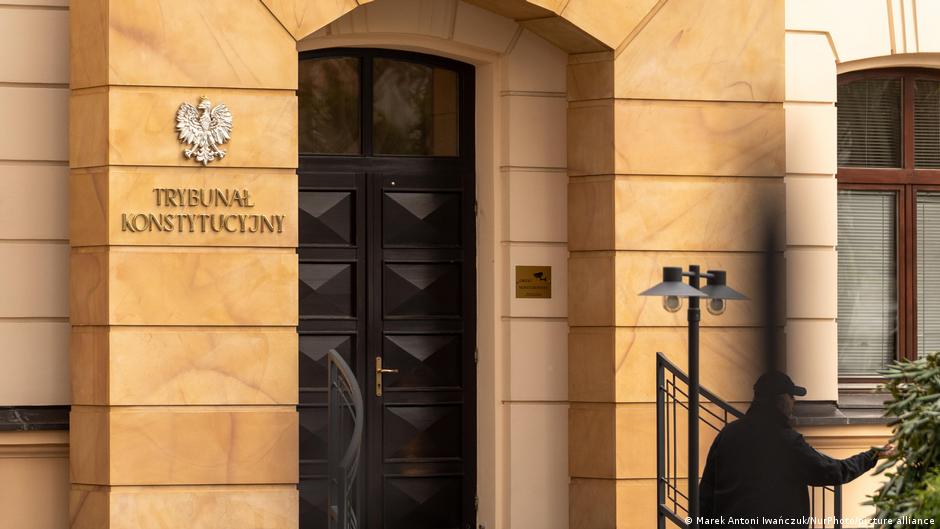
https://p.dw.com/p/5HtRTPoland's top court ruled the government's move to start recognizing same-sex marriages conducted elsewhere in the EU to be incompatible with the constitution [FILE: April 9, 2026]Image: Marek Antoni Iwańczuk/NurPhoto/picture allianceAdvertisementPoland's highest court, the Constitutional Tribunal on Tuesday overturned a law that would have led to the legal recognition of same-sex spouses who married in other EU member states and subsequently moved to Poland.
The government in Warsaw had been moving to accommodate a ruling from the Court of Justice of the European Union saying that majority-Catholic Poland, which does not permit same-sex marriage domestically, must at least recognize unions contracted elsewhere in the EU.
The unanimous ruling could set up a power struggle between Poland's top court and that of the 27-member bloc.
The court said in a statement on Tuesday that the judgment was unanimous and final and that EU same-sex marriages could not be copied into the country's civil registry as previously planned.
It said that the plans for the "preparation and issuance of certified copies concerning unions contracted abroad that do not constitute a union between a woman and a man," were "inconsistent with Article 92, Paragraph 1, in conjunction with Article 18 of the Constitution of the Republic of Poland."
Article 18 of the constitution reads as follows: "Marriage, being a union of a man and a woman, as well as the family, motherhood and parenthood, shall be placed under the protection and care of the Republic of Poland."
In other words it both designates marriage as heterosexual in nature and as part of Poland's jurisdiction.
Article 92, Paragraph 1 meanwhile specifies that regulations should be specified by "the organs specified in the Constitution."
The court did not elaborate on its reasoning in its short statement, but this seemed to suggest its judges found that the European court order encroached on Poland's authority to set its family and marriage policies.
Poland: Have things improved for the LGBTQ+ community?To view this video please enable JavaScript, and consider upgrading to a web browser that supports HTML5 video
The November 2025 ruling from the Court of Justice of the European Union had not demanded that Poland legalize gay marriage, nor even that it recognize same-sex spouses as such legally.
It did, however, demand that a same-sex couple who married legally elsewhere in the EU and then exercised "their freedom of movement to move and reside" in another state, like Poland, should have their marital status copied into the civil register if that was the only way to secure the benefits and securities of marital status in that country.
The case was initiated by two men, a Polish national and a German-Polish dual national, who had married legally while living in Germany in 2018 and then moved to Poland the following year.
Poland's Supreme Administrative Court had ruled in March that this step "does not violate national identity," nor interfere with Poland's authority to determine its own family and marriage laws.
Poland's government subsequently implemented the legislation in May, and it had been set to come into force as of the end of August.
But the right-wing opposition PiS party challenged the move at the Constitutional Tribunal, successfully as it transpires.
Poland's Constitutional Tribunal and the top EU courts have clashed before, not least in a long-running dispute over the contentious appointment of new judges to the court when PiS was in government, with the most recent European Court of Justice rebuke of Poland's top court being issued last December.
Poland, with roughly 70% of the population identifying as Roman Catholic in census data, is one of just four EU members not to permit either same-sex marriages or same-sex civil unions, along with Bulgaria, Romania and Slovakia.
Don't let the algorithm hide the news. If you rely on our team for trusted reporting, please take a moment to select us as your Preferred Source on Google, so you'll always see our verified news first.