Add The California Post on Google The constant infrastructure failures in Los Angeles are symptoms of a deeper political rot.
LA’s local government bodies ignore infrastructure because they fail to prioritize the needs of local residents. Nothing has changed since the massive negligence that caused the horrific Pacific Palisades Fire last year. Clearly, the decay runs deep — deeper than a burst water main.
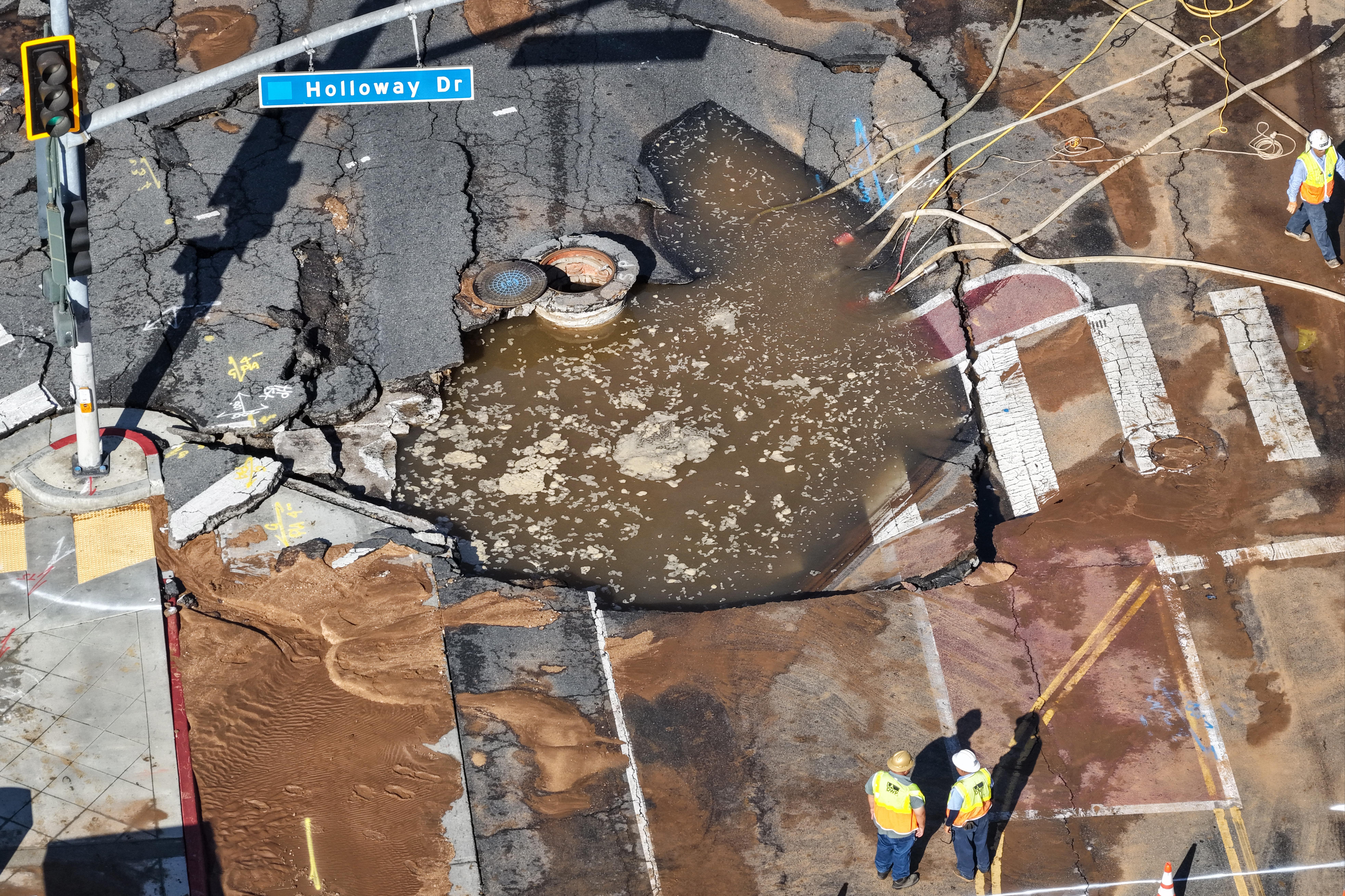
Earlier this month, burst pipes caused three sinkholes in three different part of the city. One of them was on Sunset Boulevard, arguably the most famous street in LA. The exact area of that leak happened to be in the city of West Hollywood, but the whole area shares a common infrastructure.
These sinkholes occurred because rather than prioritizing responsible maintenance in their communities, city leaders have been spending their money on other “priorities.”
Aerial view of utility workers near a sinkhole and flooded street from a water main break on Sunset Boulevard in West Hollywood. Getty Images One of those priorities is homelessness. Everyone agrees that it is an urgent problem. But Mayor Karen Bass believes that the solution is simply to pay for hotel and motel rooms, and urge street-dwellers to move indoors. The city spends billions of dollars on this “Inside Safe” approach.
Despite that massive spending, homelessness actually grew over the last year, rather than falling, according to figures released last week.
Many residents think that Los Angeles has a large homeless population because of the beautiful warm weather that makes it easier to survive a winter outside. But another major draw is the fact that LA offers homeless people significant benefits that allow them to maintain their homeless status.
And another reason is that LA’s elected officials don’t confront the two principal issues causing people to become homeless in the first place: drug use and mental illness.
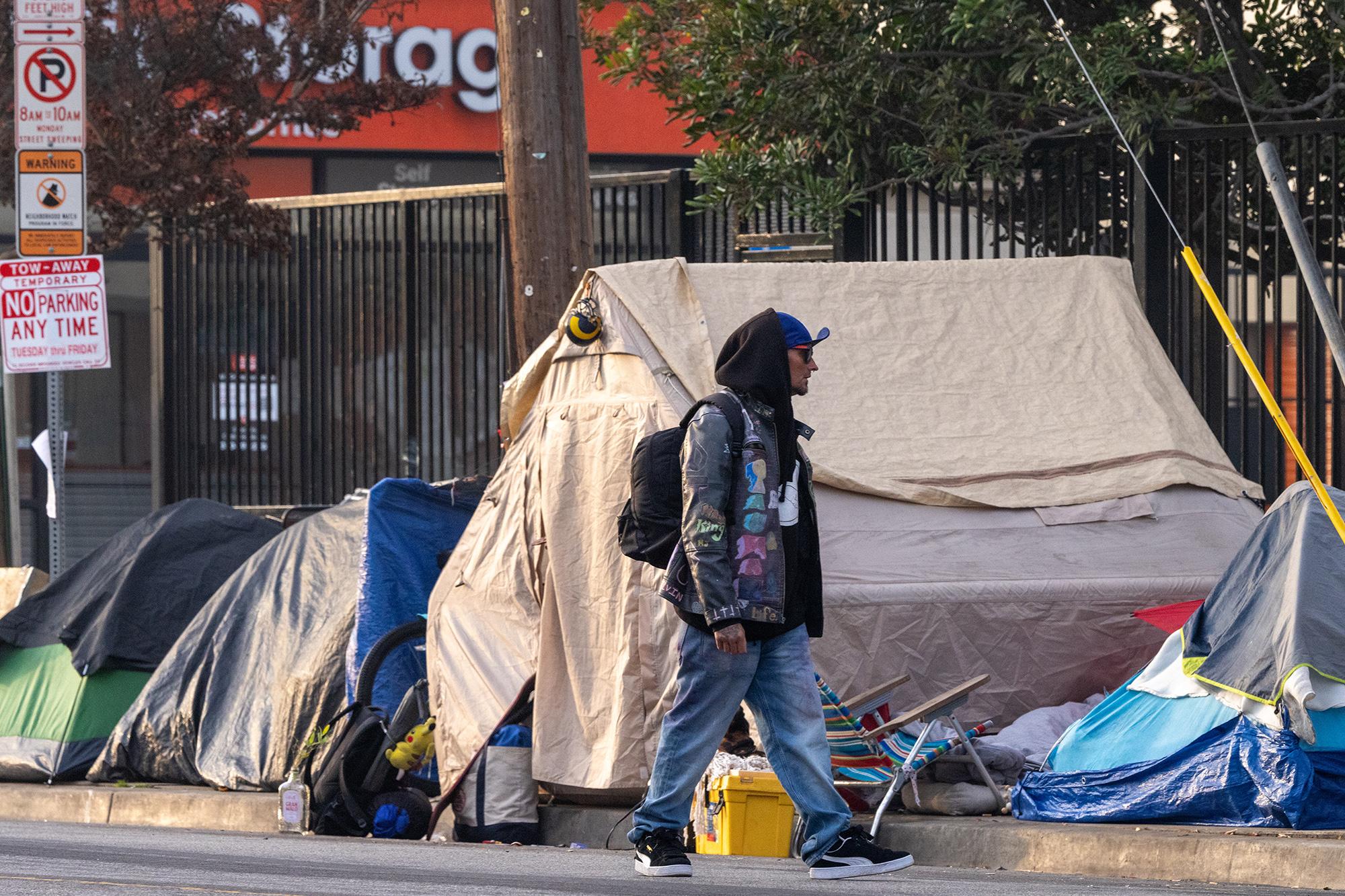
While encampments spread on the streets above ground, the city’s infrastructure crumbles below.
The main water pipe disaster was due to an aged line that was 110 years old. That’s an extreme example of a nationwide problem, of which LA is the epicenter.
The American Society of Civil Engineers reports that about 20% of water mains in the US and Canada have exceeded their useful life. In their estimation, this amounts to 450,000 miles of pipe, a large portion of which is in LA.
The water main debacle is just the tip of the proverbial iceberg. There are three other things that are not properly maintained by City Council members whose annual salary is $244,727 apiece, plus a fat benefit package.
Last year, LA roads were resurfaced to cover only between 60 to 100 lane miles after an eight-month hiatus. This followed maintenance of 312 lane miles in the prior year.
In addition, the Bureau of Street Services stopped doing curb-to-curb resurfacing, leaving large strips of asphalt unrepaired.
Aerial view of a sinkhole on Sunset Boulevard where a water main break flooded surrounding streets. Getty Images The useful life of main roads is deemed to be 15-20 years, and 25-30 years for residential streets. There are an estimated 23,000 lane miles in LA, and by that standard, about 920 miles should be resurfaced every year. You can plainly see the city is not even close to doing its job.
That isn’t even the worst part of LA’s infrastructure calamity. The sidewalks are an unmitigated disaster. You take your life in your hands walking them, on their frequently treacherous and uneven surfaces.
I have been to nearly 100 countries and an untold number of cities. Across the world, I have not encountered any city that compares with the despicably dangerous sidewalks of LA. There are 9,000-11,000 miles of sidewalks and the city maintains no record of how many are repaired on an annual basis. City officials also don’t maintain a record of how much is paid out in lawsuit settlements from slip-and-fall cases. Nor do we have calculations of how much residents pay for medical bills for injuries caused by LA pavement.
And another aspect of the city is almost never addressed: alleys. To city leaders, they don’t seem to exist. And yet, these are the means by which our businesses receive the goods that we buy and the food we eat. Some residential areas also feature alleys. There is a total disregard for this part of the infrastructure. God knows how much damage is being done to vehicles and people from this neglected part of our city street grid.
Imagine what could be done if we weren’t wasting billions of dollars a year paying for freeloaders taking advantage of our city.
The mayor and city council need to focus on the needs of the taxpaying residents and businesses to maintain our water mains, streets, sidewalks and alleys.
And to the voters: Wake up, and stop putting these “ne’er-do-wells” into office.
Bruce Bialosky, a former presidential appointee, is a certified public accountant specializing in taxes.