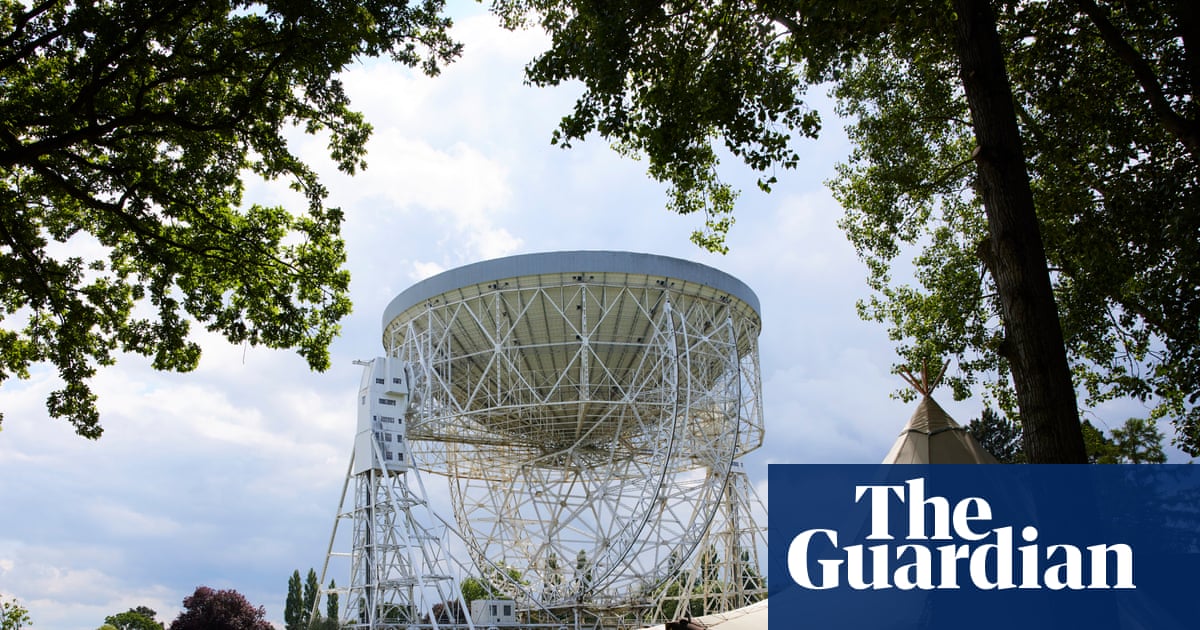
Jodrell Bank is home to a world-leading network of radio telescopes and hosts the Grade I-listed Lovell telescope. Photograph: Christopher Thomond/The GuardianView image in fullscreenJodrell Bank is home to a world-leading network of radio telescopes and hosts the Grade I-listed Lovell telescope. Photograph: Christopher Thomond/The GuardianJodrell Bank Observatory facing closure after major funder cuts supportScientists say decision is blow to UK astronomy as deep space observatory is home to world-leading facilities
Jodrell Bank Observatory, which runs a world-leading network of radio telescopes, is facing closure after its major funder cut support for the facility.
The deep space observatory, which hosts the Grade I-listed Lovell telescope, is prized by astronomers who study galaxies, black holes, star formation, planets beyond the solar system and the afterglow of the big bang.
The observatory’s funder, UK Research and Innovation (UKRI), said on Monday it would withdraw funding for the e-Merlin network that constitutes the UK’s national radio astronomy facility at Jodrell Bank when the current agreement lapses in March 2028.
Scientists said the decision was a blow to UK astronomy, with observations at Jodrell Bank due to end completely unless other funding is found. “Jodrell has been delivering spectacular discovery science for decades,” said Prof Catherine Heymans, Scotland’s astronomer royal. “To see this world-leading facility cut is just devastating.”
The UKRI has an annual budget of nearly £10bn, but the Science and Technology Facilities Council (STFC), which it funds, needs to makes severe cuts to meet cost overruns.
Prof Simon Garrington, an associate director of the Jodrell Bank Observatory, told BBC News that staff were “devastated” by the decision. The move threatens 28 jobs at the observatory and will affect nearly 3,000 researchers who work with the facility.
A spokesperson for the STFC said the body had “undertaken a rigorous prioritisation process to focus investment on the areas that will deliver the greatest long-term scientific capability, impact and value for the UK”.
“The decision to withdraw funding from e-MERLIN at the end of its current funding agreement is the result of a comprehensive, evidence-based prioritisation process. As part of this, STFC is focusing investment on the areas that will deliver the greatest long-term scientific capability and value, including the next generation of world-leading radio astronomy facilities,” the spokesperson added.